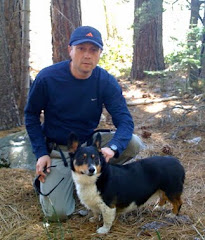
Though she tends to shy away from limelight, my agent Jennifer Weltz is my most stalwart supporter and champion; without her, I would never have sold a book! She convinced me to get back into the submission game and she put her expertise to work for me. She's also a no-nonsense critic and inspiring editorial colleague.
Jennifer was interviewed today on Guide to Literary Agents and she offers up some judicious insight into the publishing business, writing, querying, etc. Check it out!
Monday, June 1, 2009


Wednesday, May 27, 2009
A few more stops
My virtual tour ends this week, and I've had so much fun visiting all the different blogs and interacting with readers. Your enthusiasm has made all the difference; and The Last Queen trade paperback has gone into a second printing. Thank you!!
This week, I have new reviews at Book Addiction and Book Faery Reviews; Book Connection interviewed me; and Epic Rat and Cafe of Dreams are featuring my guest posts. Stay tuned for a new review at Cafe of Dreams, followed by my last stop at Book Lover.
It's been a truly marvelous tour; I want to say a special thank you to my friend Dorothy Thompson and her terrific team at PumpUpYourBookPromotion for their tireless work putting the tour together. And once again I must thank all the bloggers who so generously contributed their time and enthusiasm. In an era of dwindling marketing dollars, the book blogging world is a haven and I sincerely appreciate every blogger out there who, often without pay or major media recognition, work so hard to keep the flame of reading alive.
De todo corazon, gracias.
This week, I have new reviews at Book Addiction and Book Faery Reviews; Book Connection interviewed me; and Epic Rat and Cafe of Dreams are featuring my guest posts. Stay tuned for a new review at Cafe of Dreams, followed by my last stop at Book Lover.
It's been a truly marvelous tour; I want to say a special thank you to my friend Dorothy Thompson and her terrific team at PumpUpYourBookPromotion for their tireless work putting the tour together. And once again I must thank all the bloggers who so generously contributed their time and enthusiasm. In an era of dwindling marketing dollars, the book blogging world is a haven and I sincerely appreciate every blogger out there who, often without pay or major media recognition, work so hard to keep the flame of reading alive.
De todo corazon, gracias.
Wednesday, May 20, 2009
And the tour goes on . . .
This week, my tour continues with terrific reviews at The Bluestocking Society, Popin's Lair, and a feature on The Last Queen's different covers, followed by a review and guest post at The Epic Rat. I also have a review on Marta's Meanderings. Tonight, I'm at Clayton Books in Clayton, California at 7 pm, so if you're in the Bay Area, please stop by.
Again, I wanted to extend a warm thank you to all the bloggers hosting my tour. It's been a delight to interact with you and your readers; I truly appreciate your time, effort, and passion for books.
Have a great Memorial Day weekend, everyone! More on Monday, when I'll be visiting several more stops as the tour winds down.
Again, I wanted to extend a warm thank you to all the bloggers hosting my tour. It's been a delight to interact with you and your readers; I truly appreciate your time, effort, and passion for books.
Have a great Memorial Day weekend, everyone! More on Monday, when I'll be visiting several more stops as the tour winds down.
Wednesday, May 13, 2009
Tour Update
I wanted to say a very special thank you to Meghan at Medieval Bookworm for hosting me during my virtual tour. Today she posted a great interview with me and on Friday she'll post a review. Like so many bloggers, Meghan did not know me before she was approached to be a part of this tour, yet she took to the book with passion; her generosity and enthusiasm really make a difference in my ability to reach out to readers.
I also wanted to thank the lovely Kim Smith at Introducing Authors for interviewing me today on her radio show. Kim is so warm, she makes you feel right at home; I had a great time with her. An author herself, Kim has a very interesting assortment of guests, too. So please visit her to listen to my interview and many others.
Tomorrow, I'll be visiting Jo-Jo Loves to Read and This Book For Free; a huge thank you in advance to these bloggers for their time and effort. On Friday I'll be at BookGirls' Nightstand. Please stop by if you can!
I also wanted to thank the lovely Kim Smith at Introducing Authors for interviewing me today on her radio show. Kim is so warm, she makes you feel right at home; I had a great time with her. An author herself, Kim has a very interesting assortment of guests, too. So please visit her to listen to my interview and many others.
Tomorrow, I'll be visiting Jo-Jo Loves to Read and This Book For Free; a huge thank you in advance to these bloggers for their time and effort. On Friday I'll be at BookGirls' Nightstand. Please stop by if you can!
Tuesday, May 12, 2009
Next Lap on the Tour
My virtual tour continues apace, with a few physical bookstore stops along the way.
On May 7, I visited Books, Inc. in Palo Alto and on May 10, I was at Orinda Books. Both stores now have signed copies of The Last Queen for sale.
On May 11, Ramya's Bookshelf posted a lovely review, as did A Girl Walks into a Bookstore. I also got a marvelous review at The Book Connection. Thank you to these dedicated and generous bloggers for hosting me on my tour.
Tomorrow, May 13, I'm interviewed over at Medieval Bookworm and on Blog Talk Radio, so hope to see you there!
On May 7, I visited Books, Inc. in Palo Alto and on May 10, I was at Orinda Books. Both stores now have signed copies of The Last Queen for sale.
On May 11, Ramya's Bookshelf posted a lovely review, as did A Girl Walks into a Bookstore. I also got a marvelous review at The Book Connection. Thank you to these dedicated and generous bloggers for hosting me on my tour.
Tomorrow, May 13, I'm interviewed over at Medieval Bookworm and on Blog Talk Radio, so hope to see you there!
Thursday, May 7, 2009
The Tour: An Update
 The tour is going splendidly; it's always so much fun to meet readers online. I owe an enormous debt of gratitude to the blogging community; in this current climate, promoting a book can be very challenging and bloggers have made all the difference. Their generosity, passion, and wit are a writer's godsends, and they're all getting jewelry when I'm rich and famous! :) On a bummer note, I did have to cancel my Goodreads chat on May 8 due to an unforeseen veterinary appointment for my dog, but otherwise I got a terrific review over at the rather sexy Night Owl Romance Book Reviews site (just click on the logo above) and I'm on track.
Here's where I've been:
On May 4, I started at Historical Tapestry with a guest post. It was followed up with a review and a fun look at the different covers for THE LAST QUEEN. Marg runs such a classy blog; her initimable style and devotion to historical fiction are apparent in every well designed section of her opulent salon. She made me feel right at home. Thank you, Marg!
On May 5, I visited The Burton Review with a guest post and a review. Marie is such fun; her blog rocks, literally, and she's been one of my most enthusiastic supporters, following me on my tour and commenting on every stop. Her review of my book is one of my best, so thank you, Marie!
On May 5, I also visited the snazzy A Bookish Mom, with a very nice review, thank you! And I guest posted on Carol Fitzgerald's venerable ReadingGroupGuides.com about how books can transform readers and writers. Carol has been a wonderful supporter, and featured me in a Historical Fiction Author spotlight last year for the hardcover at BookReporter. com.
Thank you, Carol!
On May 6, I visited Passages to the Past with a guest post and a giveaway. Amy is a historical fiction writer's dream: she sparkles with her passion for the genre, and she's so generous with her time. Amy always has something new and exciting to post, and her blog is truly lovely, a blue-drenched fantasy of flowers and mouth-watering book covers; I could have stayed all month. Thank you, Amy!
Today May 7 and tomorrow May 8, I'm at the intellectually stimulating Savvy Verse and Wit with a guest post and a 2-book giveaway. Giveaways entail a good amount of work on the part of the blogger and I want to extend a special heartfelt thanks to Serena. Plus, any blog with a picture of a dude with a dog on his back is my kind of place, so I hope you'll stop by and join us.
More later, as I continue my whirlwind tour of the internet!
Sunday, May 3, 2009
THE LAST QUEEN trade paperback!
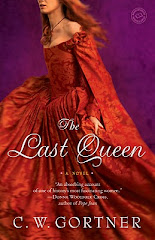
The Last Queen will be released in trade paperback on May 5, 2009. I'm very exci ted about this new edition; as a Random House Readers Circle selection, it has a brand-new cover, Q&A, and reader group discussion questions. And trade paperbacks are more affordable - always a plus in today's economic climate! I'll be reading and signing at various Bay Area locations in May; to find out where I'll be, visit my website and click the News link.
I'll also be on a virtual tour on the web, visiting various blogs. On May 4, I'm at Historical Tapestry with a guest post about why I love writing about the Renaissance. You can follow my tour on the link in the sidebar of this blog; please join me if you can!
UPDATE: I'm really sorry but I have to re-schedule my online chat at Goodreads on May 8 for another day. Unfortunately my dog appears to have sprained her leg and I need to get her to the vet tomorrow. So, I'll try to re-schedule soon.
I'll post periodic updates from my tour here, so please stay in touch.
ted about this new edition; as a Random House Readers Circle selection, it has a brand-new cover, Q&A, and reader group discussion questions. And trade paperbacks are more affordable - always a plus in today's economic climate! I'll be reading and signing at various Bay Area locations in May; to find out where I'll be, visit my website and click the News link.I'll also be on a virtual tour on the web, visiting various blogs. On May 4, I'm at Historical Tapestry with a guest post about why I love writing about the Renaissance. You can follow my tour on the link in the sidebar of this blog; please join me if you can!
UPDATE: I'm really sorry but I have to re-schedule my online chat at Goodreads on May 8 for another day. Unfortunately my dog appears to have sprained her leg and I need to get her to the vet tomorrow. So, I'll try to re-schedule soon.
I'll post periodic updates from my tour here, so please stay in touch.
Wednesday, April 15, 2009
Guest post from Kamran Pasha, author of MOTHER OF THE BELIEVERS
The topic of Aisha, child-bride of the Prophet Muhammad and one of the most influential female figures in the Muslim religion, burst onto our collective conciousness with the controversy surrounding Sherry Jones's Jewel of Medina. I must confess that I'm not the most well-read person when it comes to religious-themed fiction; I tend to shy away from it, and thus I did not read Ms Jones' book. However, I was intrigued by the concept when approached to read an advance copy of Mr Pasha's novel, Mother of the Believers, and I'm glad I took the chance. This is an erudite, well written and evocative novel about a period and a woman in history I knew nothing about. I decided to invite Mr Pasha to guest post for us today, because again, I'm no expert; and I think he can speak best to what he hopes to achieve with his book. His post offers a fascinating glimpse into a topic that is sure to generate a lot of debate.
Please join me in giving Kamran Pasha a warm welcome!
WHY MY NOVEL WILL OFFEND MUSLIMS AND NON-MUSLIMS ALIKE By Kamran Pasha, Author of Mother of the Believers
In April, Simon & Schuster’s Atria Books will publish my first novel Mother of the Believers which tells the story of the birth of Islam from the point of view of Prophet Muhamm ad’s wife Aisha. A similarly themed book, Jewel of Medina by Sherry Jones, was released last year under much controversy, after her initial publisher cancelled her contract for fear of inciting Muslim protests. With my own novel coming out in a few days, it is inevitable that people ask whether I am worried that the book will generate controversy. My response is that I have no doubt that the book WILL generate controversy and create a passionate debate among both Muslims and non-Muslims, as there are aspects of my novel that will offend people in both communities.
In Mother of the Believers, I attempt to bring to life the remarkable voice of Aisha, the Prophet’s youngest wife, who was a scholar, a politician and a military commander who led battles into Iraq. Aisha’s life single-handedly challenges the prevalent stereotype of the oppressed and submissive Muslim woman, and she remains a role model for Muslim feminists today. Aisha is revered throughout the Islamic community. But in researching her life story, I found intriguing accounts that are probably unknown to many Muslims, and my inclusion of such events may upset some. I think one thing that might startle some Muslims is my suggestion that one of the main charact ers, Talha, an early follower of Prophet Muhammad, was in love with Aisha, even though it was unrequited. Talha is a revered figure in Islam, but early Muslim sources suggest that he did have feelings for Aisha, and he once even publicly suggested that he would marry her if the Prophet died or divorced her (an incident I portray in the novel). Talha's unwavering loyalty to Aisha led to his support for her military activities, and ultimately his death on the battlefield. Being raised as a Muslim I had never heard these accounts and was startled to find them in the early Islamic histories. Most Muslims don't know these stories and some might be offended at their inclusion in my novel.
Some Muslims might also be shocked at my (very light) treatment of sexuality in the story. There are no graphic scenes, but there is an open discussion of sex, which is true to Islamic history. Muslim historians had no problem talking openly about sex, even the Prophet's sex life with his wives, and there are early accounts of one of his wives even discussing the fact that she had "wet dreams". Traditionally Muslims had a very healthy attitude toward sex, as it was considered as a normal part of daily life. In modern day, under the heavy influence of British Victorian values left over from the colonization, some Muslims might find even my light treatment of sexuality too much.
So, there will be things in my book that surprise and shock some Muslims. But there are many aspects of Mother of the Believers that will startle, and perhaps anger, non-Muslims as well. The story is told from a Muslim point of view and directly addresses many of the critiques raised against Prophet Muhammad by non-Muslims. The Prophet was a compelling spiritual figure who was famed for remarkable acts of generosity and compassion, and his words still ring true with wisdom today. But he has also been maligned by Westerners for many aspects of his life.
Specifically, non-Muslims critics point to the fact that Prophet Muhammad practiced polygamy, with a household of a dozen wives near the end of his life.
For many Christians, whose spiritual archetype is Jesus Christ, an apparently celibate man, this has always been shocking. The Prophet is also criticized for engaging in military battles against his enemies. Again, Jesus never raised a sword, so the Prophet’s battles are often decried as unworthy of a spiritual leader. And he has been accused of anti-Semitism for his conflict with the Jewish tribes of Arabia, two of whom were expelled, and a third whose men were executed and the women and children sold as slaves. Finally the Prophet’s marriage to Aisha itself has come under great criticism by non-Muslims, as some accounts suggest she was as young as nine years old when he consummated the wedding. This has led to the inflammatory charge of pedophilia by some modern critics.
As a practicing Muslim, I felt it was my duty to directly address these attacks on Prophet Muhammad. And in my novel, I endeavor to realistically portray the world in which he lived to give context to his actions. The Prophet lived in seventh century Arabia, a world that was more like the savage days of the Old Testament prophets than the cosmopolitan Hellenistic society of Jesus in the Gospels. Jesus Christ, a great prophet in Islam, lived in a world defined by the Pax Romana. Roman soldiers kept order in the Holy Land, and courts of law functioned to address disputes between neighbors. Jesus could travel in security and preach a message of love and non-violence, as he did not have to deal with creating basic social order first. Christ did not have to establish a civilization from scratch while preaching the word of God.
But the birth of Islam was radically different. The world that Prophet Muhammad confronted was the world of Abraham, Moses and David – a vicious wilderness where survival was questionable. In such a world, life and death was the daily concern. Polygamy was the normal lifestyle of the Biblical patriarchs and kings, as reproduction in a world with such low life expectancy was the primary concern for both men and women. And harsh military action in the Bible was about survival in a world where an enemy could come upon you at any time and massacre your entire tribe. Similarly, Arabia at the time was a in a state of chaos, with no central government, no police, no rules. It was truly a Hobbesian state of war, with every man for himself. The weak and the poor, particularly women and children, lived in a daily state of abject terror until the Prophet established order in this brutal world. And to do so, he had no choice but to fight the armed thugs who had turned Arabia into a war zone.
But what of the Prophet’s treatment of the Jewish tribes of Arabia? The truth was he initially allied with the Jewish tribes as fellow monotheists. But his rising power threatened their leaders, who broke their treaty with the Muslims and joined the pagan Arabs to fight Islam. The Prophet was thus forced to confront them militarily as well. And I show in my novel that he dealt with them in a manner that came directly out of commandments of the Hebrew Bible.
In my novel, I go out of my way to explain the Jewish point of view about the Prophet and why the Jewish leaders decided to break their treaty with him. But, in the end, the story is from a Muslim perspective and their actions are seen as treacherous. This may be troubling for some Western readers. In the post-Holocaust world, Jewish villains are perhaps uncommon in American literature due to fear of being labeled anti-Semitic. Shakespeare's villainous Shylock is no longer a defensible archetype in Western literature. I realize that by portraying the Jewish tribes as the villains in my novel, I am courting accusations of being anti-Semitic myself, but I am accurately portraying the realities of life and tribal politics in that world.
Polygamy was similarly a normal reality of life in a world where women outnumbered men due to the daily battles between tribes. In my novel, I show how the Prophet made women’s lives easier and was seen by women as a champion for their rights. The issues that generate controversy today were part of a struggle for survival in a primitive world, a struggle which I vividly portray in my novel, and I think many non-Muslims will find my account eye opening.
But if the Prophet’s polygamy and battles can be understood historically, what of his marriage to young Aisha? Accounts of Aisha’s age at her wedding range from the early teens to early twenties. In my novel, I have chosen to directly face the controversy over Aisha’s age by using the most contentious account, that she was nine at the time she menstruated and consummated her wedding. The reason I have done this is to show that it is foolish to project modern values onto another time and world. In a desert environment where life expectancy was extremely low, early marriage was not a social issue – it was a matter of survival. Modern Christian historians have no problem suggesting that Mary was around twelve years old when she became pregnant with Jesus, as that was the normal age for marriage and childbearing in first century Palestine. Yet no one claims Mary’s youthful pregnancy was somehow perverse, because she lived in a world where reproduction took place immediately upon menstruation.
All in all, there is enough in my novel to offend and outrage anyone who has a specific agenda regarding Islam. Some non-Muslims will label me as an apologist for suggesting that their critiques of the Prophet are unfair and motivated by a bigoted agenda. And some conservative Muslims will not like the book, because their agenda is to portray Islam and its heroes in as perfect and pristine ways as possible. But as a believing Muslim myself, I embrace the humanity of these people, as did the early Muslim historians. There is nothing to learn from a plastic saint who does not share our foibles and weaknesses. The point of Mother of the Believers is that if flawed, passionate, complex people like the founders of Islam could find spiritual enlightenment, maybe we can too.
Kamran Pasha is a Hollywood screenwriter and the author of Mother of the Believers, a novel on the birth of Islam as told by Prophet Muhammad’s teenage wife Aisha, published by Atria Books in April 2009. To find out more about him and his work, visit www.kamranpasha.com
WHY MY NOVEL WILL OFFEND MUSLIMS AND NON-MUSLIMS ALIKE By Kamran Pasha, Author of Mother of the Believers
In April, Simon & Schuster’s Atria Books will publish my first novel Mother of the Believers which tells the story of the birth of Islam from the point of view of Prophet Muhamm
 ad’s wife Aisha. A similarly themed book, Jewel of Medina by Sherry Jones, was released last year under much controversy, after her initial publisher cancelled her contract for fear of inciting Muslim protests. With my own novel coming out in a few days, it is inevitable that people ask whether I am worried that the book will generate controversy. My response is that I have no doubt that the book WILL generate controversy and create a passionate debate among both Muslims and non-Muslims, as there are aspects of my novel that will offend people in both communities.
In Mother of the Believers, I attempt to bring to life the remarkable voice of Aisha, the Prophet’s youngest wife, who was a scholar, a politician and a military commander who led battles into Iraq. Aisha’s life single-handedly challenges the prevalent stereotype of the oppressed and submissive Muslim woman, and she remains a role model for Muslim feminists today. Aisha is revered throughout the Islamic community. But in researching her life story, I found intriguing accounts that are probably unknown to many Muslims, and my inclusion of such events may upset some. I think one thing that might startle some Muslims is my suggestion that one of the main charact
 ers, Talha, an early follower of Prophet Muhammad, was in love with Aisha, even though it was unrequited. Talha is a revered figure in Islam, but early Muslim sources suggest that he did have feelings for Aisha, and he once even publicly suggested that he would marry her if the Prophet died or divorced her (an incident I portray in the novel). Talha's unwavering loyalty to Aisha led to his support for her military activities, and ultimately his death on the battlefield. Being raised as a Muslim I had never heard these accounts and was startled to find them in the early Islamic histories. Most Muslims don't know these stories and some might be offended at their inclusion in my novel.
Some Muslims might also be shocked at my (very light) treatment of sexuality in the story. There are no graphic scenes, but there is an open discussion of sex, which is true to Islamic history. Muslim historians had no problem talking openly about sex, even the Prophet's sex life with his wives, and there are early accounts of one of his wives even discussing the fact that she had "wet dreams". Traditionally Muslims had a very healthy attitude toward sex, as it was considered as a normal part of daily life. In modern day, under the heavy influence of British Victorian values left over from the colonization, some Muslims might find even my light treatment of sexuality too much.
So, there will be things in my book that surprise and shock some Muslims. But there are many aspects of Mother of the Believers that will startle, and perhaps anger, non-Muslims as well. The story is told from a Muslim point of view and directly addresses many of the critiques raised against Prophet Muhammad by non-Muslims. The Prophet was a compelling spiritual figure who was famed for remarkable acts of generosity and compassion, and his words still ring true with wisdom today. But he has also been maligned by Westerners for many aspects of his life.
Specifically, non-Muslims critics point to the fact that Prophet Muhammad practiced polygamy, with a household of a dozen wives near the end of his life.
For many Christians, whose spiritual archetype is Jesus Christ, an apparently celibate man, this has always been shocking. The Prophet is also criticized for engaging in military battles against his enemies. Again, Jesus never raised a sword, so the Prophet’s battles are often decried as unworthy of a spiritual leader. And he has been accused of anti-Semitism for his conflict with the Jewish tribes of Arabia, two of whom were expelled, and a third whose men were executed and the women and children sold as slaves. Finally the Prophet’s marriage to Aisha itself has come under great criticism by non-Muslims, as some accounts suggest she was as young as nine years old when he consummated the wedding. This has led to the inflammatory charge of pedophilia by some modern critics.
As a practicing Muslim, I felt it was my duty to directly address these attacks on Prophet Muhammad. And in my novel, I endeavor to realistically portray the world in which he lived to give context to his actions. The Prophet lived in seventh century Arabia, a world that was more like the savage days of the Old Testament prophets than the cosmopolitan Hellenistic society of Jesus in the Gospels. Jesus Christ, a great prophet in Islam, lived in a world defined by the Pax Romana. Roman soldiers kept order in the Holy Land, and courts of law functioned to address disputes between neighbors. Jesus could travel in security and preach a message of love and non-violence, as he did not have to deal with creating basic social order first. Christ did not have to establish a civilization from scratch while preaching the word of God.
But the birth of Islam was radically different. The world that Prophet Muhammad confronted was the world of Abraham, Moses and David – a vicious wilderness where survival was questionable. In such a world, life and death was the daily concern. Polygamy was the normal lifestyle of the Biblical patriarchs and kings, as reproduction in a world with such low life expectancy was the primary concern for both men and women. And harsh military action in the Bible was about survival in a world where an enemy could come upon you at any time and massacre your entire tribe. Similarly, Arabia at the time was a in a state of chaos, with no central government, no police, no rules. It was truly a Hobbesian state of war, with every man for himself. The weak and the poor, particularly women and children, lived in a daily state of abject terror until the Prophet established order in this brutal world. And to do so, he had no choice but to fight the armed thugs who had turned Arabia into a war zone.
But what of the Prophet’s treatment of the Jewish tribes of Arabia? The truth was he initially allied with the Jewish tribes as fellow monotheists. But his rising power threatened their leaders, who broke their treaty with the Muslims and joined the pagan Arabs to fight Islam. The Prophet was thus forced to confront them militarily as well. And I show in my novel that he dealt with them in a manner that came directly out of commandments of the Hebrew Bible.
In my novel, I go out of my way to explain the Jewish point of view about the Prophet and why the Jewish leaders decided to break their treaty with him. But, in the end, the story is from a Muslim perspective and their actions are seen as treacherous. This may be troubling for some Western readers. In the post-Holocaust world, Jewish villains are perhaps uncommon in American literature due to fear of being labeled anti-Semitic. Shakespeare's villainous Shylock is no longer a defensible archetype in Western literature. I realize that by portraying the Jewish tribes as the villains in my novel, I am courting accusations of being anti-Semitic myself, but I am accurately portraying the realities of life and tribal politics in that world.
Polygamy was similarly a normal reality of life in a world where women outnumbered men due to the daily battles between tribes. In my novel, I show how the Prophet made women’s lives easier and was seen by women as a champion for their rights. The issues that generate controversy today were part of a struggle for survival in a primitive world, a struggle which I vividly portray in my novel, and I think many non-Muslims will find my account eye opening.
But if the Prophet’s polygamy and battles can be understood historically, what of his marriage to young Aisha? Accounts of Aisha’s age at her wedding range from the early teens to early twenties. In my novel, I have chosen to directly face the controversy over Aisha’s age by using the most contentious account, that she was nine at the time she menstruated and consummated her wedding. The reason I have done this is to show that it is foolish to project modern values onto another time and world. In a desert environment where life expectancy was extremely low, early marriage was not a social issue – it was a matter of survival. Modern Christian historians have no problem suggesting that Mary was around twelve years old when she became pregnant with Jesus, as that was the normal age for marriage and childbearing in first century Palestine. Yet no one claims Mary’s youthful pregnancy was somehow perverse, because she lived in a world where reproduction took place immediately upon menstruation.
All in all, there is enough in my novel to offend and outrage anyone who has a specific agenda regarding Islam. Some non-Muslims will label me as an apologist for suggesting that their critiques of the Prophet are unfair and motivated by a bigoted agenda. And some conservative Muslims will not like the book, because their agenda is to portray Islam and its heroes in as perfect and pristine ways as possible. But as a believing Muslim myself, I embrace the humanity of these people, as did the early Muslim historians. There is nothing to learn from a plastic saint who does not share our foibles and weaknesses. The point of Mother of the Believers is that if flawed, passionate, complex people like the founders of Islam could find spiritual enlightenment, maybe we can too.
Kamran Pasha is a Hollywood screenwriter and the author of Mother of the Believers, a novel on the birth of Islam as told by Prophet Muhammad’s teenage wife Aisha, published by Atria Books in April 2009. To find out more about him and his work, visit www.kamranpasha.com
Sunday, April 12, 2009
Today, 454 years ago

On April 12, 1555, at six o'clock in the morning, Queen Juana of Castile died in the castle of Tordesillas after an agonizing battle with gangrene and forty-six years of imprisonment. She was attended in her final hours by Francisco de Borja, one of the most influential Jesuit leaders.
Her last words were: "Jesus Christ crucified, be with me."
She was seventy-six years old and the last queen of Spanish blood.
Her last words were: "Jesus Christ crucified, be with me."
She was seventy-six years old and the last queen of Spanish blood.
Wednesday, April 1, 2009
Guest post from David S. Brody, author of CABAL OF THE WESTFORD KNIGHT
I'm delig hted to welcome David S. Brody, author of CABAL OF THE WESTFORD KNIGHT, a modern-day thriller about recently-discovered ancient artifacts left by Templar Knights during a secret mission to North America in 1398. Attorney Cameron Thorne is thrust into a lethal battle involving secret societies, treasure hunters and keepers of the secrets of the Jesus bloodline. PW Weekly says, "Brody does a terrific job of wrapping his research in a fast-paced thrill ride that will feel far more like an action film." This is
 a non-stop thrill ride of a story that fans of Dan Brown, Steve Berry, and stories about the Knights Templar will enjoy. Please join me in giving David a warm welcome.
 hted to welcome David S. Brody, author of CABAL OF THE WESTFORD KNIGHT, a modern-day thriller about recently-discovered ancient artifacts left by Templar Knights during a secret mission to North America in 1398. Attorney Cameron Thorne is thrust into a lethal battle involving secret societies, treasure hunters and keepers of the secrets of the Jesus bloodline. PW Weekly says, "Brody does a terrific job of wrapping his research in a fast-paced thrill ride that will feel far more like an action film." This is
 a non-stop thrill ride of a story that fans of Dan Brown, Steve Berry, and stories about the Knights Templar will enjoy. Please join me in giving David a warm welcome.
Experts stubbornly cling to the outdated notion that not a single European explorer visited our shores during the 500 year gap between the Vikings and Christopher Columbus. Numerous artifacts scattered around New England tell us otherwise:
• Rhode Is land’s Newport Tower—a round stone tower built in medieval fashion—has long been thought to be a colonial windmill. But a mortar sample from an archeological dig was recently carbon-dated to the mid-1400s. And astronomers studying the seemingly randomly-placed windows and niches of the tower have identified dozens of astronomical alignments, including a spectacular winter solstice illumination, that are reflective of medieval religious practices.
• Maine’s Spirit Pond Rune Stones are shoebox-size stones inscribed with medieval runic lettering. The stones have been dismissed by many scholars as a 20th-centur y hoax. However, linguistic experts have recently discovered that the stones contain a rare, previously undiscovered runic character that links the stones both to 14th-century Gotland, an island off the coast of Sweden, and to other North American rune stones.
• The Narragansett Rune Stone is a runic inscription engraved on a boulder in Rhode Island’s Narragansett Bay. The inscription, visible only for 20 minutes a day at low tide, con tains the same rare, medieval runic character that links the Spirit Pond stones to the island of Gotland.
• The Westford Knight is a carving of a medieval battle sword pecked into a rock outcropping in Westford, Massachusetts. (Some claim the inscription also depicts a medieval knight carrying a shield, but these inscriptions have largely faded.) This carving may have been left as a memorial to a fallen knight by a group of 14th-century Scottish explorers led by Prince Henry Sinclair. Details of this journey are recounted in a 16th-century chronicle known as the Zeno Narrative, written by the descendants of the original captain of the Sinclair fleet, Antonio Zeno. Cartographers comparing U.S. Naval maps with the map contained in the Zeno Narrative—often dismissed as fake because the Narrative’s map displays islands in the North Atlantic where none today exist—have discovered startling similarities between subsurface land masses and the islands portrayed on the Zeno map.
The authenticity of these artifacts was recently buttressed by research conducted on Minnesota’s Kensington Rune Stone, a tombstone-size slab dated 1362 and inscribe d with medieval runic lettering similar to that found on the New England rune stones. A renowned geologist studying the weathering patterns of the minerals within the rock’s inscriptions determined the carvings predate the earliest European settlement of Minnesota. Since Native Americans in Minnesota did not speak the runic language, logic dictates that the inscriptions must therefore be medieval. And if medieval explorers made their way to Minnesota, it stands to reason they landed first on or near the New England shoreline.
So what do these artifacts tell us about the medieval explorers and why they were here? Much evidence corroborates the Zeno Narrative and points to Scotland’s Prince Henry Sinclair, drawn by North America’s vast natural resources at a time when Black Plague and war ravaged Europe. Digging deeper into Sinclair’s motivations, we uncover a fascinating version of history that one commentator describes as The Da Vinci Code crashing ashore in America. There is some evidence and much informed speculation indicating that Sinclair—clan chief of the prominent Knights Templar family made famous by Dan Brown as carrying the blood line of Jesus—led a band of outlawed religious warriors to the New World in the late 1300s to escape Church persecution and form an alternative, liberalized version of Christianity reflective of the burgeoning European Renaissance movement. Sinclair’s grandson later built Scotland’s Roslyn Chapel, a monument to pagan imagery and iconography.
It is from this fertile ground that Cabal of the Westford Knight sprung. It has been a ton of fun researching and writing this story. I hope readers are fascinated by this secret history of North America as well.
Giveaway Alert! Thank you to Historical Boys for hosting me today. As a special thanks to the readers of this blog, I will be offering a free copy of Cabal of the Westford Knight to one lucky person who comments about this post. This giveaway is open to anyone residing in the United States and Canada. Please be sure to leave a working email address in the body of your comment so that we can contact you if you win. Good luck!
Thank you, David. We wish you much success with this intriguing novel. For more information, please visit David at http://www.davidbrodybooks.com/.
• Rhode Is
 land’s Newport Tower—a round stone tower built in medieval fashion—has long been thought to be a colonial windmill. But a mortar sample from an archeological dig was recently carbon-dated to the mid-1400s. And astronomers studying the seemingly randomly-placed windows and niches of the tower have identified dozens of astronomical alignments, including a spectacular winter solstice illumination, that are reflective of medieval religious practices.
• Maine’s Spirit Pond Rune Stones are shoebox-size stones inscribed with medieval runic lettering. The stones have been dismissed by many scholars as a 20th-centur
 y hoax. However, linguistic experts have recently discovered that the stones contain a rare, previously undiscovered runic character that links the stones both to 14th-century Gotland, an island off the coast of Sweden, and to other North American rune stones.
• The Narragansett Rune Stone is a runic inscription engraved on a boulder in Rhode Island’s Narragansett Bay. The inscription, visible only for 20 minutes a day at low tide, con
 tains the same rare, medieval runic character that links the Spirit Pond stones to the island of Gotland.
• The Westford Knight is a carving of a medieval battle sword pecked into a rock outcropping in Westford, Massachusetts. (Some claim the inscription also depicts a medieval knight carrying a shield, but these inscriptions have largely faded.) This carving may have been left as a memorial to a fallen knight by a group of 14th-century Scottish explorers led by Prince Henry Sinclair. Details of this journey are recounted in a 16th-century chronicle known as the Zeno Narrative, written by the descendants of the original captain of the Sinclair fleet, Antonio Zeno. Cartographers comparing U.S. Naval maps with the map contained in the Zeno Narrative—often dismissed as fake because the Narrative’s map displays islands in the North Atlantic where none today exist—have discovered startling similarities between subsurface land masses and the islands portrayed on the Zeno map.
The authenticity of these artifacts was recently buttressed by research conducted on Minnesota’s Kensington Rune Stone, a tombstone-size slab dated 1362 and inscribe
 d with medieval runic lettering similar to that found on the New England rune stones. A renowned geologist studying the weathering patterns of the minerals within the rock’s inscriptions determined the carvings predate the earliest European settlement of Minnesota. Since Native Americans in Minnesota did not speak the runic language, logic dictates that the inscriptions must therefore be medieval. And if medieval explorers made their way to Minnesota, it stands to reason they landed first on or near the New England shoreline.
So what do these artifacts tell us about the medieval explorers and why they were here? Much evidence corroborates the Zeno Narrative and points to Scotland’s Prince Henry Sinclair, drawn by North America’s vast natural resources at a time when Black Plague and war ravaged Europe. Digging deeper into Sinclair’s motivations, we uncover a fascinating version of history that one commentator describes as The Da Vinci Code crashing ashore in America. There is some evidence and much informed speculation indicating that Sinclair—clan chief of the prominent Knights Templar family made famous by Dan Brown as carrying the blood line of Jesus—led a band of outlawed religious warriors to the New World in the late 1300s to escape Church persecution and form an alternative, liberalized version of Christianity reflective of the burgeoning European Renaissance movement. Sinclair’s grandson later built Scotland’s Roslyn Chapel, a monument to pagan imagery and iconography.
It is from this fertile ground that Cabal of the Westford Knight sprung. It has been a ton of fun researching and writing this story. I hope readers are fascinated by this secret history of North America as well.
Giveaway Alert! Thank you to Historical Boys for hosting me today. As a special thanks to the readers of this blog, I will be offering a free copy of Cabal of the Westford Knight to one lucky person who comments about this post. This giveaway is open to anyone residing in the United States and Canada. Please be sure to leave a working email address in the body of your comment so that we can contact you if you win. Good luck!
Thank you, David. We wish you much success with this intriguing novel. For more information, please visit David at http://www.davidbrodybooks.com/.
David S. Brody is a Director of the New England Antiquities Research Association (NEARA). CABAL OF THE WESTFORD KNIGHT, a modern-day thriller, features the ancient New England artifacts mentioned above.
Tuesday, March 24, 2009
Gearing up for THE LAST QUEEN in paperback
In between interviews and guest posts, I wanted to let you know that I'm gearing up for the trade paperback release of THE LAST QUEEN, which hits stores on May 5, 2009! The new cover is now on this blog's sidebar; I think it's quite sumptuous and fitting for our dramatic Juana. A Random House Readers Circle selection, the paperback features reader group discussion questions and Q&A. I'm committed to working with reader groups, and can meet with them via speaker phone, so if you're part of a reader group and think THE LAST QUEEN would be a good selection, please let me know. So far, reader groups love the book, as it generates a lot of robust discussion. There's a reader group link on my website, where you can find more information about scheduling a chat with me.
I'll also be doing a virtual book tour in May and will post tour dates here, as these occur. In the San Francisco Bay Area, I'll be making appearances and I'll be speaking on two panels at the Historical Novel Society Conference in Schaumberg, Il. (June 12-14). On May 8, I'll be chatting with readers on Goodreads. If you want to join in, click here: http://www.goodreads.com/group/show/14760.Chat_with_C_W_Gortner
My website is also undergoing a visual renovation and is scheduled to launch in mid-April.
On the new book front, I turned in my latest revision for THE CONFESSIONS OF CATHERINE DE MEDICI and my editor is currently reading it. As far as pub date goes, it's scheduled for 2010; I'll keep you posted as more details develop.
I'll also be doing a virtual book tour in May and will post tour dates here, as these occur. In the San Francisco Bay Area, I'll be making appearances and I'll be speaking on two panels at the Historical Novel Society Conference in Schaumberg, Il. (June 12-14). On May 8, I'll be chatting with readers on Goodreads. If you want to join in, click here: http://www.goodreads.com/group/show/14760.Chat_with_C_W_Gortner
My website is also undergoing a visual renovation and is scheduled to launch in mid-April.
On the new book front, I turned in my latest revision for THE CONFESSIONS OF CATHERINE DE MEDICI and my editor is currently reading it. As far as pub date goes, it's scheduled for 2010; I'll keep you posted as more details develop.
Wednesday, March 18, 2009
Goodbye, Natasha
 I am deeply saddened to hear of Natasha Richardson's passing. I've been a fan for years, both of her work on stage and in film, as well as her tireless contributions to the fight against AIDS.
My thoughts and prayers are with her family during this devastating time. She will be greatly missed.
Saturday, March 7, 2009
Guest post from Sarah Bower, author of BOOK OF LOVE
 With her second novel, BOOK OF LOVE, Sarah Bower has established herself as one of our most talented historical novelists. Set in early 16th century Italy during the dangerous reign of the Borgias, BOOK OF LOVE tells the story of Esther, a young Jewess who escapes with her family from Isabel of Castile's Spain, only to find herself enraptured by, and ensnared in, the intrigues and lethal attractions of Cesare Borgia and his sister, Lucrezia. Fans of Sarah's debut NEEDLE IN THE BLOOD will be enthralled by this mesmerizing tale of an innocent's journey into the dark secret heart of one of Italy's most infamous papal dynasties.
In celebration of the paperback release of BOOK OF LOVE in the US, Sarah has graciously agreed to offer a guest post. Please join me in giving her a warm welcome for her return to Historical Boys.
One Man and His Dog
by Sarah Bower
In the beginning of the Powell and Pressburger film A Matter of Life and Death (1946), a wartime airman is washed up on a beach after his aircraft is shot down over the sea. He believes he is dead and has gone to heaven. As he walks up the beach, he encounters a black Labrador.
‘I always hoped there’d be dogs,’ he says as he pats the animal’s head.
The room where I write contains two desks, two computers, an inexplicably large number of books (do they breed, I wonder, while my back is turned? Should I worry about leaving my Freud next to my Austen..?), and two golden retrievers.
These retrievers – Clarence and Floyd (named after two characters from the same movie. An impromptu competition: a signed copy of The Book of Love to the first reader who can spot the movie) – are apparently inert. To the uninitiated they might seem to be rugs, moth eaten leftovers from a golden age of big game hunting, or possibly evidence of a bizarre taste for taxidermy. Yet despite the fact that they sleep away my working hours, only snapping into a flurry of dancing, whimpering and tail wagging when I rise from my desk and intone the word, ‘walk’, or possibly, ‘tea’, they make an invaluable contribution to my fiction.
Walking is itself a great spur to creativity, of course. Keats, it is said, composed verses in his head while walking on Hampstead Heath and committed them, fully formed, to paper when he arrived home.
He took
In his knapsack
A book
Full of vowels
And a shirt
With some towels –
(From John Keats, A Song About Myself, The Complete Poems, Penguin Classics 3rd edition 1988)
In the beginning of the Powell and Pressburger film A Matter of Life and Death (1946), a wartime airman is washed up on a beach after his aircraft is shot down over the sea. He believes he is dead and has gone to heaven. As he walks up the beach, he encounters a black Labrador.
‘I always hoped there’d be dogs,’ he says as he pats the animal’s head.
The room where I write contains two desks, two computers, an inexplicably large number of books (do they breed, I wonder, while my back is turned? Should I worry about leaving my Freud next to my Austen..?), and two golden retrievers.
These retrievers – Clarence and Floyd (named after two characters from the same movie. An impromptu competition: a signed copy of The Book of Love to the first reader who can spot the movie) – are apparently inert. To the uninitiated they might seem to be rugs, moth eaten leftovers from a golden age of big game hunting, or possibly evidence of a bizarre taste for taxidermy. Yet despite the fact that they sleep away my working hours, only snapping into a flurry of dancing, whimpering and tail wagging when I rise from my desk and intone the word, ‘walk’, or possibly, ‘tea’, they make an invaluable contribution to my fiction.
Walking is itself a great spur to creativity, of course. Keats, it is said, composed verses in his head while walking on Hampstead Heath and committed them, fully formed, to paper when he arrived home.
He took
In his knapsack
A book
Full of vowels
And a shirt
With some towels –
(From John Keats, A Song About Myself, The Complete Poems, Penguin Classics 3rd edition 1988)
You can almost hear the rhythm of his feet, can’t you? History does not relate ( I don’t think) if he walked with a dog, but I’m certain many authors do.
Among the many memorable characters in J. G. Farrell’s novel, The Singapore Grip, set in the period just before the fall of Singapore to the Japanese in 1942, is a mangy, half-blind King Charles spaniel, nicknamed The Human Condition. The Human Condition survives bombing and shelling, several attempts to take him to the vet to be put down, and beats most of the human characters on to the last ship away from the island before the invading force arrives. He left me suspecting that Farrell, like me, wrote in the presence of dogs.
The decision to give Bishop Odo, ‘hero’ of my first novel, The Needle in the Blood, a favourite dog was straightforward. One of the themes of that book is – perversely – the Englishness of the Normans, the fact that William the Conqueror and those who accompanied him on his great adventure are as much the ancestors of P. G. Wodehouse’s Lord Emsworth as they are the proto-Nazis much beloved of the champions of Harold Godwinson and his Anglo Saxon kingdom. English gentlemen – just like Powell and Pressburger’s gallant bomber pilot, played by that quintessential English actor, David Niven – have dogs.
Much as J. G. Farrell’s lamentable King Charles spaniel acquired his Human Condition, however, I found that Bishop Odo’s dog, Juno, developed a role and character of her own and began to make interventions in the narrative as a kind of interpreter of human emotions, a channel of communication between human characters bent on misunderstanding one another. So, by the time I came to plan my latest book, The Book of Love, which looks at the lives of Cesare and Lucrezia Borgia through the eyes of a young Jewish conversa, I was very conscious of the need to add dogs to the mix.
There are two dogs of importance in The Book of Love - Alfonsino, a lap dog given to Lucrezia as a betrothal gift by her last husband, Alfonso d’Este, and Tiresias, a blind hound belonging to Cesare. A theme of the novel is doubling – Esther, the Jewess, and Lucrezia are very similar in appearance, a fact which has enormous consequences for Esther. One way in which I chose to signify this was to set up a rapport between Esther and the dog. She becomes its principal carer, and this in turn leads her into certain circumstances which change her life. Lucrezia begins by disliking the dog but shifts towards affection for it as she settles into a marriage which was, if not an idyllic love affair, a long and successful one which eventually enabled her to escape the lurid reputation she had acquired as a girl in Rome. In Ferrara, where the Este were the ruling family, she is remembered with great fondness for her cultivated court and her gallantry in defending the city during the War of the League of Cambrai.
Tiresias was a late addition to the novel. He didn’t appear in the first draft at all and it was only while I was proof reading The Needle in the Blood it occurred to me that Cesare Borgia needed a dog every bit as much as Bishop Odo, perhaps more so, as my initial motivation in giving him Tiresias was quite shamelessly manipulative. I wanted to make my readers like him more.
Cesare Borgia has been fictionalised in many ways, from the wonderfully subtle portrayal by Nigel Balchin in The Borgia Testament, in my view the best of all novels about the Borgias, to the wicked and clever comedy of Somerset Maugham’s Then and Now to the gloriously predatory ogre of Gregory Maguire’s Mirror, Mirror. He is a godsend to the novelist in many ways, having led a life which his biographer, Sarah Bradford , describes as having all the ingredients of a Greek tragedy. He is also (and I suspect, wherever he is now, with or without dogs, this must be a source of great satisfaction to him) impossible. As many headed as the hydra that was his emblem, every time you think you’ve got a grasp on his character, he slips away. The atheist son of a Pope, the womaniser who took no account of any woman other than his mother and his sister, possibly the greatest military and political genius of his age who nevertheless ended in complete failure, the inspiration for Machiavelli’s Prince – but then we have to ask ourselves, what is The Prince? Is it a serious treatise on government or a deeply ironical joke levelled at the tyrannical Medici by a dyed-in-the-wool republican?
These contradictions, the evasiveness and trickery of the man even 500 years beyond the grave (he died in 1507), challenges the novelist to transform him into either hero or villain with any conviction. He forces her to do what, of course, she should be doing, to recreate out of the facts and the myths an authentic human being. All human beings have their loveable side, even if only their own mothers can see it. Unfortunately, my plot dictated that Cesare’s relationship with his mother would not show his best side. If we’re lucky, we get unconditional love from our mothers, but everyone gets unconditional love from their dog. How better to show Cesare to advantage than by giving him a dog?
Of course, like any other gentleman of his age, he would have owned a lot of dogs, hounds of various kinds for hunting (though hunting with leopards was one of his favourite pastimes – how wonderfully over-the-top Renaissance of him) and would have put considerable resources into breeding them. What, then, would he do with a puppy born blind? Well, have it destroyed, of course.
An exercise I often set my students is to turn a convention on its head and see where it takes you. What, for example, happens to the story if you turn Cinderella into a boy or give Don Juan a conscience? With Tiresias, I did exactly the same thing – instead of putting him down, Cesare keeps him. He says it’s because, being blind, he will have a good nose for truffles, but you kind of know that’s just an excuse, a pragmatic front put up to shield the sentimental streak in his nature. So, Tiresias stands for the goodness in Cesare, for the side of him that is capable of love and loyalty and straight dealing. His lifespan is also exactly that of the papacy of Alexander VI, Cesare’s father, and thus, by his untimely, violent and avoidable death, he foreshadows his master’s own end.
Oh, and he gives Cesare the idea for the chestnut orgy. Chestnut orgy? Well, if you want to know more, you’ll have to read The Book of Love, which explores many different kinds of love, not least that of a man for his dog and vice versa.
I always hoped there’d be dogs too.
Biographical Note: Sarah Bower is the author of two historical novels. The Needle in the Blood was Susan Hill’s Book of the Year 2007. The Book of Love is now released in the US. Sarah is currently working on a novel about Juana La Loca – but it’s nothing like C.W.’s!
Among the many memorable characters in J. G. Farrell’s novel, The Singapore Grip, set in the period just before the fall of Singapore to the Japanese in 1942, is a mangy, half-blind King Charles spaniel, nicknamed The Human Condition. The Human Condition survives bombing and shelling, several attempts to take him to the vet to be put down, and beats most of the human characters on to the last ship away from the island before the invading force arrives. He left me suspecting that Farrell, like me, wrote in the presence of dogs.
The decision to give Bishop Odo, ‘hero’ of my first novel, The Needle in the Blood, a favourite dog was straightforward. One of the themes of that book is – perversely – the Englishness of the Normans, the fact that William the Conqueror and those who accompanied him on his great adventure are as much the ancestors of P. G. Wodehouse’s Lord Emsworth as they are the proto-Nazis much beloved of the champions of Harold Godwinson and his Anglo Saxon kingdom. English gentlemen – just like Powell and Pressburger’s gallant bomber pilot, played by that quintessential English actor, David Niven – have dogs.
Much as J. G. Farrell’s lamentable King Charles spaniel acquired his Human Condition, however, I found that Bishop Odo’s dog, Juno, developed a role and character of her own and began to make interventions in the narrative as a kind of interpreter of human emotions, a channel of communication between human characters bent on misunderstanding one another. So, by the time I came to plan my latest book, The Book of Love, which looks at the lives of Cesare and Lucrezia Borgia through the eyes of a young Jewish conversa, I was very conscious of the need to add dogs to the mix.
There are two dogs of importance in The Book of Love - Alfonsino, a lap dog given to Lucrezia as a betrothal gift by her last husband, Alfonso d’Este, and Tiresias, a blind hound belonging to Cesare. A theme of the novel is doubling – Esther, the Jewess, and Lucrezia are very similar in appearance, a fact which has enormous consequences for Esther. One way in which I chose to signify this was to set up a rapport between Esther and the dog. She becomes its principal carer, and this in turn leads her into certain circumstances which change her life. Lucrezia begins by disliking the dog but shifts towards affection for it as she settles into a marriage which was, if not an idyllic love affair, a long and successful one which eventually enabled her to escape the lurid reputation she had acquired as a girl in Rome. In Ferrara, where the Este were the ruling family, she is remembered with great fondness for her cultivated court and her gallantry in defending the city during the War of the League of Cambrai.
Tiresias was a late addition to the novel. He didn’t appear in the first draft at all and it was only while I was proof reading The Needle in the Blood it occurred to me that Cesare Borgia needed a dog every bit as much as Bishop Odo, perhaps more so, as my initial motivation in giving him Tiresias was quite shamelessly manipulative. I wanted to make my readers like him more.
Cesare Borgia has been fictionalised in many ways, from the wonderfully subtle portrayal by Nigel Balchin in The Borgia Testament, in my view the best of all novels about the Borgias, to the wicked and clever comedy of Somerset Maugham’s Then and Now to the gloriously
 predatory ogre of Gregory Maguire’s Mirror, Mirror. He is a godsend to the novelist in many ways, having led a life which his biographer, Sarah Bradford , describes as having all the ingredients of a Greek tragedy. He is also (and I suspect, wherever he is now, with or without dogs, this must be a source of great satisfaction to him) impossible. As many headed as the hydra that was his emblem, every time you think you’ve got a grasp on his character, he slips away. The atheist son of a Pope, the womaniser who took no account of any woman other than his mother and his sister, possibly the greatest military and political genius of his age who nevertheless ended in complete failure, the inspiration for Machiavelli’s Prince – but then we have to ask ourselves, what is The Prince? Is it a serious treatise on government or a deeply ironical joke levelled at the tyrannical Medici by a dyed-in-the-wool republican?
These contradictions, the evasiveness and trickery of the man even 500 years beyond the grave (he died in 1507), challenges the novelist to transform him into either hero or villain with any conviction. He forces her to do what, of course, she should be doing, to recreate out of the facts and the myths an authentic human being. All human beings have their loveable side, even if only their own mothers can see it. Unfortunately, my plot dictated that Cesare’s relationship with his mother would not show his best side. If we’re lucky, we get unconditional love from our mothers, but everyone gets unconditional love from their dog. How better to show Cesare to advantage than by giving him a dog?
Of course, like any other gentleman of his age, he would have owned a lot of dogs, hounds of various kinds for hunting (though hunting with leopards was one of his favourite pastimes – how wonderfully over-the-top Renaissance of him) and would have put considerable resources into breeding them. What, then, would he do with a puppy born blind? Well, have it destroyed, of course.
An exercise I often set my students is to turn a convention on its head and see where it takes you. What, for example, happens to the story if you turn Cinderella into a boy or give Don Juan a conscience? With Tiresias, I did exactly the same thing – instead of putting him down, Cesare keeps him. He says it’s because, being blind, he will have a good nose for truffles, but you kind of know that’s just an excuse, a pragmatic front put up to shield the sentimental streak in his nature. So, Tiresias stands for the goodness in Cesare, for the side of him that is capable of love and loyalty and straight dealing. His lifespan is also exactly that of the papacy of Alexander VI, Cesare’s father, and thus, by his untimely, violent and avoidable death, he foreshadows his master’s own end.
Oh, and he gives Cesare the idea for the chestnut orgy. Chestnut orgy? Well, if you want to know more, you’ll have to read The Book of Love, which explores many different kinds of love, not least that of a man for his dog and vice versa.
I always hoped there’d be dogs too.
Biographical Note: Sarah Bower is the author of two historical novels. The Needle in the Blood was Susan Hill’s Book of the Year 2007. The Book of Love is now released in the US. Sarah is currently working on a novel about Juana La Loca – but it’s nothing like C.W.’s!
Thank you, Sarah. We wish you much success in your US debut!
Sunday, February 15, 2009
Guest post from C.J. Sansom, author of WINTER IN MADRID
I've been a fan of author C.J. Sansom since he published his debut historical mystery, DISSOLUTION, introducing readers to the lawyer, Matthew Shardlake, who struggles to retain his sense of faith and honor in midst of the upheaval and corruption of the latter years of Henry VIII's reign. I was therefore honored when his publicist approached me to read his literary debut, the international bestseller, WINTER IN MADRID,  and feature a guest post by Mr Sansom here on Historical Boys.
Set in 1940, Sansom's novel is an unforgettable amalgam: part war-time thriller, part epic love story, and an unflinching look at the savage consequences of war. Harry Brett, a survivor of the defeat at Dunkirk, is recruited by British intelligence during the worst of Hitler's bombings on London to travel to Spain to spy on Sandy Forsyth, a former school companion-turned-shady-businessman. Brett has been to Spain before, with his idealist Communist friend, Bernie, now missing for three years, allegedly killed on the bloody battlefield of Jarama. As Brett finds himself caught up in the intrigue, deprivations and corruption of Franco's nascent fascist Spain, he befriends Bernie's former lover, Barbara, an ex-Red Cross nurse now involved with Forsyth but still haunted by Bernie's disappearance, as well as an impoverished Spanish family reeling from the effects of the Civil War. And as Harry Brett begins to unravel the secrets behind Sandy's business dealings, he comes face-to-face with the ghosts of the past and the bitter fruits of the present.
On a personal note, I was raised in Spain during the final years of Franco's regime and can still recall the falangist salute we had to do every morning at school. I knew of course that he supported Hitler, but I was taught that he did so only to prevent the Nazis from invading Spain - a promotional fallacy, the truth of which I learned later on as an adult. As a child, I was insulated for the most part from how Franco's long reign had crippled Spaniards' freedoms; but I did witness how his death turned the country upside down before initiating a glorious renaissance in every aspect of culture and society. My grandmother and many maternal relatives lived through the Civil War, and reading this novel reminded me vividly of stories they used to tell me of surviving the chaotic terror in Madrid. Some of the most poignant moments in WINTER IN MADRID involve Barbara's work with children orphaned by the war, and Mr Sansom kindly offers this essay on this tragic and oft-overlooked aspect of Franco's regime:
The Children of Franco's Orphanages
by C.J. Sansom
Spain in the 1940s was utterly impoverished. Much of the country's infrastructure had been wrecked in the war, social dislocation was enormous, there were a succession of bad harvests and Franco's administration was corrupt and chaotic. Observers in Spanish cities reported the many children, often sick or crippled, hawking cigarettes and begging in the streets, or living rough in feral gangs.The government's response to the problem was to bring in the Spanish Catholic church, which historically held great power and had had a virtual monopoly of schools and orphanages. With the exception of the Basque country, the church throughout Spain had been entirely on the side of Franco's rebels.
This is the background against which many Spanish children, both during and aft er the Civil War, were rounded up and sent to church orphanages. There is a photograph in Antony Beevor's The Battle for Spain of a group of frightened looking Spanish children, the oldest no more than twelve, being trained to give the Fascist salute below a series of nightmarish posters of communistic ogres threatening helpless children. The orphanages were determined to reverse any liberal, left-wing or irreligious ideas the children may have picked up from their parents, and indoctrination was intense. Children who had been given names like Ivan or Rousseau forced to take new ones.
 and feature a guest post by Mr Sansom here on Historical Boys.
 Set in 1940, Sansom's novel is an unforgettable amalgam: part war-time thriller, part epic love story, and an unflinching look at the savage consequences of war. Harry Brett, a survivor of the defeat at Dunkirk, is recruited by British intelligence during the worst of Hitler's bombings on London to travel to Spain to spy on Sandy Forsyth, a former school companion-turned-shady-businessman. Brett has been to Spain before, with his idealist Communist friend, Bernie, now missing for three years, allegedly killed on the bloody battlefield of Jarama. As Brett finds himself caught up in the intrigue, deprivations and corruption of Franco's nascent fascist Spain, he befriends Bernie's former lover, Barbara, an ex-Red Cross nurse now involved with Forsyth but still haunted by Bernie's disappearance, as well as an impoverished Spanish family reeling from the effects of the Civil War. And as Harry Brett begins to unravel the secrets behind Sandy's business dealings, he comes face-to-face with the ghosts of the past and the bitter fruits of the present.
Mr Sansom's meticulous eye for detail, his powers of description, and humanity as a writer shine through in this compelling tale of a country crumbling in the grips of fascism and of the impossible choices we make to save those we love. His rendering of Madrid itself, decimated by one of the 20th century's most brutal conflicts, is mesmerizing; clinging to its vestiges of elegance and promise even as Franco paralyzes Spain in a relentless vise of fear, poverty, and oppression.
On a personal note, I was raised in Spain during the final years of Franco's regime and can still recall the falangist salute we had to do every morning at school. I knew of course that he supported Hitler, but I was taught that he did so only to prevent the Nazis from invading Spain - a promotional fallacy, the truth of which I learned later on as an adult. As a child, I was insulated for the most part from how Franco's long reign had crippled Spaniards' freedoms; but I did witness how his death turned the country upside down before initiating a glorious renaissance in every aspect of culture and society. My grandmother and many maternal relatives lived through the Civil War, and reading this novel reminded me vividly of stories they used to tell me of surviving the chaotic terror in Madrid. Some of the most poignant moments in WINTER IN MADRID involve Barbara's work with children orphaned by the war, and Mr Sansom kindly offers this essay on this tragic and oft-overlooked aspect of Franco's regime:
The Children of Franco's Orphanages
by C.J. Sansom
On the 1st of April 1939 the Spanish Civil War ended. During three years of warfare the elected Republican government had fought the forces of General Franco and the German and Italian units sent by Hitler and Mussolini to aid him. In the absence of help from Britain and France, the Republic had been forced to turn to the Soviet Union for aid, Stalin's price being greatly enhanced power for the small Spanish Communist party. The Republic had been gradually beaten back into a smaller and smaller area, and after the fall of Catalonia it finally surrendered. There is a photograph of the Republic's last leader, Julián Besteiro, broadcasting the surrender, grave faced, in a badly lit room. He died in one of Franco's jails a year later. Franco's forces entered the third of Spain still under Republican control, including Madrid.
 third of Spain still under Republican control, including Madrid.
The war had been ferocious, and had left innumerable orphaned children. Many adults had fallen on the battlefield, others had been victims of air raids or of the terror waged against civilian political opponents by both sides. Now, with Franco's victory, the bloodshed did not cease. As victor, his policy was to "cleanse" Spain of remaining Republican activists; that meant the execution of thousands and the imprisonment, often in concentration camps, of thousands more. Children would come home to find their parents had been taken away by the police and they were left helpless and alone.
Spain in the 1940s was utterly impoverished. Much of the country's infrastructure had been wrecked in the war, social dislocation was enormous, there were a succession of bad harvests and Franco's administration was corrupt and chaotic. Observers in Spanish cities reported the many children, often sick or crippled, hawking cigarettes and begging in the streets, or living rough in feral gangs.The government's response to the problem was to bring in the Spanish Catholic church, which historically held great power and had had a virtual monopoly of schools and orphanages. With the exception of the Basque country, the church throughout Spain had been entirely on the side of Franco's rebels.
In one way that is not surprising, for the Republican government had been strongly opposed to the historic power of the church and had turned a blind eye to many church burnings, while on the outbreak of the Civil War in 1936 there had been atrocities against priests and nuns on the Republican side. Even so, the unquestioning support given to Franco's violent and vengeful regime not only during the Civil War but after his victory, cannot fail to disturb.
This is the background against which many Spanish children, both during and aft
 er the Civil War, were rounded up and sent to church orphanages. There is a photograph in Antony Beevor's The Battle for Spain of a group of frightened looking Spanish children, the oldest no more than twelve, being trained to give the Fascist salute below a series of nightmarish posters of communistic ogres threatening helpless children. The orphanages were determined to reverse any liberal, left-wing or irreligious ideas the children may have picked up from their parents, and indoctrination was intense. Children who had been given names like Ivan or Rousseau forced to take new ones.
It was a hard time and a harsh regime and no quarter was given to nonconformists of any kind, certainly not by a church determined the children in its care would draw up as good Catholics and good Francoists. Many, though not all, of the orphanages were brutal places.Some of the older street children were doubtless smart enough to conform outwardly with the political and religious indoctrination for the sake of the limited food -- outside, many in Spain were on the verge of starvation -- and for a roof over their heads, no matter how spartan the orphanages. Some, especially perhaps those whose parents had been victims of red rather than blue terror, would have accepted faith in God and Franco. But for the many traumatised by the war and the loss of their parents, there would have been little if any comfort.
That first generation of children lost their parents between 1936, when the war began, and around 1941 when the Francoist "cleansing" had claimed most of its desired victims. They would have left their orphanages later in the hard decade of the 1940s. Whatever the economic status of their parents before the war, and most would have been poor, their children would have been cast out with little skills into a poverty-stricken dictatorship; those with a Republican family background would have been known to the police and under particular pressure to conform. Most would have done so, outwardly at least, for being a dissident in a ruthless police state, whether of left or right, takes more courage and obstinacy than people living comfortably in democracies can realise. Most would have survived to see life become a little less frugal in the sixties, and to witness the "Francoist" regime and its warped and archaic ideology vanish almost overnight after Franco's death in 1975.
Even so, many who had been in power under Franco remained in place in the early years of democratic Spain, and even now many older people are reluctant, or afraid, to discuss the past. However, now that Spain has passed the Law of Historic Memory and acknowledged the cruelties done between 1936 and 1975, the sufferings of Franco's orphans are at last being recognised and discussed. I hope that may be some comfort to the elderly survivors of the Civil War years and of the años de hambre, the years of hunger, in the 1940s.
That first generation of children lost their parents between 1936, when the war began, and around 1941 when the Francoist "cleansing" had claimed most of its desired victims. They would have left their orphanages later in the hard decade of the 1940s. Whatever the economic status of their parents before the war, and most would have been poor, their children would have been cast out with little skills into a poverty-stricken dictatorship; those with a Republican family background would have been known to the police and under particular pressure to conform. Most would have done so, outwardly at least, for being a dissident in a ruthless police state, whether of left or right, takes more courage and obstinacy than people living comfortably in democracies can realise. Most would have survived to see life become a little less frugal in the sixties, and to witness the "Francoist" regime and its warped and archaic ideology vanish almost overnight after Franco's death in 1975.
Even so, many who had been in power under Franco remained in place in the early years of democratic Spain, and even now many older people are reluctant, or afraid, to discuss the past. However, now that Spain has passed the Law of Historic Memory and acknowledged the cruelties done between 1936 and 1975, the sufferings of Franco's orphans are at last being recognised and discussed. I hope that may be some comfort to the elderly survivors of the Civil War years and of the años de hambre, the years of hunger, in the 1940s.
Copyright © 2009 C.J. Sansom, author of Winter in Madrid: A Novel
A former lawyer, C. J. Sansom now writes full time. He holds a Ph.D. in history and is the author of Dissolution, Dark Fire, Sovereign and Revelation in the Matthew Shardlake series. Winter in Madrid was a major bestseller in England and is being published in twelve countries. Sansom lives in Brighton, England.
Friday, February 13, 2009
Lots of love to Australia
 My thoughts and prayers are with Australia, as the people and wildlife there face the most devastating wildfires in the nation's history. The loss of life, both human and animal, is truly heartbreaking, with an estimated 200 people missing or dead and over a million animals lost.
To donate to help wildlife affected by this disaster, please go to The International Fund for Animal Welfare (IFAW) at:
Friday, February 6, 2009
Join Ashley Judd and Defenders of Wildlife to Stop the Aerial Killing of Wolves
 As a long-time conservationist and animal rights activist, I am personally outraged by Sarah Palin's ongoing attack on wolves and other wildlife in Alaska via her savage aerial hunting program. Naturalists and renowned conservationists from all over the country have denounced this program as unethical, inhumane and unnecessary.
So far this year, Palin's program has slaughtered 67 wolves, with over 600 more targeted. She also wants to expand the program to include the killing of black bear sows and their cubs. Please join actress Ashley Judd, Defenders of Wildlife and myself in opposing this violent assault on defenseless animals - a practice that Alaskan voters have twice voted against and Palin has overturned. You can sign the petition to stop the program and support Defender's efforts via the link below for Eye on Palin.
 a practice that Alaskan voters have twice voted against and Palin has overturned. You can sign the petition to stop the program and support Defender's efforts via the link below for Eye on Palin.
See the video (WARNING: Graphic imagery of wolves being shot and killed): http://www.youtube.com/watch?v=yFdijgMytUA
Go to Eye on Palin: http://www.eyeonpalin.org/index.php
Monday, February 2, 2009
Guest post from Sandra Worth, author THE KING'S DAUGHTER
New month, new book! My friend and fellow historical novelist Sandra Worth recently published her second historical novel with NAL, Penguin. THE KING'S DAUGHTER is the untold account of Elizabeth of York, whose dynastic union with Henry VII founded the Tudor dynasty and b rought an end to the bloody York-Lancaster conflict known as the War of the Roses. Sumptuous and elegantly written, Elizabeth comes to life in this tale of intrigue, betrayal, passion and sacrifice; while the Tudors have been very well covered in fiction, Elizabeth remains a shadowy figure, largely passed over for her more glamorous counterparts; and Sandra has unearthed a wealth of research in order to portray this valiant queen and her importance in history. Please join me in giving a warm welcome to Sandra Worth!
 rought an end to the bloody York-Lancaster conflict known as the War of the Roses. Sumptuous and elegantly written, Elizabeth comes to life in this tale of intrigue, betrayal, passion and sacrifice; while the Tudors have been very well covered in fiction, Elizabeth remains a shadowy figure, largely passed over for her more glamorous counterparts; and Sandra has unearthed a wealth of research in order to portray this valiant queen and her importance in history. Please join me in giving a warm welcome to Sandra Worth!
First, thank you, Christopher, for hosting me again on Historical Boys!
The last time I posted was for LADY OF THE ROSES, my novel on John Lord Montagu and his beloved Isobel— lovers who bear a remarkable resemblance to Shakespeare’s Romeo and Juliet. But unlike their fictional counterparts, John and Isobel’s love affair ended happily, and they did  marry and have children together—lucky for us! I say that because they’re the direct medieval ancestors of both FDR and Churchill, who saved our world from Hitler’s tyranny.
In this way, they’ve touched us all intimately, whether we know it or not—and just a few days ago, to my great delight, I was honored to learn that they touched a chord with reviewers as well. LADY OF THE ROSES was awarded the 2008 CataNetwork Reviewers Choice Award as one of the best books reviewed by Single Titles last year! This brings my total number of awards to thirteen, but it’s my first for LADY OF THE ROSES, and I’m very happy—not only for myself, but also for John and Isobel, whose dramatic life story has never been told before.
But I digress. My invitation here is to talk about my latest novel, THE KING’S DAUGHTER: A NOVEL OF THE FIRST TUDOR QUEEN, so let me plunge right into the heart of the thing.
The infamous Tudors are a well-known family, and reams have been written about Henry VIII, Anne Boleyn, Catherine Howard, Bloody Mary, and Elizabeth I, et al. But the first Tudor queen, Elizabeth of York, “Elizabeth the Good,” is neither well-known nor infamous. In fact she remains a mystery. Five hundred years later, the smattering of facts on her would be hard-pressed to fill a page or two. There is only one biography, and the author, by her own admission, was forced for dearth of information to resort to novelistic techniques.
Some of you are familiar with Elizabeth of York from the last book of my ROSE OF YORK trilogy, where she made a cameo appearance and closed out the book in an epilogue. Frankly, I didn’t think there was much more to relate about her, and certainly I had no thoughts of writing a book on her life. When I was picked up by Penguin for LADY OF THE ROSES in a two book deal, I had to make a decision on the subject of my next book, and something her biographer said resonated with me. That she “brought hope to those in despair, comfort to those in pain, and restraint to those in power.” If there’s one thing I admire, it’s integrity, and this was a woman of great compassion and integrity.
Hoping to learn more, I perused every major account of Henry VII’s reign—Gairdner, Storey, Temperley, Simons, Griffiths, Bacon, Chrimes, Lockyer—to mention a few. And always I came across references to Elizabeth as “invisible,” holding a “shadow” court, where access was near “impossible” to attain. When she was seen in public, it was always with her mother-in-law at her side—usually dressed exactly like Elizabeth!
Francis Bacon reports that her mother, Bess Woodville, thought her daughter “not advanced but depressed,” meaning she considered Elizabeth not a true queen, but a puppet. I was intrigued. How could this be? Why was so little known about her when so much is known about her son, Henry VIII, her husband Henry VII, and even her mother-in-law, Margaret Beaufort?
It was a mystery, and in the course of unraveling it, I found my answers. Gathering them together, they make quite a story of greed, lust, ambition, betrayal, and blood –altogether a very dramatic life indeed! For example, Tudor propaganda has always claimed that Richard III murdered her brothers, the Princes in the Tower—but did he? Was Elizabeth in love with her uncle, Richard III? Did the Tudors keep her captive, and why should she be a threat to them? Did she b elieve the Pretender, Perkin Warbeck, was really her lost brother, the younger prince in the Tower, Richard Duke of York? Was Henry VII in love with the Pretender’s wife, and what was behind his incredibly brutal treatment of the young man?
 marry and have children together—lucky for us! I say that because they’re the direct medieval ancestors of both FDR and Churchill, who saved our world from Hitler’s tyranny.
In this way, they’ve touched us all intimately, whether we know it or not—and just a few days ago, to my great delight, I was honored to learn that they touched a chord with reviewers as well. LADY OF THE ROSES was awarded the 2008 CataNetwork Reviewers Choice Award as one of the best books reviewed by Single Titles last year! This brings my total number of awards to thirteen, but it’s my first for LADY OF THE ROSES, and I’m very happy—not only for myself, but also for John and Isobel, whose dramatic life story has never been told before.
But I digress. My invitation here is to talk about my latest novel, THE KING’S DAUGHTER: A NOVEL OF THE FIRST TUDOR QUEEN, so let me plunge right into the heart of the thing.
The infamous Tudors are a well-known family, and reams have been written about Henry VIII, Anne Boleyn, Catherine Howard, Bloody Mary, and Elizabeth I, et al. But the first Tudor queen, Elizabeth of York, “Elizabeth the Good,” is neither well-known nor infamous. In fact she remains a mystery. Five hundred years later, the smattering of facts on her would be hard-pressed to fill a page or two. There is only one biography, and the author, by her own admission, was forced for dearth of information to resort to novelistic techniques.
Some of you are familiar with Elizabeth of York from the last book of my ROSE OF
 YORK trilogy, where she made a cameo appearance and closed out the book in an epilogue. Frankly, I didn’t think there was much more to relate about her, and certainly I had no thoughts of writing a book on her life. When I was picked up by Penguin for LADY OF THE ROSES in a two book deal, I had to make a decision on the subject of my next book, and something her biographer said resonated with me. That she “brought hope to those in despair, comfort to those in pain, and restraint to those in power.” If there’s one thing I admire, it’s integrity, and this was a woman of great compassion and integrity.
Hoping to learn more, I perused every major account of Henry VII’s reign—Gairdner, Storey, Temperley, Simons, Griffiths, Bacon, Chrimes, Lockyer—to mention a few. And always I came across references to Elizabeth as “invisible,” holding a “shadow” court, where access was near “impossible” to attain. When she was seen in public, it was always with her mother-in-law at her side—usually dressed exactly like Elizabeth!
Francis Bacon reports that her mother, Bess Woodville, thought her daughter “not advanced but depressed,” meaning she considered Elizabeth not a true queen, but a puppet. I was intrigued. How could this be? Why was so little known about her when so much is known about her son, Henry VIII, her husband Henry VII, and even her mother-in-law, Margaret Beaufort?
It was a mystery, and in the course of unraveling it, I found my answers. Gathering them together, they make quite a story of greed, lust, ambition, betrayal, and blood –altogether a very dramatic life indeed! For example, Tudor propaganda has always claimed that Richard III murdered her brothers, the Princes in the Tower—but did he? Was Elizabeth in love with her uncle, Richard III? Did the Tudors keep her captive, and why should she be a threat to them? Did she b
 elieve the Pretender, Perkin Warbeck, was really her lost brother, the younger prince in the Tower, Richard Duke of York? Was Henry VII in love with the Pretender’s wife, and what was behind his incredibly brutal treatment of the young man?
 In my novel, crafted in long discussions with a Ph.D. medievalist friend, and based in part on Ann Wroe’s THE PERFECT PRINCE, Elizabeth reveals her shocking story, from her turbulent childhood during the Wars of the Roses to her reluctant, but courageous, marriage to Henry Tudor that made the Tudor dynasty. Historians agree that she exercised much influence over her Henry VII for good, since, after she died, his character began to degenerate and his actions grew more violent, debased and vile. Through these thousands of pages of academic texts, like her biographer I had a sense of Elizabeth hovering behind Henry, gently advising him, restraining his hand when she could, and praying for him when she couldn’t.
And as I wrote this book, I have to tell you—Elizabeth won my heart, too. I turn her over to you with affection, admiration, and deep respect for her great courage, compassion, faith and sacrifice. I hope you'll find THE KING’S DAUGHTER worth reading (excuse the pun!).
Thank you, Sandra! We wish the best of success with this new novel. To learn more about Sandra and her work, please visit her at: http://www.sandraworth.com/
And as I wrote this book, I have to tell you—Elizabeth won my heart, too. I turn her over to you with affection, admiration, and deep respect for her great courage, compassion, faith and sacrifice. I hope you'll find THE KING’S DAUGHTER worth reading (excuse the pun!).
Thank you, Sandra! We wish the best of success with this new novel. To learn more about Sandra and her work, please visit her at: http://www.sandraworth.com/
Tuesday, January 6, 2009
Guest Post by Robin Maxwell, author of SIGNORA DA VINCI
 One of the highlights of 2008 for me was reading an advance copy of Robin Maxwell's SIGNORA DA VINCI, set in 15th century Italy. Robin's books have thrilled me for years; whether she's exploring the life of Anne Boleyn, the youth of Elizabeth I or the Irish tragedy of Elizabeth's later reign, her work is distinguished by painstaking scholarship, a true passion for the era, and dramatic characterizations. When I first got SIGNORA DA VINCI , I was excited, as everything I'd read of Robin's thus far was set in the Tudor period. I was also honored because Robin herself had asked me to give the book an endorsement, which says it all:
"Maxwell tells the story of Caterina, an alchemist's daughter whose illicit love affair brings her the greatest love of her life, her genius son Leonardo da Vinci. In order to watch over and protect him, she escapes the restrictions of her gender, entering into a seductive garden of philosophy, art, and learning. From the dusty streets of Vinci and the glories of Il Magnifico's Florence, to the conspiratorial halls of Rome and Milan, Signora da Vinci celebrates one woman's unquenchable ardor for knowledge, and a secret world that readers rarely see."
I am honored to present this guest post from my friend, Robin Maxwell, in celebration of the publication of what I personally consider her best book to date, the fabulous and unputdownable SIGNORA DA VINCI.
I know I’m not alone in my utter fascination for the ridiculously fertile mind and staggering accomplishments of the original “Renaissance Man”— Leonardo da Vinci. But studying his works revealed only a fraction of the intimate, character-driven story I knew I wanted to tell in Signora da Vinci. Who was this person? What was he like as a child? Most of all: where did he acquire his earth shattering genius? The more I dug, the clearer it became. There was simply no way that he’d inherited his gifts from his social-climbing, icy-hearted, petty bureaucrat of a father. They had to have come from his mother.

The problem, I discovered, was that next to nothing is known of Caterina da Vinci, save her name and this cluster of facts: Leonardo’s father refused to marry her, and the infant was snatched from Caterina’s arms the day after his birth, thereafter raised in the loveless home of his paternal grandfather. Somehow, the dearth of information about “the most important woman we’ve never heard of,” sparked a fire in my mind. The city of Florence, at the very moment that Leonardo was sent there to learn his trade as an artist, was the center of the intellectual, cultural and political universe. The brightest stars of philosophy, science, art, architecture, music and international finance came together and out of the ashes of Medieval Europe built the foundation of the Renaissance movement.
Bound and determined to take these intriguing puzzle pieces and create a compelling novel, I concocted a device that allowed Caterina to follow her young son into the city —and to my great delight — to insinuate herself into the innermost circles of Florentine society. I disguised her as a man. Suddenly I possessed, through Caterina, the best of both worlds for an author of fiction— a character that was able to view her son Leonardo’s glorious and sometimes scandalous career through a woman’s eyes, while gaining entrée into intellectual circles — Lorenzo de’ Medici’s secret and heretical “Platonic Academy” — normally reserved for men.
For me, the Italian Renaissance was not simply an explosion of the art and architecture that most people think of when they hear the words. What my research uncovered was a “Shadow Renaissance” steeped in Platonic and Hermetic philosophy and Egyptian magic. Almost every ruler, writer, scientist or thinker in those years at least toyed with alchemy and the occult. Despite the church’s prohibitions, most of these great men (and a few women) took these views very seriously indeed. Few admitted to being outright atheists like Leonardo, but attempting to meld Christian scripture with the pagan mysteries was extremely common, especially in educated and highly cultured circles…even in Rome.
Despite its importance, one finds little if anything written about the Platonic Academy and its impact on the early Italian Renaissance -- as though it was a men’s social club and not an overarching philosophy that informed the lives of its members, making them especially vulnerable when the Dominican friar, Savonarola, came to power. Authors – both fiction and non-fiction – tend to ignore the implications of such towering figures as Lorenzo de Medici – one of the greatest patrons of the Academy – adhering to such heretical beliefs. But this was, in fact, the foundation of the revolution in thinking that brought Europe out of the dark ages and into the light of the Renaissance.
And then there was Leonardo himself. While everyone seems to have extremely strong opinions about the man, no one – biographer or historian – has conclusive evidence about whether Leonardo was straight, gay, bi-sexual or asexual. My best guess is that his sexual preferences changed according to his age, his social setting, and the emotional and political pressures brought to bear upon him. As a young apprentice in Verrocchio’s bottega, Leonardo was surrounded by lots of “pretty boys” who had little or no money to spend on whores, so homosexual behavior was perhaps more a necessity than a choice.
When Leonardo was nineteen, he and three other Florentine youths (two of whom were relatives of the Medici) were arrested by the church’s Officers of Night on a charge of “sodomy.” The infamous trial that ensued proved nothing, and charges were later dropped. Once he was a bit older, there was every reason to think he visited the female, as well as male prostitutes.
It seems clear that the sodomy trial had an effect on Leonardo’s sexuality – putting him off it for a time. The scandal seemed to traumatize the young, exquisitely sensitive young man. Once an outgoing, fancily clad man-about-town, he became quite reclusive and solitary. Later in life, Leonardo appeared asexual. While he adored having beautiful young men surrounding him as apprentices, he was so caught up in the “life of the mind” that sex may have become quite unimportant to him. Some of his writings suggest that he thought the sex act silly, the sex organs repulsive, and the only redeeming qualities the attractive faces of the participants – all that kept the human race from dying out.
But of all the mysteries surrounding Leonardo, the Turin Shroud hoax is the most intriguing. In Signora da Vinci I’ve based my sub-plot on the idea that the relic was not the burial cloth of the savior, but the first photograph in the history of the world, taken by Da Vinci and a small band of conspirators, with Leonardo himself as Jesus.

The problem, I discovered, was that next to nothing is known of Caterina da Vinci, save her name and this cluster of facts: Leonardo’s father refused to marry her, and the infant was snatched from Caterina’s arms the day after his birth, thereafter raised in the loveless home of his paternal grandfather. Somehow, the dearth of information about “the most important woman we’ve never heard of,” sparked a fire in my mind. The city of Florence, at the very moment that Leonardo was sent there to learn his trade as an artist, was the center of the intellectual, cultural and political universe. The brightest stars of philosophy, science, art, architecture, music and international finance came together and out of the ashes of Medieval Europe built the foundation of the Renaissance movement.
Bound and determined to take these intriguing puzzle pieces and create a compelling novel, I concocted a device that allowed Caterina to follow her young son into the city —and to my great delight — to insinuate herself into the innermost circles of Florentine society. I disguised her as a man. Suddenly I possessed, through Caterina, the best of both worlds for an author of fiction— a character that was able to view her son Leonardo’s glorious and sometimes scandalous career through a woman’s eyes, while gaining entrée into intellectual circles — Lorenzo de’ Medici’s secret and heretical “Platonic Academy” — normally reserved for men.
For me, the Italian Renaissance was not simply an explosion of the art and architecture that most people think of when they hear the words. What my research uncovered was a “Shadow Renaissance” steeped in Platonic and Hermetic philosophy and Egyptian magic. Almost every ruler, writer, scientist or thinker in those years at least toyed with alchemy and the occult. Despite the church’s prohibitions, most of these great men (and a few women) took these views very seriously indeed. Few admitted to being outright atheists like Leonardo, but attempting to meld Christian scripture with the pagan mysteries was extremely common, especially in educated and highly cultured circles…even in Rome.
Despite its importance, one finds little if anything written about the Platonic Academy and its impact on the early Italian Renaissance -- as though it was a men’s social club and not an overarching philosophy that informed the lives of its members, making them especially vulnerable when the Dominican friar, Savonarola, came to power. Authors – both fiction and non-fiction – tend to ignore the implications of such towering figures as Lorenzo de Medici – one of the greatest patrons of the Academy – adhering to such heretical beliefs. But this was, in fact, the foundation of the revolution in thinking that brought Europe out of the dark ages and into the light of the Renaissance.
And then there was Leonardo himself. While everyone seems to have extremely strong opinions about the man, no one – biographer or historian – has conclusive evidence about whether Leonardo was straight, gay, bi-sexual or asexual. My best guess is that his sexual preferences changed according to his age, his social setting, and the emotional and political pressures brought to bear upon him. As a young apprentice in Verrocchio’s bottega, Leonardo was surrounded by lots of “pretty boys” who had little or no money to spend on whores, so homosexual behavior was perhaps more a necessity than a choice.
When Leonardo was nineteen, he and three other Florentine youths (two of whom were relatives of the Medici) were arrested by the church’s Officers of Night on a charge of “sodomy.” The infamous trial that ensued proved nothing, and charges were later dropped. Once he was a bit older, there was every reason to think he visited the female, as well as male prostitutes.
It seems clear that the sodomy trial had an effect on Leonardo’s sexuality – putting him off it for a time. The scandal seemed to traumatize the young, exquisitely sensitive young man. Once an outgoing, fancily clad man-about-town, he became quite reclusive and solitary. Later in life, Leonardo appeared asexual. While he adored having beautiful young men surrounding him as apprentices, he was so caught up in the “life of the mind” that sex may have become quite unimportant to him. Some of his writings suggest that he thought the sex act silly, the sex organs repulsive, and the only redeeming qualities the attractive faces of the participants – all that kept the human race from dying out.
But of all the mysteries surrounding Leonardo, the Turin Shroud hoax is the most intriguing. In Signora da Vinci I’ve based my sub-plot on the idea that the relic was not the burial cloth of the savior, but the first photograph in the history of the world, taken by Da Vinci and a small band of conspirators, with Leonardo himself as Jesus.
SIGNORA DA VINCI is available in bookstores everywhere. Please visit Robin at her fun and informative website at http://www.robinmaxwell.com, where you will find more about her work and a special passport to the complex, fascinating world of SIGNORA DA VINCI.
Thank you, Robin, for taking the time to visit Historical Boys. We wish you all the success in the world!
Subscribe to:
Posts (Atom)