Pages

Tuesday, July 21, 2009

INVASION Giveaway!

I'm proud to announce my first official ARC giveaway on Historical Boys. McBooks Press has kindly offered 5 advance reading copies of INVASION, part of the popular Thomas Kydd series by Julian Stockwin.

This a great series set in the 18th century, full of adventure on the high seas. In INVASION, Napoleon’s army is massing for an invasion of England, relying on American inventor Robert Fulton's "infernal machines" - creations that Fulton claims can wreak mass destruction.

But the English employ a clever scheme to bring Fulton over to their side. The plan calls for Kydd's friend Renzi to help the inventor escape Revolutionary France and develop the devices in England. Though Kydd believes that standing man-to-man is the only honorable way to fight, he agrees to take part in the crucial testing of these new long-range weapons and finds himself embroiled in a fight that will determine the fate of nations.

The Kydd series summary: In 1793, twenty-year-old Thomas Kydd earns his living as a wig-maker in England, only dimly aware of the war breaking out across Europe. When he is seized by a Royal Navy press-gang and forced to be part of the crew of the 98-gun man-o’-war Duke William, he meets the mysterious Nicholas Renzi, a man with a past, who is destined to become Kydd’s greatest friend through many dangers and adventures. Kydd soon finds that he is a born sailor and a natural leader, and has no wish to return to his old life. And as Renzi knows only too well, times are changing: for the first time, a man like Kydd has the chance to rise all the way to the top.

To win one of these exciting ARCs, just leave a comment here on this post. Please make sure to include a way for me to contact you. I'll randomly draw five winners on August 10. Best of luck!

Thursday, July 9, 2009

Interview with Rory Clements, author of MARTYR

As some of you may know, I'm a big fan of historical thrillers, so I was excited when I heard about MARTYR by Rory Clements, a novel set in the later years of Elizabeth I's reign that introduces us to the intelligencer John Shakespeare, older brother of the playwright. While investigating the brutal murder of a noblewoman, Shakespeare finds himself drawn into an assasination plot against Sir Francis Drake and the hunt for a deadly Jesuit; what he discovers will shake his belief in himself and the world around him. (Picture: US cover / Bantam)
Mr Clements excels in his debut. While he can write spine-tingling action with flair, his best asset is his ability to render believable, flawed characters, as well as the complexities of a society torn apart by religious discord, poverty, and greed. I invited the author to an interview and I'm delighted to introduce him to you here on Historical Boys. Please join me in giving a warm welcome to Rory Clements!

1. Congratulations on the publication of MARTYR. It's an honor to have you with us. Set in the Elizabethan era shortly before the Armada invasion, MARTYR depicts a dark and dangerous time of religious discord in England, and introduces us to the intelligencer John Shakespeare, older brother of the famous playwright. This is not the habitual look at Queen Elizabeth's reign, which is usually given a Renaissance Faire air, but rather a gritty true-to-history depiction of the intrigue and violence that both Catholics and Protestants indulged in to further their cause. Through Shakespeare's adventures, you offer a balanced look at this terrible conflict. What inspired you to write about this particular time in the Tudor period?
Difficult question - it’s a bit like asking a junkie what inspired him to take up heroin. The truth is I’m not entirely sure what drew me in, but I confess that I am now well and truly addicted to the late 16th century – it’s where I have lived a lot of my internal life these past fifteen years or so.
Hollywood barely scratches the surface of Elizabeth’s England, which is a shame because there are a lot of great stories down there. For me, the bit-part players are often more interesting than the well-known knights and nobles. Take my villain Richard Topcliffe, a licensed brute and rapist who makes Goldfinger look like a charity worker. One US reviewer in the School Library Journal asks whether he could be so consistently evil. Well, yes, I’m afraid he was – and he evidently delighted in his cruelty.

Nor was Elizabeth a saint. She ruled with ferocity and connived at the tearing apart of men’s and women’s bodies for the “crime” of being a Catholic (though it was dressed up as treason). But she was also a very cultured lady without whom there would have been no Will Shakespeare, Christopher Marlowe or Ben Jonson.

In your question you say I offer a balanced look at the conflict. I was glad you said that, because I tried hard to be fair. There were atrocities on both sides and the threat to England in 1587 must have seemed as real and terrifying as the threat posed by Hitler in 1939.

2. MARTYR is a great read, fast-paced, involving, and full of twists and turns. It also offers a vivid and rare depiction of the common people of London, including prostitutes, tavern keepers, and others. You also bring give us a fascinating look at the ways in which Jesuit priests inflitrated the country, were hidden by sympathizers and hunted down by men in the Queen's pay. What surprising or interesting facts did you discover about the way these common people lived and how they were affected by religious issues?
I discovered their incredible courage and their utter belief in their own versions of Christianity. As an occasional church-goer who was brought up in the Church of England, I cannot imagine being willing to die for my faith. But in the 16th century many ordinary English people were prepared to undergo the torments of fire and steel for their beliefs. One man, a tailor named Nicholas Horner, was hanged by Topcliffe simply for making a jerkin for a priest. (Picture: UK cover /John Murray)

3. A key plotline within the novel is Shakespeare’s struggle to save Sir Francis Drake from a Catholic assasination attempt. How much of this is based on actual events?
In 1582, King Philip of Spain put a price of 20,000 ducats on Drake’s head. I mention this in Martyr. My 1587 plot is fictional – but it certainly wouldn’t be a major surprise if there had been other attempts on his life which went unreported. One thing is certain – Philip was happy to resort to political assassination to further his cause, as he proved in the case of the killing of William the Silent in 1584.
4. Besides John Shakespeare, of all the other characters in the book, which ones did you most enjoy creating and which presented the greatest challenge?
I love Drake. He wasn’t big physically, but his character was huge. I just hope I have done him justice. But I didn’t create Drake, I just interpreted him. I did enjoy creating Boltfoot Cooper, Gilbert Cogg, Harry Slide and Starling Day. All the ordinary folks, the people who don’t get their names in the history books.
5. Can you tell us about your journey to publication?
This goes back a long way. I always wanted to write novels, so I went into journalism hoping it would teach me to write well. I don’t know if it did – but I think it probably taught me to spot a good story and tell it clearly and with verve. I have tried my hand at various novels along the way, but without much conviction because earning my daily bread always intruded.
Then some years ago, as I became more and more engrossed in the Elizabethan era, I conceived the basic idea for the John Shakespeare series. It took me a long time to work it all out but finally, in 2007, I had time to give it my undivided attention. I wrote off to an agent called Teresa Chris (who seemed to fit the bill as she was listed as liking crime novels and historicals). She called me back and said she liked the idea but I had to write it first – she couldn’t sell it on the basis of a synopsis. So I settled down to write and six months later I felt it was ready.
I sent the finished manuscript to Teresa. She contacted me within days saying she loved it. A few days later it had been bought in a pre-emptive strike by Kate Miciak at Bantam Dell in America. That was one of the best days of my life. Soon after that, it sold to John Murray in the UK, Karakter in Holland, Piemme in Italy, Lubbe in Germany and Agave in Hungary.
6. How do you think your novel speaks to today’s reader or how do the events you evoke resonate in today’s world?
There are obvious echoes. You might think that Darwin would have done for religious strife, but it looms as large as ever. As for terrorism, political assassination and torture, well, what’s changed? That said, I do hope my book resonates with today’s readers. I have tried to give it a modern edge because, let’s face it, the Elizabethans saw themselves as the most modern, enlightened people there had ever been – just as we do today. This was the age of William Shakespeare, for heaven’s sake!
7. Please, tell us about your next project.
My next book, the second in the John Shakespeare series, is called Revenger and is scheduled to be published by Bantam Dell in the US next spring/summer. It’s 1592 - five years on – and Walsingham is dead. With Elizabeth about to enter her 60th year, the question of who will succeed her is more fevered than ever. Meanwhile, her courtiers Essex, Ralegh and Cecil are fighting like ferrets in a sack. And there is a dark mystery to solve – with a distinctive American flavour to it. Don’t forget, England had a foot in America long before the Pilgrim Fathers ever arrived…
Thank you, Rory. I'm really looking forward to your next book and we wish you much success. To find out more about Rory and his work, please visit:

Sunday, June 28, 2009

Enter for a Chance to see Pope Joan Premiere!

Donna Woolfolk Cross's Pope Joan is one of my favorite historical novels; a sweeping and gritty look at Europe in the Dark Ages and one woman's determination to rise above the confines of her gender as the first female pope. Due in large part to Donna's amazing perseverance and dedication to promotion, Pope Joan is now an international bestseller and has been released in a new edition by Three Rivers Press. The novel has also become a film, which I cannot wait to see, and Donna is offering one lucky reader the chance to join her on the red carpet for the premiere. Historical fiction and film are two of my favorite passions, so I just couldn't resist posting Donna's contest. Go ahead: enter, and good luck! Oh, and if you need a guest, I'm always available for premieres. You can see the German language trailer here.

Join Donna and her family as they walk the red carpet on the night of the Pope Joan movie premiere! The winning entry includes two tickets to the movie premiere, plus round trip airfare for two from any location in the continental United States or Canada, and one night hotel accommodation for you to share with your guest. To enter, just buy the Three Rivers Press/Crown Publishing paperback edition of Pope Joan during the months of June or July 2009 and send Donna the original receipt. In August, she'll pick randomly from the pile of receipts to select someone and their guest to join her at the U.S. movie premiere in the fall (exact date still to be determined).
For more information, visit Donna's official contest website.

Thursday, June 25, 2009

Goodbye, Farrah


I was saddened today to hear of Farrah Fawcett's passing. She was a classy lady and her battle against cancer bore testament to her determination and courage. One of my best friends in high school had her poster on his bedroom wall and I remember how much she influenced all my girl friends, who ran around with enormous winged hair and gold throat bracelets, just like Farrah.

Later on, she bowled me over with her searing portrayal of an abused woman in "The Burning Bed." Though she could act, she never seemed to take herself or her outrageous fame too seriously, something a few of today's up-and-coming stars should take a lesson from.

We'll miss you, Farrah. You defined a generation, and those of us who grew up watching you will never forget you.

Sunday, June 21, 2009

The HNS Conference

So, I mentioned I'd do a brief re-cap of my experience at the Historical Novel Society Conference, which I attended last weekend. The first thing I want to say is: Wow! I had so much fun. Honestly, I didn't expect to have as much fun as I did. I had of course been looking forward to it; I attended the first U.S. HNS conference in Salt Lake City in 2004, shortly after The Secret Lion was published, and enjoyed it immensely; I met several authors I admired and through one of them, my marvelous friend Judith Merkle Riley, I eventually found my current agent and sold my books. So, I knew the HNS conferences offered important networking opportunities, interesting panels, as well as the only gathering where the historical fiction tribe can congregate and shamelessly share its obsession with the past.

This year I had the opportunity to sit on two panels: "Breaking in and Staying in the Historical Fiction Game" with Michelle Moran and Karen Essex; and "Historical Boys" with authors Doug Jacobson, Tony Hays, and last minute replacements, Margaret George and Karen Essex. The panels were great; Michelle, Karen and I focused on how marketing has become integral to an author's longevity and the different approaches we take to it. On "Historical Boys" we had a lively interactive discussion about writing in the POV of a different gender and about the political correctness /branding that has seeped into publishing and limited our ability to pitch ideas that are seen as contrary to our brand. Each panel had dynamic Q&A sessions.

I also attended an editor's panel on selling historical fiction, featuring Trish Todd of Touchstone, Barbara Peters of Poisoned Pen Press, and Shana Drehs of Sourcebooks. The different perspectives presented by each editor were fascinating and helped answer some questions I had as to how editors acquire historical fiction and which manuscripts are most likely to be seen as successful. Not surprisingly, characters that are 'marquee' names (famous people in history) and a strong female perspective continue to dominate the genre.

The evening banquets and keynote speeches by Margaret George, Sharon Penman and Trish Todd were marvelous; but it was the late-night sessions at the bar that were true highlights for me. Meeting other writers and readers over copious amounts of wine and having robust conversations on everything from eras that fascinate us to the ways books are sold made me realize just how important that elusive 'face time' is, i.e., getting off the computer and getting out there. I've always valued personal interaction and the HNS Conference only further cemented for me the essential fact while we may be a virtual culture, as human beings we still need to talk to one another in person. I think all of us who attended the conference will agree.

If you love historical fiction and haven't yet attended a Historical Novel Society Conference, I cannot recommend it enough. These are terrific, well-organized events that offer a variety of panels for writers and readers.(In photo, left to right: Karen Essex, Michelle Moran, Margaret George and me).

Monday, June 15, 2009

I'll do anything for publicity . . .

I'm back home after a whirlwind, exciting and fun time at the Historical Novel Society in Schaumberg, Il. I'll blog later about the wonderful writers I met, the new friends I made and the overall terrific and exhaustive efforts the entire HNS committee made to create what is certainly the most comprehensive and delightful reunion for the historical fiction tribe. (In picture, left to right: Me, Cynthia Miller, Margaret George, Val Perry, Michelle Moran and Kate Forsythe).

I also met the lovely and witty Barbara Vey, blogger extraordinare of Beyond Her Book at Publishers Weekly. Barbara is truly a book lover and author's best advocate and she asked me to give her a "drive-by" video for her Monday morning blog, a request I simply could not resist. After three days of little sleep and much socializing, it just goes to show that I'll do almost anything for publicity. Enjoy! (and please don't hold it against me :)

Friday, June 12, 2009

Historical Fiction for the Summer on the Daily Beast

I'm in Chicago attending the Historical Novel Society Conference and I'll be blogging more about it when I get home, but in the meantime please check out my new article on The Daily Beast, featuring a summer historical fiction roundup.

This was a terrific opportunity for me to showcase samples of the genre at the biggest blog on the web, so if you can comment directly at The Daily Beast on the post (there is a section for comments at the end of it) they will be much appreciated. I did have some limitations, per the editor. Novels I selected to showcase had to have been published within the last three months and upcoming releases had to be no later than August. I'm hoping I'll have more opportunities to review again for the blog and thereby bring more attention to historical fiction. Fingers crossed!

Wednesday, June 3, 2009

E-book, anyone?

I've been reading a massive amount of blog posts and other material related to the recent BookExpo 2009 in New York; I followed the actual event via Publishers Weekly updates, because, frankly, it's the biggest book gathering in the U.S. and with all the rumbling going on around the future of publishing, I was very interested to hear what the industry thought and how they were preparing to deal with all the changes coming, one of which is the rise of the e-book. While I was reading, I came across this very interesting Q&A with author Sherman Alexie, who garnered some infamy for himself at BEA when he made a controversial remark about a woman he saw on a plane, reading from a Kindle.

Now, I have to admit, I am not an e-book reader. I've tried several times, even borrowing a Kindle from a friend; but I just don't like the sleek "feel" of the e-reader tool, nor am I enamoured of seeing a book on screen. It all feels . . . well, impersonal. I may be old-fashioned, though, like Alexie mentions in his post, I do love my computer, my iphone, my HD tv, etc. I also work on a computer all day and, as a writer, cannot imagine living without one. I've written manuscripts long-hand (yes, I'm old enough to recall a time when personal computers did not exist) so I know the drill. Your wrists ache and editing is a white-out nightmare. Computers are a writer's best friend. Unless the hard drive crashes and you forgot to back up. But I digress.

For me, a book is more than words; it's a sensory experience. I revel in all four senses whenever I read. The words are most important, yes, but the texture of the pages, the feel of the cover, the look and smell: each book has its own distinct personality, its allure, if you will. Short, tall, fat, slim, rough-cut pages, gullotine-cut, matte, varnished, embossed, smooth, new, used, collector edition, mass market, trade, hard cover -- I'm in love with the book itself and whenever I walk into a bookstore, I still get that giddy rush I've had for as long as I can remember. It's like seeing a beloved; I just can't wait to touch.

To me, books on an e-reader look all the same. Like droids. This isn't meant as a criticism or lament; honestly, I'm all for books selling in whatever formats most benefit readers - the operative word here being 'selling.' There is a comment below the Alexie Q&A that froze my blood: "In the future, no one will be able to make a living writing novels." This gave me serious pause. Of all the arguments in favor of the rapid digitalization of books, this isn't one I'd ever thought to hear, nor did I ever think to hear it declared with quite such glee. First of all, it's not as if most writers make much of a living writing novels to start with. For every James Patterson and Danielle Steel, they are thousands who sacrifice a lot to write, because they must. Most book advances are not yacht-worthy, trust me, and they're doled out in installments, so most writers never "cash in". It can take years to write a book and years to build a career, if you're lucky. And with publishing suffering the massive effects of this recession, shrinking marketing dollars means more and more of us realize we must save a portion of our advance, often up to 20%, for our own marketing, if we ever want to sell enough copies to get the next book deal.

I'm ashamed to admit, because I'm not an e-book reader I've also paid little attention to the pricing issues and formatting related to e-books. As far as formats go, it's all very complicated, and so I've just thought to avoid it by continuing to buy physical books. Pricing, however, does apparently affect me, and so I did some research, only to discover, to my surprise, that many e-books cost around $9.95! I guess the poster on the Alexie Q&A was right: at that rate, if the book does go 100% "e", none of us will be able to make a living, except the e-book publisher, that is. And when I start exploring all the pesky copyright issues coming up, I start to feel as if I need a cocktail.

Nevertheless, I'm going to pay a lot more attention from now on. As an author, it's vital to me that all writers receive decent compensation for their work and are protected as much as possible from the horrifying piracy issues that nearly gutted the music industry. I also think writers should have a say in how their work is digitalized. There's no question that the e-book is here to stay and there are as passionate defenders of it as there are opponents. I'm still muddling my way through the various arguments, because frankly I don't see why we shouldn't all be on the same page, no pun intended: we should be championing reading and joining forces to keep our book industry alive. There has to be a place for everything: I want physical book and e-books, online and physical bookstores, and all types of publishers to thrive, because I believe there is an audience for all of it, providing we, as a society and as a species, keep reading.

What do you think?

Monday, June 1, 2009

Meet My Agent

Though she tends to shy away from limelight, my agent Jennifer Weltz is my most stalwart supporter and champion; without her, I would never have sold a book! She convinced me to get back into the submission game and she put her expertise to work for me. She's also a no-nonsense critic and inspiring editorial colleague.

Jennifer was interviewed today on Guide to Literary Agents and she offers up some judicious insight into the publishing business, writing, querying, etc. Check it out!

Wednesday, May 27, 2009

A few more stops

My virtual tour ends this week, and I've had so much fun visiting all the different blogs and interacting with readers. Your enthusiasm has made all the difference; and The Last Queen trade paperback has gone into a second printing. Thank you!!

This week, I have new reviews at Book Addiction and Book Faery Reviews; Book Connection interviewed me; and Epic Rat and Cafe of Dreams are featuring my guest posts. Stay tuned for a new review at Cafe of Dreams, followed by my last stop at Book Lover.

It's been a truly marvelous tour; I want to say a special thank you to my friend Dorothy Thompson and her terrific team at PumpUpYourBookPromotion for their tireless work putting the tour together. And once again I must thank all the bloggers who so generously contributed their time and enthusiasm. In an era of dwindling marketing dollars, the book blogging world is a haven and I sincerely appreciate every blogger out there who, often without pay or major media recognition, work so hard to keep the flame of reading alive.
De todo corazon, gracias.

Wednesday, May 20, 2009

And the tour goes on . . .

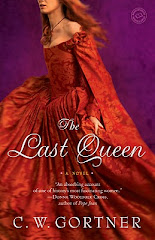
This week, my tour continues with terrific reviews at The Bluestocking Society, Popin's Lair, and a feature on The Last Queen's different covers, followed by a review and guest post at The Epic Rat. I also have a review on Marta's Meanderings. Tonight, I'm at Clayton Books in Clayton, California at 7 pm, so if you're in the Bay Area, please stop by.

Again, I wanted to extend a warm thank you to all the bloggers hosting my tour. It's been a delight to interact with you and your readers; I truly appreciate your time, effort, and passion for books.

Have a great Memorial Day weekend, everyone! More on Monday, when I'll be visiting several more stops as the tour winds down.

Wednesday, May 13, 2009

Tour Update

I wanted to say a very special thank you to Meghan at Medieval Bookworm for hosting me during my virtual tour. Today she posted a great interview with me and on Friday she'll post a review. Like so many bloggers, Meghan did not know me before she was approached to be a part of this tour, yet she took to the book with passion; her generosity and enthusiasm really make a difference in my ability to reach out to readers.

I also wanted to thank the lovely Kim Smith at Introducing Authors for interviewing me today on her radio show. Kim is so warm, she makes you feel right at home; I had a great time with her. An author herself, Kim has a very interesting assortment of guests, too. So please visit her to listen to my interview and many others.

Tomorrow, I'll be visiting Jo-Jo Loves to Read and This Book For Free; a huge thank you in advance to these bloggers for their time and effort. On Friday I'll be at BookGirls' Nightstand. Please stop by if you can!

Tuesday, May 12, 2009

Next Lap on the Tour

My virtual tour continues apace, with a few physical bookstore stops along the way.

On May 7, I visited Books, Inc. in Palo Alto and on May 10, I was at Orinda Books. Both stores now have signed copies of The Last Queen for sale.

On May 11, Ramya's Bookshelf posted a lovely review, as did A Girl Walks into a Bookstore. I also got a marvelous review at The Book Connection. Thank you to these dedicated and generous bloggers for hosting me on my tour.

Tomorrow, May 13, I'm interviewed over at Medieval Bookworm and on Blog Talk Radio, so hope to see you there!

Thursday, May 7, 2009

The Tour: An Update

The tour is going splendidly; it's always so much fun to meet readers online. I owe an enormous debt of gratitude to the blogging community; in this current climate, promoting a book can be very challenging and bloggers have made all the difference. Their generosity, passion, and wit are a writer's godsends, and they're all getting jewelry when I'm rich and famous! :) On a bummer note, I did have to cancel my Goodreads chat on May 8 due to an unforeseen veterinary appointment for my dog, but otherwise I got a terrific review over at the rather sexy Night Owl Romance Book Reviews site (just click on the logo above) and I'm on track.

Here's where I've been:

On May 4, I started at Historical Tapestry with a guest post. It was followed up with a review and a fun look at the different covers for THE LAST QUEEN. Marg runs such a classy blog; her initimable style and devotion to historical fiction are apparent in every well designed section of her opulent salon. She made me feel right at home. Thank you, Marg!

On May 5, I visited The Burton Review with a guest post and a review. Marie is such fun; her blog rocks, literally, and she's been one of my most enthusiastic supporters, following me on my tour and commenting on every stop. Her review of my book is one of my best, so thank you, Marie!

On May 5, I also visited the snazzy A Bookish Mom, with a very nice review, thank you! And I guest posted on Carol Fitzgerald's venerable ReadingGroupGuides.com about how books can transform readers and writers. Carol has been a wonderful supporter, and featured me in a Historical Fiction Author spotlight last year for the hardcover at BookReporter. com.
Thank you, Carol!

On May 6, I visited Passages to the Past with a guest post and a giveaway. Amy is a historical fiction writer's dream: she sparkles with her passion for the genre, and she's so generous with her time. Amy always has something new and exciting to post, and her blog is truly lovely, a blue-drenched fantasy of flowers and mouth-watering book covers; I could have stayed all month. Thank you, Amy!

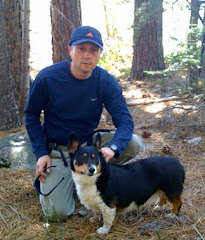
Today May 7 and tomorrow May 8, I'm at the intellectually stimulating Savvy Verse and Wit with a guest post and a 2-book giveaway. Giveaways entail a good amount of work on the part of the blogger and I want to extend a special heartfelt thanks to Serena. Plus, any blog with a picture of a dude with a dog on his back is my kind of place, so I hope you'll stop by and join us.

More later, as I continue my whirlwind tour of the internet!

Sunday, May 3, 2009

THE LAST QUEEN trade paperback!

The Last Queen will be released in trade paperback on May 5, 2009. I'm very excited about this new edition; as a Random House Readers Circle selection, it has a brand-new cover, Q&A, and reader group discussion questions. And trade paperbacks are more affordable - always a plus in today's economic climate! I'll be reading and signing at various Bay Area locations in May; to find out where I'll be, visit my website and click the News link.

I'll also be on a virtual tour on the web, visiting various blogs. On May 4, I'm at Historical Tapestry with a guest post about why I love writing about the Renaissance. You can follow my tour on the link in the sidebar of this blog; please join me if you can!

UPDATE: I'm really sorry but I have to re-schedule my online chat at Goodreads on May 8 for another day. Unfortunately my dog appears to have sprained her leg and I need to get her to the vet tomorrow. So, I'll try to re-schedule soon.

I'll post periodic updates from my tour here, so please stay in touch.

Wednesday, April 15, 2009

Guest post from Kamran Pasha, author of MOTHER OF THE BELIEVERS

The topic of Aisha, child-bride of the Prophet Muhammad and one of the most influential female figures in the Muslim religion, burst onto our collective conciousness with the controversy surrounding Sherry Jones's Jewel of Medina. I must confess that I'm not the most well-read person when it comes to religious-themed fiction; I tend to shy away from it, and thus I did not read Ms Jones' book. However, I was intrigued by the concept when approached to read an advance copy of Mr Pasha's novel, Mother of the Believers, and I'm glad I took the chance. This is an erudite, well written and evocative novel about a period and a woman in history I knew nothing about. I decided to invite Mr Pasha to guest post for us today, because again, I'm no expert; and I think he can speak best to what he hopes to achieve with his book. His post offers a fascinating glimpse into a topic that is sure to generate a lot of debate.


Please join me in giving Kamran Pasha a warm welcome!

WHY MY NOVEL WILL OFFEND MUSLIMS AND NON-MUSLIMS ALIKE By Kamran Pasha, Author of Mother of the Believers
In April, Simon & Schuster’s Atria Books will publish my first novel Mother of the Believers which tells the story of the birth of Islam from the point of view of Prophet Muhammad’s wife Aisha. A similarly themed book, Jewel of Medina by Sherry Jones, was released last year under much controversy, after her initial publisher cancelled her contract for fear of inciting Muslim protests. With my own novel coming out in a few days, it is inevitable that people ask whether I am worried that the book will generate controversy. My response is that I have no doubt that the book WILL generate controversy and create a passionate debate among both Muslims and non-Muslims, as there are aspects of my novel that will offend people in both communities.

In Mother of the Believers, I attempt to bring to life the remarkable voice of Aisha, the Prophet’s youngest wife, who was a scholar, a politician and a military commander who led battles into Iraq. Aisha’s life single-handedly challenges the prevalent stereotype of the oppressed and submissive Muslim woman, and she remains a role model for Muslim feminists today. Aisha is revered throughout the Islamic community. But in researching her life story, I found intriguing accounts that are probably unknown to many Muslims, and my inclusion of such events may upset some. I think one thing that might startle some Muslims is my suggestion that one of the main characters, Talha, an early follower of Prophet Muhammad, was in love with Aisha, even though it was unrequited. Talha is a revered figure in Islam, but early Muslim sources suggest that he did have feelings for Aisha, and he once even publicly suggested that he would marry her if the Prophet died or divorced her (an incident I portray in the novel). Talha's unwavering loyalty to Aisha led to his support for her military activities, and ultimately his death on the battlefield. Being raised as a Muslim I had never heard these accounts and was startled to find them in the early Islamic histories. Most Muslims don't know these stories and some might be offended at their inclusion in my novel.

Some Muslims might also be shocked at my (very light) treatment of sexuality in the story. There are no graphic scenes, but there is an open discussion of sex, which is true to Islamic history. Muslim historians had no problem talking openly about sex, even the Prophet's sex life with his wives, and there are early accounts of one of his wives even discussing the fact that she had "wet dreams". Traditionally Muslims had a very healthy attitude toward sex, as it was considered as a normal part of daily life. In modern day, under the heavy influence of British Victorian values left over from the colonization, some Muslims might find even my light treatment of sexuality too much.

So, there will be things in my book that surprise and shock some Muslims. But there are many aspects of Mother of the Believers that will startle, and perhaps anger, non-Muslims as well. The story is told from a Muslim point of view and directly addresses many of the critiques raised against Prophet Muhammad by non-Muslims. The Prophet was a compelling spiritual figure who was famed for remarkable acts of generosity and compassion, and his words still ring true with wisdom today. But he has also been maligned by Westerners for many aspects of his life.
Specifically, non-Muslims critics point to the fact that Prophet Muhammad practiced polygamy, with a household of a dozen wives near the end of his life.

For many Christians, whose spiritual archetype is Jesus Christ, an apparently celibate man, this has always been shocking. The Prophet is also criticized for engaging in military battles against his enemies. Again, Jesus never raised a sword, so the Prophet’s battles are often decried as unworthy of a spiritual leader. And he has been accused of anti-Semitism for his conflict with the Jewish tribes of Arabia, two of whom were expelled, and a third whose men were executed and the women and children sold as slaves. Finally the Prophet’s marriage to Aisha itself has come under great criticism by non-Muslims, as some accounts suggest she was as young as nine years old when he consummated the wedding. This has led to the inflammatory charge of pedophilia by some modern critics.

As a practicing Muslim, I felt it was my duty to directly address these attacks on Prophet Muhammad. And in my novel, I endeavor to realistically portray the world in which he lived to give context to his actions. The Prophet lived in seventh century Arabia, a world that was more like the savage days of the Old Testament prophets than the cosmopolitan Hellenistic society of Jesus in the Gospels. Jesus Christ, a great prophet in Islam, lived in a world defined by the Pax Romana. Roman soldiers kept order in the Holy Land, and courts of law functioned to address disputes between neighbors. Jesus could travel in security and preach a message of love and non-violence, as he did not have to deal with creating basic social order first. Christ did not have to establish a civilization from scratch while preaching the word of God.

But the birth of Islam was radically different. The world that Prophet Muhammad confronted was the world of Abraham, Moses and David – a vicious wilderness where survival was questionable. In such a world, life and death was the daily concern. Polygamy was the normal lifestyle of the Biblical patriarchs and kings, as reproduction in a world with such low life expectancy was the primary concern for both men and women. And harsh military action in the Bible was about survival in a world where an enemy could come upon you at any time and massacre your entire tribe. Similarly, Arabia at the time was a in a state of chaos, with no central government, no police, no rules. It was truly a Hobbesian state of war, with every man for himself. The weak and the poor, particularly women and children, lived in a daily state of abject terror until the Prophet established order in this brutal world. And to do so, he had no choice but to fight the armed thugs who had turned Arabia into a war zone.

But what of the Prophet’s treatment of the Jewish tribes of Arabia? The truth was he initially allied with the Jewish tribes as fellow monotheists. But his rising power threatened their leaders, who broke their treaty with the Muslims and joined the pagan Arabs to fight Islam. The Prophet was thus forced to confront them militarily as well. And I show in my novel that he dealt with them in a manner that came directly out of commandments of the Hebrew Bible.

In my novel, I go out of my way to explain the Jewish point of view about the Prophet and why the Jewish leaders decided to break their treaty with him. But, in the end, the story is from a Muslim perspective and their actions are seen as treacherous. This may be troubling for some Western readers. In the post-Holocaust world, Jewish villains are perhaps uncommon in American literature due to fear of being labeled anti-Semitic. Shakespeare's villainous Shylock is no longer a defensible archetype in Western literature. I realize that by portraying the Jewish tribes as the villains in my novel, I am courting accusations of being anti-Semitic myself, but I am accurately portraying the realities of life and tribal politics in that world.

Polygamy was similarly a normal reality of life in a world where women outnumbered men due to the daily battles between tribes. In my novel, I show how the Prophet made women’s lives easier and was seen by women as a champion for their rights. The issues that generate controversy today were part of a struggle for survival in a primitive world, a struggle which I vividly portray in my novel, and I think many non-Muslims will find my account eye opening.

But if the Prophet’s polygamy and battles can be understood historically, what of his marriage to young Aisha? Accounts of Aisha’s age at her wedding range from the early teens to early twenties. In my novel, I have chosen to directly face the controversy over Aisha’s age by using the most contentious account, that she was nine at the time she menstruated and consummated her wedding. The reason I have done this is to show that it is foolish to project modern values onto another time and world. In a desert environment where life expectancy was extremely low, early marriage was not a social issue – it was a matter of survival. Modern Christian historians have no problem suggesting that Mary was around twelve years old when she became pregnant with Jesus, as that was the normal age for marriage and childbearing in first century Palestine. Yet no one claims Mary’s youthful pregnancy was somehow perverse, because she lived in a world where reproduction took place immediately upon menstruation.

All in all, there is enough in my novel to offend and outrage anyone who has a specific agenda regarding Islam. Some non-Muslims will label me as an apologist for suggesting that their critiques of the Prophet are unfair and motivated by a bigoted agenda. And some conservative Muslims will not like the book, because their agenda is to portray Islam and its heroes in as perfect and pristine ways as possible. But as a believing Muslim myself, I embrace the humanity of these people, as did the early Muslim historians. There is nothing to learn from a plastic saint who does not share our foibles and weaknesses. The point of Mother of the Believers is that if flawed, passionate, complex people like the founders of Islam could find spiritual enlightenment, maybe we can too.

Kamran Pasha is a Hollywood screenwriter and the author of Mother of the Believers, a novel on the birth of Islam as told by Prophet Muhammad’s teenage wife Aisha, published by Atria Books in April 2009. To find out more about him and his work, visit www.kamranpasha.com

Sunday, April 12, 2009

Today, 454 years ago

On April 12, 1555, at six o'clock in the morning, Queen Juana of Castile died in the castle of Tordesillas after an agonizing battle with gangrene and forty-six years of imprisonment. She was attended in her final hours by Francisco de Borja, one of the most influential Jesuit leaders.

Her last words were: "Jesus Christ crucified, be with me."

She was seventy-six years old and the last queen of Spanish blood.

Wednesday, April 1, 2009

Guest post from David S. Brody, author of CABAL OF THE WESTFORD KNIGHT

I'm delighted to welcome David S. Brody, author of CABAL OF THE WESTFORD KNIGHT, a modern-day thriller about recently-discovered ancient artifacts left by Templar Knights during a secret mission to North America in 1398. Attorney Cameron Thorne is thrust into a lethal battle involving secret societies, treasure hunters and keepers of the secrets of the Jesus bloodline. PW Weekly says, "Brody does a terrific job of wrapping his research in a fast-paced thrill ride that will feel far more like an action film." This is a non-stop thrill ride of a story that fans of Dan Brown, Steve Berry, and stories about the Knights Templar will enjoy. Please join me in giving David a warm welcome.

Experts stubbornly cling to the outdated notion that not a single European explorer visited our shores during the 500 year gap between the Vikings and Christopher Columbus. Numerous artifacts scattered around New England tell us otherwise:

• Rhode Island’s Newport Tower—a round stone tower built in medieval fashion—has long been thought to be a colonial windmill. But a mortar sample from an archeological dig was recently carbon-dated to the mid-1400s. And astronomers studying the seemingly randomly-placed windows and niches of the tower have identified dozens of astronomical alignments, including a spectacular winter solstice illumination, that are reflective of medieval religious practices.
• Maine’s Spirit Pond Rune Stones are shoebox-size stones inscribed with medieval runic lettering. The stones have been dismissed by many scholars as a 20th-century hoax. However, linguistic experts have recently discovered that the stones contain a rare, previously undiscovered runic character that links the stones both to 14th-century Gotland, an island off the coast of Sweden, and to other North American rune stones.
• The Narragansett Rune Stone is a runic inscription engraved on a boulder in Rhode Island’s Narragansett Bay. The inscription, visible only for 20 minutes a day at low tide, contains the same rare, medieval runic character that links the Spirit Pond stones to the island of Gotland.
• The Westford Knight is a carving of a medieval battle sword pecked into a rock outcropping in Westford, Massachusetts. (Some claim the inscription also depicts a medieval knight carrying a shield, but these inscriptions have largely faded.) This carving may have been left as a memorial to a fallen knight by a group of 14th-century Scottish explorers led by Prince Henry Sinclair. Details of this journey are recounted in a 16th-century chronicle known as the Zeno Narrative, written by the descendants of the original captain of the Sinclair fleet, Antonio Zeno. Cartographers comparing U.S. Naval maps with the map contained in the Zeno Narrative—often dismissed as fake because the Narrative’s map displays islands in the North Atlantic where none today exist—have discovered startling similarities between subsurface land masses and the islands portrayed on the Zeno map.

The authenticity of these artifacts was recently buttressed by research conducted on Minnesota’s Kensington Rune Stone, a tombstone-size slab dated 1362 and inscribed with medieval runic lettering similar to that found on the New England rune stones. A renowned geologist studying the weathering patterns of the minerals within the rock’s inscriptions determined the carvings predate the earliest European settlement of Minnesota. Since Native Americans in Minnesota did not speak the runic language, logic dictates that the inscriptions must therefore be medieval. And if medieval explorers made their way to Minnesota, it stands to reason they landed first on or near the New England shoreline.

So what do these artifacts tell us about the medieval explorers and why they were here? Much evidence corroborates the Zeno Narrative and points to Scotland’s Prince Henry Sinclair, drawn by North America’s vast natural resources at a time when Black Plague and war ravaged Europe. Digging deeper into Sinclair’s motivations, we uncover a fascinating version of history that one commentator describes as The Da Vinci Code crashing ashore in America. There is some evidence and much informed speculation indicating that Sinclair—clan chief of the prominent Knights Templar family made famous by Dan Brown as carrying the blood line of Jesus—led a band of outlawed religious warriors to the New World in the late 1300s to escape Church persecution and form an alternative, liberalized version of Christianity reflective of the burgeoning European Renaissance movement. Sinclair’s grandson later built Scotland’s Roslyn Chapel, a monument to pagan imagery and iconography.

It is from this fertile ground that Cabal of the Westford Knight sprung. It has been a ton of fun researching and writing this story. I hope readers are fascinated by this secret history of North America as well.

Giveaway Alert! Thank you to Historical Boys for hosting me today. As a special thanks to the readers of this blog, I will be offering a free copy of Cabal of the Westford Knight to one lucky person who comments about this post. This giveaway is open to anyone residing in the United States and Canada. Please be sure to leave a working email address in the body of your comment so that we can contact you if you win. Good luck!

Thank you, David. We wish you much success with this intriguing novel. For more information, please visit David at http://www.davidbrodybooks.com/.

David S. Brody is a Director of the New England Antiquities Research Association (NEARA). CABAL OF THE WESTFORD KNIGHT, a modern-day thriller, features the ancient New England artifacts mentioned above.