Pages

Tuesday, November 3, 2009

Guest post and giveaway from Terence Hawkins, author of THE RAGE OF ACHILLES

Historical Boys is proud to welcome Terence Hawkins, author of the novel The Rage of Achilles. Praised by Tom Perotta, author of Little Children, as a "a genuinely fresh take on a classic text," this modern retelling of Homer's The Iliad has tells the story of Achilles, Paris, Agamemnon, and of the countless Trojans, Achaeans, warriors and peasants caught up in the conflict, their families torn apart by a decade-long war.

In celebration of the novel's publication, Mr Hawkin's publisher has kindly offered a book to giveaway. If you'd like to enter for a chance to win, please leave a comment. A random winner will be drawn from comments on November 10.

Now, please join me in welcoming Terence Hawkins!

The Rage of Achilles was intended as a realistic account of The Iliad. The natural first question is whether I think the Iliad is history or fiction. And the natural answer is both. The structure of the Iliad itself demonstrates that it was composed neither at one time nor by one person; rather, its creation spanned generations of bards. In some of its books, for example, iron is treated as a precious metal, which it unquestionably was in the earlier Bronze Age; in other books, however, it’s common enough for use as arrowheads. Also, a barbarian invasion and subsequent dark age separated the Trojan War from what we think of as classical Greece. So for a lot of reasons it’s entirely reasonable to place little faith in the Iliad as an historic record.

But it’s equally reasonable to believe that the Trojan War actually occurred. Archaeologists have discovered ruins at Hisarlik in Turkey that they’ve identified as Troy-multiple Troys, destroyed and rebuilt successively over thousands of years. One level, labeled Troy VIIa, shows evidence of having fallen at human hands-skeletal fragments with broken jaws and skulls, bronze arrowheads, signs of fire. This level has been dated to 1190 BCE, close to the time assigned to the war by the classical Greeks. It therefore seems safe to conclude that the Iliad is an unreliable account of an actual event. So an historical novelist has a free hand. Or so it would appear.

There is, of course, a problem. The gods. I wanted to stay as close to the original text as possible without violating the limited historical knowledge we have. But in the original almost every action is driven by divine intervention from a nasty and capricious pantheon. How to write a realistic novel in which every development is a holy practical joke? The answer is Julian Jaynes. As I started writing I remembered having read a review of a book called The Origin of Consciousness in the Breakdown of the Bicameral Mind, a title as facially specious as Extraordinary Popular Delusions and the Madness of Crowds. Which I not only possess but heartily recommend. In any event, Jaynes’ hypothesizes that the development of complex language provoked hemispheric dominance, so that the portion of the brain containing the speech center essentially overpowered the other half . Hemispheric dominance allowed abstract reasoning and the development of the modern self-observing consciousness. Until that point, Jaynes believed that humans were automata reacting to messages between halves of the brain, messages they perceived as the voices of the gods. Relying on both internal and extrinsic linguistic evidence, Jaynes placed this epochal transition at about the time of the Iliad.


Crazy? Maybe. In The God Delusion, Richard Dawkins said that the idea was either a complete crock or the greatest intellectual revolution of the twentieth century. The jury’s still out. (Interestingly, Jaynes also speculated that because both schizophrenia and religious experiences tend to involve “hearing voices”, both are the product of a malfunction of hemispheric dominance. As I worked on the book I spoke to religious friends who said they’d heard God’s voice; all described it as so loud and clear that they were startled that those around them didn’t hear it as well.) But in any event, the idea gave me a solution that was not a cheat: In The Rage of Achilles, the gods appear not as actors, but as hallucinations driving men to act, often not in their best interest. And it also allowed me to portray Odysseus as what he may have been-the first modern man, who realized that the voice in his head was only his own.


Another question was one of detail. I had in mind two opposite models, both favorites: Gore Vidal’s Julian, in which most attention was focused not on appearance or the mechanics of daily life in early Byzantium but the political, religious, and military considerations that occupied his character’s minds; on the other, George Garrett’s The Death of the Fox, so effortlessly rich in period that it might be a text. Here the decision was made for me by the comparative poverty of knowledge of Bronze Age Mycenae. If I were writing about Marlborough’s wars it would be easy enough to go to a museum to look at a dummy in russet velvet with a Steenkirk cravat stuffed through a buttonhole trimmed with Brandenberg braid. But Troy three thousand years ago? Not so much. So my decision, ultimately, was to allow the story itself, rather than the period in which it is set, to control the book.


Oh yeah-sex and violence. In the original the former appears not at all; the latter is as stylized as Kabuki. As to the latter the work’s first audience knew what war with edged weapons was like-been there, done that-so it was unnecessary for the bards to describe it. We, fortunately, don’t know what it feels like in the shoulder to pry a sword out of a head you’ve just split open. So in order to recreate the immediacy that the work first had I had to imagine it. Let me hasten to emphasize imagine-no headless corpses in my freezer. As to the former, the original was driven by sex: Paris, after all, didn’t commit the unspeakable crime of a breach of hospitality and kidnap Helen to gaze at her from afar. Boy wanted her, bad. And of course the relationship between Achilles and Patroclus has been sanitized beyond reason, as though anything but what it was would have been natural in a bisexual cultural that had had an army on a foreign beach for ten years. All that said, the Iliad is a story of almost indescribable richness and humanity. I can’t hope I’ve done it justice; I do hope I’ve done it no offence.

Terence Hawkins was born in Uniontown, Pennsylvania, and graduated from Yale. His work has appeared in Poor Mojo's Almanac(k), Keyhole, Pindeldyboz, Ape Culture, Eclectica, Megaera, the Binnacle, and the New Haven Register. It has also appeared on Connecticut Public Radio. He is a trial lawyer in Connecticut. You can visit him at: http://terencehawkins.net/.

Sunday, November 1, 2009

Book Trailer Sunday: CLEOPATRA'S DAUGHTER

Sometimes, an author really gives us a cinematic trailer! My dear friend, the fabulous Michelle Moran, author of the national bestseller Nefertiti and its stand-alone sequel The Heretic Queen went the Hollywood route for the trailer for her most recent novel, Cleopatra's Daughter. This trailer is like a mini-movie, with live action, costumes, and sets. Enjoy!


Sunday, October 25, 2009

Book Trailer Sunday: Jeri Westerson's Medieval Noir Series

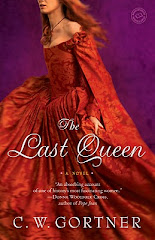
Nowadays, every author is being asked to have a book trailer. Sometimes the publisher pays for it; more often, the author does. Book trailers are absolute requirements for marketing, we're told, yet to date, no one - not the authors nor the publishers - are quite sure just how effective these audio-visual tools really are. I don't have any new insights to offer (though I do have a fantastic book trailer for THE LAST QUEEN) but I have decided that after so many authors go through so much effort and expense to get these trailers made, the least I can do is share them with my blog readers. So, I'm going to start a new feature here on Historical Boys called Book Trailer Sunday, in which I'll post my favorite book trailers, hopefully to incite more of us to watch these often marvelously inventive videos, and then go out and get the book!

This week, I'm featuring Jeri Westerson's splendid new video for her Crispin Guest Medieval Noir series. Enjoy!!

Friday, October 23, 2009

Sevilla, Part 2

The Alcazares Reales of Sevilla, or the royal palace complex, is one of the hidden treasures of this intoxicating city. Overshadowed by the internationally renowned splendor of the Alhambra, few people realize before they step foot inside the complex that it is, in fact, a sublime and gorgeously well preserved example of the Moorish architectural tradition, as well as the Christian one that followed. The photograph to the right shows the entwining of these civilizations in the foundations, as well as columns from the original Roman site. The left shows the medieval fortress entrance; the entire complex is surrounded by walls dating back to the 11th century.

The palace compound began to take shape during the 711 conquest by the Moors, who used the compound as their primary royal residence from 720 onward. When King Fernando III conquered Sevilla in 1238, it became a Christian palace and fortress. Such famous Spanish kings as Alfonso X the Wise, Pedro the Cruel, and Isabella of Castile all resided in the Royal Alcazar of Sevilla. The palace was the scene of Charles V's marriage to Isabel of Portugal, and the Infanta Elena, daughter of Spain's current King Juan Carlos I, held her wedding reception here. The photo to the left shows the gold-vaulted and embossed ceiling of the grand salon, or hall, where many of the palace's pivotal events took place.

The entire palace complex exudes mystique and sensuous echoes of the past; I could well believe that the infamous King Pedro preferred this residence above all others, creating a haven of silk and cinnabar within the royal apartments where he sought to escape the ceaseless intrigues of his nobility. With splendid gardens, painted ceilings and corridors, festooned with stalacite tracery and cool watery passageways, the Royal Alcazares of Sevilla are a world apart, permeated by a long-gone majesty that reminds us of a time of blood and luxury, iron and alabastar; a time when the fractured kingdoms of Spain created some of the most beautiful buildings ever seen.

Friday, October 16, 2009

Next Stop: Sevilla

Taking a day-trip to Sevilla is like taking a day-trip to New York. Sure, you can see a lot, but you'll miss a lot more. Unfortunately, we only had a day in Sevilla, but it's definitely a city I'll visit again and stay in much longer. Truly breathtaking, Sevilla is worthy of its reputation as one of the great architectural beauties. So much so, I'll be doing two separate posts on the city, of which this the first. I must add that Sevilla's legendary heat was also palpable during our visit; though already late September, the sun fell like an anvil on this gorgeous city steeped in the past, which basks on the banks of the River Guadalquivir.

They say that Sevilla simmers but at night it becomes an intoxicating cauldron filled with dama de noche, a fragrant flower vine that grows everywhere on trees in Andalucia and emits its perfume only at night; and, of course, with the scent of oranges. The trees grow in the streets, and while their fruit is sour and unpalatable, the Seville orange's scent is so intense, it was coveted in ancient times for its use in body-oils.

Sevilla has been inhabitated since the 9th century; Carthaginians, Romans, Visigoths, Moors, and Christians have all at one time called this city home. It was named Hispalis by Julius Cesar; toward the end of the Roman Empire, it was one of the most important cities of Empire and center of Christian activity in the Iberian Peninsula before its conquest by the Moors in 711. The Plaza de Espana in the photo to the right, built in 1929, honors both Spain and the city's incredible historical past with mosaics surrounding an impressive palisade.

Like most Spanish cities, Sevilla had a rich centuries-long tradition of Jewish livelihood and wealth, which was tragically lost under the reign of the Catholic monarchs. The quarter has greatly changed and now houses some of the most expensive real estate in the city. Still, as you walk through its narrow streets, past brightly painted houses with Moorish-arched windows hidden by celosias (shutters) you can feel the ghostly remnant of a time when different faiths and races thrived in harmony in Spain, creating one of the most splendid and evanescent civilizations the world has ever seen.

The Cathedral of Sevilla is the largest Gothic cathedral in the world, spanning several blocks and festooned with gargoyles, turrets and buttresses. Built upon the remains of a central mosque, the Cathedral carries its Islamic foundations within the orangerie outside its gates and decorative brickwork. Since 1568, the Cathedral's tower has been crowned by an airy belfry with a bronze weather vane known as El Giraldillo, which has lent its name to the tower La Giralda, known as one of the most famous belltowers in Christendom.
I'll post next about the incredible Royal Alcazares of Sevilla. For now, I leave you here with a photo of a palace in the casco viejo, or historic
center; and of me with one of Sevilla's most venerable residents: the carriage horse.

A Plea for Our Wolves

Once again, I appeal to all of you to help us stand up for wolves in America.


From Defenders of Wildlife:
Yellowstone National Park’s famous Cottonwood Pack has just been destroyed - all the adult wolves have been killed and the surviving pups will likely die without their wolf family. These are just some of the latest victims of the federal government’s likely illegal decision to eliminate vital protections for our wolves in Greater Yellowstone and the northern Rockies. Please sign Defenders of Wildlife's petition and urge Interior Secretary Ken Salazar to immediately take action to restore protections for these amazing animals.The next few weeks will be crucial for wolves in the Greater Yellowstone region. The future of wolves in the northern Rockies is at a crossroads and it will take the voices of caring wildlife supporters to make a difference.

I just signed Defenders' petition to Secretary Salazar and I hope you will, too. Because for me, a world without wolves is a terrible thing to contemplate.
(Image courtsey of First People)

Wednesday, October 7, 2009

Next Stop: Granada

Andalucia in southern Spain is one of the most mountainous regions in the Iberian penninsula. Situated in the mountains of the Sierra Nevada above Malaga lies the jewel-like city of Granada, a now thriving modern metropolis that nevertheless reverberates with the echoes of its rich and multicultural past, where once Jews, Moors and Christians lived in harmony, in a paradise of agricultural and societal abundance. The first picture is of Granada's former Jewish quarter, as seen from the parapets of the Alhambra Palace.

Conquered by Isabel and Fernando in 1492, Granada fell into Christian hands and Isabel ordered a cathedral built on the site of the Moorish mosque. The cathedral is a marvel of pinnacles and Gothic tracery; in its royal chapel lie the sepulchre of the Catholic soveriegns and of Queen Juana of Castile and her treacherous husband, the Archduke Philip. This picture show Juana's sepulchre.
The Moors held the city for over 500 years; however, it was not until the last 300 that they began to build the Alhambra. Subsequent generations of Moorish caliphs added to the palace, amplifying its halls and apartments, and constructing a summer palace for the king and his royal family. This picture shows the Alhambra as seen from the Nasarid summer palace.

The beautiful gardens we see today are from the 16th century; the Moors, with their respect for water, a scarce resource, had orchards and vegetable gardens in the areas where now the modern visitor can bask in sumptuous fountains and greenery. However, the interior patios of the palace, such as the famous Patio of the Lions, were adorned with fruit trees and flower pots, designed to imbue the palace with coolness and fragrance in the heat of the summer months. One of the seven wonders of the world, the Alhambra is truly a spectacular testament to the ingenuity, grace and tenacity of the Moors' dominion in Spain.

Friday, October 2, 2009

Trip to Spain. First Stop: Malaga


I'm back from Spain and I had a wonderful time! I could have stayed twice as long, despite an abrupt turn in the weather toward the end of the trip and a nasty cold. I thought I'd post a few pictures from my trip in the next few posts and explain a little of the incredible history of Andalucia in southern Spain, where my partner and I spent most of our time.
Malaga is an ancient port city, one of the oldest in Spain, where Phoenicians and Moorish civilizations once thrived. The first photo above is of the Alcazaba, the Moorish palace that overlooks the port of Malaga and was the residence of the rulers of the city for hundreds of years before the Catholic Reconquest.

The second photo is of Calle Larios, a thriving shopping street in the center of the city, closed to traffic, that reveals the link between the past and the present. Many of the buildings are 15th to 18th century, their lower stories renovated to accomodate fashionable stores, the upper levels housing some of the most expensive real estate in Malaga.

In the third photo, we see the narrow medieval quarter, with a view of the Cathedral spire in the background. Crowded with local cafes and tapas bars, this area is one of the best to find good, inexpensive food that locals enjoy.
The last picture features the amalgam of cultures prevalent in Malaga: a Moorish doorway, marbled over, in a 16th century church.

Tuesday, September 22, 2009

Guest Post from Jeri Westerson, author of SERPENT IN THE THORNS

Jeri Westerson is one of my favorite new mystery writers, forging a place for herself in the medieval "noir" genre with her exciting Crispin Guest series. In her debut, VEIL OF LIES, Jeri delivered a compelling, gritty portrait of the tangled alleyways and dangers of life in 14th century London and introduced us to Crispin, a disgraced knight struggling to make ends meet as a detective-for-hire. The second in the series, SERPENT IN THE THORNS, promises to be equally engrossing, as a simple-minded tavern girl stirs up trouble for Crispin when a body is found in her room.

As part of her blog tour, Jeri has kindly offered this guest post. Please join me in giving her a warm welcome!

Swan Upping by Jeri Westerson
No, it’s not playing poker with a swan nor is it some sort of illegal and unsavory practice with water fowl. In fact, it has everything to do with legality, monarchs, and, strangely enough, swans.

Swans were an important part of medieval life in London. They were, of course, the most prominent of water fowl on the Thames. And for the most part, they are mute. Much better to have around than geese, which are not by any means mute. Swans were also an important figure in heraldry, on the shields and arms of noble houses. A swan is a noble-looking animal, sleek, elegant, majestic. But they are a bit dim. After all, once the Swan Uppers get the upper hand, as it were, why don’t the silly sods fly away?

So what is Swan Upping? Or a Swan Upper, for that matter? Swan Upping is the twelfth century tradition of counting all the swans on the river Thames. Swan was quite the delicacy for the rich in the Middle Ages, and the head honcho of England naturally wanted to have the majority of the swanage. You had to know how many there were and so, once a year, in the third week of July, the Swan Uppers row up the Thames (see, I knew you thought "Swan Uppers" was swan cocaine), grab swans, and count them. All those unmarked by others, were sent to the king’s table.

In the fifteenth century, swan ownership was shared by the Vitner’s Company and the Dyers Company, two liveried guilds of London. When they went about in their boats, they surround the swans and marked them by nicking their beaks. (Nowadays, the uppers ring the feet of the swans so they know which guild they belong to).

As I said, swan was quite the delicacy. Here’s a lovely roasted swan recipe from Curye on Inglish: English Culinary Manuscripts of the Fourteenth-Century (Including the Forme of Cury) by Constance B. Hieatt and Sharon Butler:

For to prepare a swan. Take & undo him & wash him, & do on a spit & lard him fair & roast him well; & dismember him on the best manner & make a fair carving, & the sauce thereto shall be made in this manner, & it is called: Chaudon. Take the issue of the swan & wash it well, & scour the guts well with salt, & boil the issue all together til it be enough, & then take it up and wash it well & hew it small, & take bread & powder of ginger & of galingale & grind together & temper it with the broth, & color it with the blood. And when it is boiled & ground & strained, salt it, & boil it well together in a small pot & season it with a little vinegar.
Doesn’t that sound tasty?

If you’d like to watch a little swan upping (and who wouldn’t), watch this YouTube offering: http://www.youtube.com/watch?v=KUFB_mH0to0 )

Thank you, Jeri! To find out more about Jeri and her work, please visit her at her website.

Monday, August 31, 2009

Guest Post from Michelle Moran, author of CLEOPATRA'S DAUGHTER

Michelle Moran has carved a niche for herself in bringing to life the tumult and drama of the ancient world. From the intrigues and tragedies of ancient Egypt's most famous queen, NEFERTITI, to the struggles and triumph of her neice in THE HERETIC QUEEN, Michelle has enthralled readers with her vivid descriptions of a legendary time and people. Now, in her third novel, CLEOPATRA'S DAUGHTER, we meet Selene, daughter of Egypt's doomed last pharoah, who is brought as a hostage to Rome along with her brothers, and whose keen instincts for survival help her forge a new life for herself. As colorfully rendered and meticulously researched as Michelle's previous efforts, CLEOPATRA'S DAUGHTER is also a marvelous cross-over historical novel which will appeal to adults and young adults alike.

Michelle has kindly offered me this guest post, which sheds light on her research techniques and the importance of creating an authentic world for her readers. Please join in me in giving Michelle Moran a warm welcome!

Life and Libraries in the Classical Age by Michelle Moran
One of the most frequent questions I’m asked by readers is what life was like two thousand years ago when Julius Caesar walked the corridors of the Senate house and Cleopatra visited Rome. Surprisingly, life for the ancient Romans was not unbelievably different from today. The Romans had many of the little luxuries that we often associate exclusively with the modern world. For example, baths were to be found in every city, and public toilets were viewed as a necessity. The toilets depicted in HBO’s Rome Series are copies of those discovered in Pompeii, where those caught short could find a long stretch of latrines (much like a long bench with different sized holes) and relieve themselves next to their neighbor. Shops sold a variety of wigs, and women could buy irons to put curls their hair. For the rain, there were umbrellas, and for the sun, parasols. Houses for the wealthy were equipped with running water and were often decorated quite lavishly, with elaborate mosaics, painted ceilings, and plush carpets.

In the markets, the eager shopper could find a rich array of silks, along with linen and wool. You could also find slaves, and in this, Roman times certainly differ from our own. While some men spoke out against it, one in three people were enslaved. Most of these slaves came from Greece, or Gaul (an area roughly comprising modern France). Abuse was rampant, and the misery caused by this led desperate men like Spartacus to risk death for freedom.

For those few who were free and wealthy, however, life in Rome provided nearly endless entertainments. As a child, there were dolls and board games to be played with, and as an adult, there was every kind of amusement to be had, from the theatre to the chariot races. Even the poor could afford “bread and circuses,” which, according to Juvenal, was all the Romans were really interested in.

For those more academic minded, however, there were libraries. Although I don’t portray this in Cleopatra’s Daughter, libraries were incredibly noisy places. The male scholars and patrons read aloud to themselves and each other, for nothing was ever read silently (the Romans believed it was impossible!). Other cities were renowned for their learning, too: Pergamum (or Pergamon) was the largest and grandest library in the world. Built by the Greeks, Pergamum became Roman property when Greece was captured and many of its people enslaved. The library was said to be home to more than 200,000 volumes, and it is was in Pergamum that the history of writing was forever changed.

Built by Eumenes II, Pergamum inspired great jealousy in the Egyptian Ptolemies, who believed that their Library of Alexandria was superior. In order to cripple this Greek rival (and also because of crop shortages), Egypt ceased exporting papyrus, on which all manuscripts were written. Looking for an alternative solution, the Library of Pergamum began using parchment, or charta pergamena. For the first time, manuscripts were now being written on thin sheets of calf, sheep or goat’s skin. The result of this change from papyrus to parchment was significant. Now, knowledge could be saved by anyone with access to animal hide. Manuscripts (although still quite rare) were now available to more people. Alas, so impressive was this vast Pergamese library of parchment that Cleopatra asked Marc Antony to ship its entire contents to her as a wedding gift. This transfer marked the end of Pergamum’s scholarly dominance, and is the reason why, today, we remember Alexandria as possessing the ancient world’s greatest library.

Thank you, Michelle! To find out more Michelle Moran and her work, please visit her website.

Thursday, August 27, 2009

Please help save Idaho's Wolves

Once again, Idaho officials have announced that they plan to allow hunters to target the 1,000 wolves in Idaho, shooting and killing up to 220 wolves during this hunting season alone. The aim is to reduce the population by half, which will kill parents and leave many orphaned wolf cubs to starve to death in the harsh winter months ahead. And all this is happening because Secretary of the Interior, Ken Salazar, has rubber-stamped a Bush Administration decision to delist the wolf as an endangered species, though every scientific study done to date emphasizes that the population has not fully recovered and continues to be targeted by cattle ranchers, bounty hunters and ignorant state governors pandering to the hunting community.

If you have ever had the opportunity to see a wolf in the wild, as I have, you would never believe anyone is capable of the cold-blooded slaughter planned in Idaho. Yet in just a few days, more than four thousand - of an estimated 70,000 - wolf-killing permits have already been sold, so I urge you to please help Defenders of Wildlife save these wolves. Go here and fill out the form to send President Obama a message urging him to halt Idaho’s horrific wolf hunt and restore the Endangered Species Act protections for gray wolves in Idaho and Montana. It will only take a few minutes of your time and it could save these magnificent and misunderstood animals for future generations. Thank you!

Wednesday, August 26, 2009

Farewell, Ted Kennedy

This week, the United States lost a great man, an icon from a legendary political family and a tireless champion for human rights. Fallible, charming, often overshadowed by his late brothers, Ted Kennedy created an indelible role for himself in the Senate, where he fought throughout his career for equality for all Americans. From his stance against the first invasion of Iraq to his dedication to women's rights, gay rights, and government-sponsored healthcare that would support the thousands who struggle every day in an insurance-dominated system, Ted Kennedy never wavered in his resolve or devotion to public service.
Farewell, Ted Kennedy. You will be greatly missed.

Tuesday, August 25, 2009

On vacation!

My partner and I are off to southern Spain and Madrid from September 2 - 18. I'll bring back photos and stories, as I'm meeting up with a book group in Marbella to discuss THE LAST QUEEN. I'm also seeing family and friends, and touring Sevilla, Granada and Cordoba.

On the book news front, I recently received approval for my revisions to THE CONFESSIONS OF CATHERINE DE MEDICI, which is exciting. Publication is scheduled for May 25, 2010. I'll keep you posted on developments; for the moment, I'm eagerly awaiting the copyedited manuscript and looking forward to first drafts of cover art - one of the fun parts of bringing a book to print.

While I'm gone, I have two fantastic guest posts lined up: On September 1, Michelle Moran will visit in celebration of the upcoming release of her third novel, CLEOPATRA'S DAUGHTER. Michelle will be blogging about the importance of ancient libraries.

On September 22, Jeri Westerson joins us to celebrate the release of SERPENT IN THE THORNS, the second in her Crispin Guest medieval 'noir' series. Jeri offers us a look at a little-known medieval custom called 'swan upping.'

Have a safe and fun end of summer, and I'll look forward to catching up with you on my return!

Monday, August 10, 2009

Winners of the INVASION giveaway!

Here are the 5 winners of the INVASION giveaway, as determined by random.org. Please send your full mailing address to me by August 12 at: cwgortner[at]earthlink.net so I can forward these to the publisher, who'll mail out the copies. Congratulations and thanks to all of you who entered!
1) Buddy T.
2) Justin Aucoin
3) Terry Carine
4) Jess
5) Linda

Wednesday, July 29, 2009

Don't Defame The Dead

Given the continuing surge in historical fiction’s popularity, backlash was inevitable. First, it was an article in the UK Guardian, in which certain historians bemoaned the success of historical novelists, which in turn has lowered historical nonfiction’s profile and their own advances, and even led some to defect to a genre they clearly feel is beneath them. Now, in a recent article in the same Guardian, historian Anthony Beevor makes his case against what he dubs “histo-tainment”, stating: “…when the historical novel is made into a TV play or film the process of faction-creep accelerates. From selling fiction as truth in books and movies to the big lies of counter-knowledge is not such a very big step after all. The key point, surely, is that we play with facts at our peril.”

Earlier in the article, Mr Beevor argues that the trend of fictionalizing actual events in film and, to a lesser degree, books corrupts history and misleads us as a culture. We are losing a sense of our historical past and giving conspiracy theorists the upper hand, as these thrive in a fact-deprived environment. He mentions hearing a young man whisper in the row behind him at the end of The Da Vinci Code movie, “It makes you think, doesn’t it?” and not knowing whether to laugh or be appalled. Well, neither do I – but mostly because Mr. Beevor evidently paid to see the film.

In any event, the article ruffled my fur. First of all, as a historical fiction novelist I strive to remain as true to facts as possible and I know most of my respected colleagues do the same. Some of us even have a saying: "Don’t defame the dead." Yet for years, the lofty gatekeepers of academia have looked down on historical fiction novelists as second-rate hacks who can never fully achieve the illusory veracity of history. Much of their disdain reads like sour grapes; nevertheless, everyone has a right to their opinion. That said, most historical fiction writers do not set out to castrate history; while the words ‘a novel’ are emblazoned on our covers, we take our research very seriously – sometimes, to our editors’ despair, too seriously.

No one can argue that Story is the primary component of commercial fiction, the arena where historical fiction competes for readers; within this vast arena, maintaining factual veracity at all times is not so simple. For starters, history itself is contradictory. Seek out three sources on the Tudors and I guarantee you’ll find different opinions on Henry VIII. The historical novelist’s task is therefore complex: we must research everything there is to find out; distill this unwieldy mass of information into what is relevant to our particular book; and, in the case of contradictory facts, make decisions about what probably happened based on what we know about the era, the event, the character in question—all the while never forgetting the dictates of Story. Factual accuracy is essential. But within a finite amount of words, we know going in that not everything that happened to our Historical Protagonist will make it into the book. And sometimes, painful as it can be, we must modify or alter situations and characters to create a seamless narrative, because unlike the historian or biographer for the historical novelist the biggest challenge is what not to include.

The truth is, our readers and our editors require the same ingredients from us that they require from any novelist: complex, interesting characters; a well-constructed plot, and, above all else, irresistible story. At best, historical fiction draws them into the past and gives them a sense of what life might have been like. If their imagination ignites, they’ll hopefully seek out more fiction and nonfiction on the subject. At worst, historical fiction is just entertainment, on par with much commercial fiction published today. Some writers do it better than others; but it should never be mistaken for History. It is fiction, based on actual events, people and eras, so there is no excuse for sloppy research. A historical novelist worth his or her salt will not show Lucrezia Borgia plugging in the can opener. Still, when it comes to story . . . well, that can depend on who’s telling it.

I believe historical fiction writers bear the responsibility to adhere to known facts and not go hog-wild re-inventing the past to suit their whims; but I also believe that as readers, we bear equal responsibility to not believe everything we read.

Tuesday, July 21, 2009

INVASION Giveaway!

I'm proud to announce my first official ARC giveaway on Historical Boys. McBooks Press has kindly offered 5 advance reading copies of INVASION, part of the popular Thomas Kydd series by Julian Stockwin.

This a great series set in the 18th century, full of adventure on the high seas. In INVASION, Napoleon’s army is massing for an invasion of England, relying on American inventor Robert Fulton's "infernal machines" - creations that Fulton claims can wreak mass destruction.

But the English employ a clever scheme to bring Fulton over to their side. The plan calls for Kydd's friend Renzi to help the inventor escape Revolutionary France and develop the devices in England. Though Kydd believes that standing man-to-man is the only honorable way to fight, he agrees to take part in the crucial testing of these new long-range weapons and finds himself embroiled in a fight that will determine the fate of nations.

The Kydd series summary: In 1793, twenty-year-old Thomas Kydd earns his living as a wig-maker in England, only dimly aware of the war breaking out across Europe. When he is seized by a Royal Navy press-gang and forced to be part of the crew of the 98-gun man-o’-war Duke William, he meets the mysterious Nicholas Renzi, a man with a past, who is destined to become Kydd’s greatest friend through many dangers and adventures. Kydd soon finds that he is a born sailor and a natural leader, and has no wish to return to his old life. And as Renzi knows only too well, times are changing: for the first time, a man like Kydd has the chance to rise all the way to the top.

To win one of these exciting ARCs, just leave a comment here on this post. Please make sure to include a way for me to contact you. I'll randomly draw five winners on August 10. Best of luck!

Thursday, July 9, 2009

Interview with Rory Clements, author of MARTYR

As some of you may know, I'm a big fan of historical thrillers, so I was excited when I heard about MARTYR by Rory Clements, a novel set in the later years of Elizabeth I's reign that introduces us to the intelligencer John Shakespeare, older brother of the playwright. While investigating the brutal murder of a noblewoman, Shakespeare finds himself drawn into an assasination plot against Sir Francis Drake and the hunt for a deadly Jesuit; what he discovers will shake his belief in himself and the world around him. (Picture: US cover / Bantam)
Mr Clements excels in his debut. While he can write spine-tingling action with flair, his best asset is his ability to render believable, flawed characters, as well as the complexities of a society torn apart by religious discord, poverty, and greed. I invited the author to an interview and I'm delighted to introduce him to you here on Historical Boys. Please join me in giving a warm welcome to Rory Clements!

1. Congratulations on the publication of MARTYR. It's an honor to have you with us. Set in the Elizabethan era shortly before the Armada invasion, MARTYR depicts a dark and dangerous time of religious discord in England, and introduces us to the intelligencer John Shakespeare, older brother of the famous playwright. This is not the habitual look at Queen Elizabeth's reign, which is usually given a Renaissance Faire air, but rather a gritty true-to-history depiction of the intrigue and violence that both Catholics and Protestants indulged in to further their cause. Through Shakespeare's adventures, you offer a balanced look at this terrible conflict. What inspired you to write about this particular time in the Tudor period?
Difficult question - it’s a bit like asking a junkie what inspired him to take up heroin. The truth is I’m not entirely sure what drew me in, but I confess that I am now well and truly addicted to the late 16th century – it’s where I have lived a lot of my internal life these past fifteen years or so.
Hollywood barely scratches the surface of Elizabeth’s England, which is a shame because there are a lot of great stories down there. For me, the bit-part players are often more interesting than the well-known knights and nobles. Take my villain Richard Topcliffe, a licensed brute and rapist who makes Goldfinger look like a charity worker. One US reviewer in the School Library Journal asks whether he could be so consistently evil. Well, yes, I’m afraid he was – and he evidently delighted in his cruelty.

Nor was Elizabeth a saint. She ruled with ferocity and connived at the tearing apart of men’s and women’s bodies for the “crime” of being a Catholic (though it was dressed up as treason). But she was also a very cultured lady without whom there would have been no Will Shakespeare, Christopher Marlowe or Ben Jonson.

In your question you say I offer a balanced look at the conflict. I was glad you said that, because I tried hard to be fair. There were atrocities on both sides and the threat to England in 1587 must have seemed as real and terrifying as the threat posed by Hitler in 1939.

2. MARTYR is a great read, fast-paced, involving, and full of twists and turns. It also offers a vivid and rare depiction of the common people of London, including prostitutes, tavern keepers, and others. You also bring give us a fascinating look at the ways in which Jesuit priests inflitrated the country, were hidden by sympathizers and hunted down by men in the Queen's pay. What surprising or interesting facts did you discover about the way these common people lived and how they were affected by religious issues?
I discovered their incredible courage and their utter belief in their own versions of Christianity. As an occasional church-goer who was brought up in the Church of England, I cannot imagine being willing to die for my faith. But in the 16th century many ordinary English people were prepared to undergo the torments of fire and steel for their beliefs. One man, a tailor named Nicholas Horner, was hanged by Topcliffe simply for making a jerkin for a priest. (Picture: UK cover /John Murray)

3. A key plotline within the novel is Shakespeare’s struggle to save Sir Francis Drake from a Catholic assasination attempt. How much of this is based on actual events?
In 1582, King Philip of Spain put a price of 20,000 ducats on Drake’s head. I mention this in Martyr. My 1587 plot is fictional – but it certainly wouldn’t be a major surprise if there had been other attempts on his life which went unreported. One thing is certain – Philip was happy to resort to political assassination to further his cause, as he proved in the case of the killing of William the Silent in 1584.
4. Besides John Shakespeare, of all the other characters in the book, which ones did you most enjoy creating and which presented the greatest challenge?
I love Drake. He wasn’t big physically, but his character was huge. I just hope I have done him justice. But I didn’t create Drake, I just interpreted him. I did enjoy creating Boltfoot Cooper, Gilbert Cogg, Harry Slide and Starling Day. All the ordinary folks, the people who don’t get their names in the history books.
5. Can you tell us about your journey to publication?
This goes back a long way. I always wanted to write novels, so I went into journalism hoping it would teach me to write well. I don’t know if it did – but I think it probably taught me to spot a good story and tell it clearly and with verve. I have tried my hand at various novels along the way, but without much conviction because earning my daily bread always intruded.
Then some years ago, as I became more and more engrossed in the Elizabethan era, I conceived the basic idea for the John Shakespeare series. It took me a long time to work it all out but finally, in 2007, I had time to give it my undivided attention. I wrote off to an agent called Teresa Chris (who seemed to fit the bill as she was listed as liking crime novels and historicals). She called me back and said she liked the idea but I had to write it first – she couldn’t sell it on the basis of a synopsis. So I settled down to write and six months later I felt it was ready.
I sent the finished manuscript to Teresa. She contacted me within days saying she loved it. A few days later it had been bought in a pre-emptive strike by Kate Miciak at Bantam Dell in America. That was one of the best days of my life. Soon after that, it sold to John Murray in the UK, Karakter in Holland, Piemme in Italy, Lubbe in Germany and Agave in Hungary.
6. How do you think your novel speaks to today’s reader or how do the events you evoke resonate in today’s world?
There are obvious echoes. You might think that Darwin would have done for religious strife, but it looms as large as ever. As for terrorism, political assassination and torture, well, what’s changed? That said, I do hope my book resonates with today’s readers. I have tried to give it a modern edge because, let’s face it, the Elizabethans saw themselves as the most modern, enlightened people there had ever been – just as we do today. This was the age of William Shakespeare, for heaven’s sake!
7. Please, tell us about your next project.
My next book, the second in the John Shakespeare series, is called Revenger and is scheduled to be published by Bantam Dell in the US next spring/summer. It’s 1592 - five years on – and Walsingham is dead. With Elizabeth about to enter her 60th year, the question of who will succeed her is more fevered than ever. Meanwhile, her courtiers Essex, Ralegh and Cecil are fighting like ferrets in a sack. And there is a dark mystery to solve – with a distinctive American flavour to it. Don’t forget, England had a foot in America long before the Pilgrim Fathers ever arrived…
Thank you, Rory. I'm really looking forward to your next book and we wish you much success. To find out more about Rory and his work, please visit:

Sunday, June 28, 2009

Enter for a Chance to see Pope Joan Premiere!

Donna Woolfolk Cross's Pope Joan is one of my favorite historical novels; a sweeping and gritty look at Europe in the Dark Ages and one woman's determination to rise above the confines of her gender as the first female pope. Due in large part to Donna's amazing perseverance and dedication to promotion, Pope Joan is now an international bestseller and has been released in a new edition by Three Rivers Press. The novel has also become a film, which I cannot wait to see, and Donna is offering one lucky reader the chance to join her on the red carpet for the premiere. Historical fiction and film are two of my favorite passions, so I just couldn't resist posting Donna's contest. Go ahead: enter, and good luck! Oh, and if you need a guest, I'm always available for premieres. You can see the German language trailer here.

Join Donna and her family as they walk the red carpet on the night of the Pope Joan movie premiere! The winning entry includes two tickets to the movie premiere, plus round trip airfare for two from any location in the continental United States or Canada, and one night hotel accommodation for you to share with your guest. To enter, just buy the Three Rivers Press/Crown Publishing paperback edition of Pope Joan during the months of June or July 2009 and send Donna the original receipt. In August, she'll pick randomly from the pile of receipts to select someone and their guest to join her at the U.S. movie premiere in the fall (exact date still to be determined).
For more information, visit Donna's official contest website.