A wonderful review for THE TUDOR SECRET from Book List:
In 1553, England is a dangerous place to be. King Edward is on his deathbed. Vying for the crown are Elizabeth, her half sister Mary, and their cousin, Lady Jane Grey, who is manipulated by her powerful father-in-law. Into the midst of all this drama rides Brendan Prescott, a 20-year-old orphan raised by the servants at the Duke of Northumberland’s country home. Sent to court to serve the duke’s sons, one of his first tasks is to deliver a secret missive to Elizabeth. But Brendan is soon lured by Elizabeth’s protector, William Cecil, into working for Elizabeth instead, as Cecil promises to help Brendan decipher the mystery of his parentage. Amid crosses and double crosses, Brendan realizes he has to choose a side, for the issue of succession to the throne quickly becomes a matter of life and death—and not just for the potential monarch. An exciting, vividly rendered story of intrigue and espionage. - Hilary Hatton
Wednesday, February 2, 2011


TUDOR SECRET Blog Tour Day 2
Today, you can find a guest post on Elizabeth and Robert Dudey, and a giveaway, at A Cozy Reader's Corner Reviews.
Tuesday, February 1, 2011
TUDOR SECRET Blog Tour Starts Today!
Today is publication day for THE TUDOR SECRET! And my official blog tour begins. I'm very excited to be visiting some new blogs as well as returning to some favorites; you can see my schedule on the right by clicking on my tour banner. In addition, I have a few unscheduled stops, so just check in here daily if you want to follow me. Thank you to all of you who have bought my books (or are thinking of buying:) I hope you enjoy my latest one as much as I enjoyed writing it.
Today, you can read an interview at:
As The Pages Turn
A guest post at:
Writing The Renaissance
And a review at:
The Musings of ALMYBNENR
For a giveaway of the book, visit:
The Tudor Book Blog
Today, you can read an interview at:
As The Pages Turn
A guest post at:
Writing The Renaissance
And a review at:
The Musings of ALMYBNENR
For a giveaway of the book, visit:
The Tudor Book Blog
Monday, January 31, 2011
C.W. Gortner interviews Sandra Worth and vice-versa
To celebrate tomorrow's release of THE TUDOR SECRET and of my friend Sandra Worth's new novel, PALE ROSE OF ENGLAND, I invited Sandra to be interviewed. Nothing is nicer on a release day than to take the pressure off by talking about someone else's book, but Sandra wanted to interview me, as well, so we decided to make this a joint celebration.
C.W. Gortner interviews Sandra Worth:
1) Congratulations on your new novel, PALE ROSE OF ENGLAND. Please tell us what inspired you to write this story.
 Hi, Christopher! Thank you for having me here today.
Pale Rose of England relates the story of the Pretender that the Tudors called “Perkin Warbeck” and his love affair with the beautiful Scottish princess, Lady Catherine Gordon. I had written five previous novels on the Wars of the Roses, and never believed that Richard III had strangled his two nephews to death. I was one of those who thought he had smuggled the younger prince out of the country for his own safety—a narrative I presented in The Rose of York: Fall from Grace.
When a wonderful new book came out recently on the Pretender, I found a great deal of information there to confirm my sense that the Pretender really was King Edward’s younger son, Richard, Duke of York. So I asked myself, What would have been like for him?
Pale Rose of England was the result.
2) This book closes out your series of novels set in time of the Plantagenets. What do you find so fascinating about this particular era?
The Wars of the Roses is a colorful time of knights, and girls in long dresses, intrigue, and war. It has an Arthurian feel, maybe because Sir Thomas Malory who wrote Morte d’Arthur lived and wrote his tales of King Arthur’s court during this time. The love stories that populate the period bear amazing resemblance to those we cherish. There’s Romeo and Juliet, where young a pair of lovers are swept apart by the family feud and reunited through the power of love. And there’s Cinderella, where a handsome prince rescues the girl he loves from the kitchen where she has been enslaved. There’s also so much more. It’s hard to resist the allure of the Wars of the Roses!
3) Do you travel to see the sites you write about? If so, why do you find it important?
For me, travel is the best part of writing. I make it a point to visit the places I write about and find it vitally necessary to retrace my character’s footsteps. It gives me a feel for the lay of the land, the vegetation, the scent of the air, and what my characters may have seen and felt as they went about their lives. It never fails to help. Sometimes, if I’m lucky, standing there where they stood, and gazing on what they saw, a scene will leap into my mind. Those are the most rewarding moments.
For Pale Rose of England it was St. Michael’s Mount that proved invaluable. Climbing those massive stone steps hewn into the mountainside with the fierce wind from the sea blowing in my face, I was aware with every breath and every step I took that Catherine and Richard had climbed those same steps before me five hundred years earlier. I had the strongest sense of them in that place. Not only did I see what they saw as they looked around, but I felt what they might have felt as they made their way up to the fortress on the Mount with the dreams that lived in their hearts.
4) What do you find most challenging about recreating the past in fiction?
Not changing the historical record to suit my convenience! Many times I’ve wished I didn’t have to jump the hurdles that facts put in my way, and many times I just wanted to change the ending. That’s an emotional reaction, because history can be so cruel, but I always stick with the facts as best I can. It’s just a question of taste and style. There are authors (and readers) who prefer stories where imagination predominates, and authors like me (and readers like mine) who prefer stories where accuracy prevails.
5) Can you give us a hint of what you're working on next?
I’m halfway through a novel set a long way from England—in a time of war, tumult, drama, upheaval and great passion. I can’t say more than that right now because I’m superstitious and don’t want to jinx my book. But it’s one amazing story and I’m having so much fun writing it!!
Thanks so much, Christopher, for having me here, and good luck with your Feb. 1st release!
Sandra Worth Interviews C.W. Gortner:
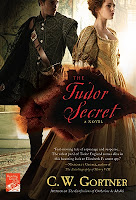 1) Congratulations on your new novel, THE TUDOR SECRET. This is a spy novel and quite a different genre from your historical fiction novels on Juana La Loca and Catherine de Medici. Can you tell us why you felt you wanted to try a new direction? What is the attraction of writing a political thriller set in Tudor times?
Hi Sandra, thanks for interviewing me!
I hadn’t planned to write a political thriller set in Tudor times. Actually, I was researching another character for a possible novel when I stumbled upon research about the birth of the Tudor intelligencer, or espionage, system. I was fascinated. I knew that Elizabeth I had been protected by one of the most sophisticated intelligence systems in the world but I’d never stopped to consider the details of what being a Tudor spy might entail, or what the seeds of that service might have looked like before Elizabeth assumed her throne. While the Tudors have been covered from nearly every angle, nothing I’d read explored the possibility that Elizabeth may have had her own intimate spy, someone devoted to her special interests— and someone who had his own deadly secret. I was so inspired that I started drafting the outline for THE TUDOR SECRET; while unsure about embarking on a new direction, once I began writing I realized that I really enjoyed some of the liberties working with purely fictional characters allowed. While my book interweaves factual people and storylines, I could also give rein to my imagination.
2) This book opens an entirely new series for you. How can you keep a spy series going when you are also doing research for another Historical Fiction novel? Do you ever feel overwhelmed? Do you ever confuse the characters?
I don't get the stories or characters confused because the books are so different. I also don’t work on them at the same time! Also, I try to keep my Tudor series separate from my stand-alone novels, in that I won’t write a stand-alone book set in the same time-frame as one of the Spymaster books. Earlier or later is fine, but not the same.
3) Do you visit the places you write about? If so, why do you feel it’s important, and what is the most memorable thing that happened to you during a research trip?
I always travel to the places I write about. For me, it’s vital to see the actual sites where my characters lived, no matter how much they may have changed. I often return from research trips revitalized; landscape, internal and external, is very important to me. The most memorable thing that happened to me during a research trip was at the Chateau of Chenonceau in the Loire valley. I was researching Catherine de Medici and the manuscript was not working at all for me. I kept feeling as if Catherine herself eluded me. But when I visited her chateau and saw for myself the uniquely feminine Renaissance spirit she had infused into it, it opened my mind. I realized I’d been seeing Catherine just as her legend described— unemotional, ruthless, devoted solely to the pursuit of power. Her chateau revealed a secret side of her to me, a Catherine I think very few got to see, and it inspired me to delve further beneath her exterior, to discover the woman she might have been.
4) What do you like most about- and dislike most - about recreating the past in fiction?
I like creating the sensation – sound, smell, taste, sight— of the past in fiction, to walk through Tudor London with my lead character, Brendan, and experience the city in all its squalor and glamour, just as he does. I dislike having to depict some of the harsher realities of the time, especially cruelty to women and animals. I often say that while I love visiting the past, I don’t want to reside there permanently.
5) Can you tell us what you're working on now?
I just finished a stand-alone novel about Isabella of Castile, which is currently with my editor at Ballantine Books. I’m now writing the second book in the Spymaster series, which takes Brendan back to court in the months before Mary Tudor’s marriage to Philip II and embroils him in another deadly plot against Elizabeth. This time, however, Brendan is savvier and believes he knows what he’s up against. He’s in for some very dark surprises.
Thank you, Sandra, and I wish you much success with your new book!
C.W. Gortner interviews Sandra Worth:
1) Congratulations on your new novel, PALE ROSE OF ENGLAND. Please tell us what inspired you to write this story.
 Hi, Christopher! Thank you for having me here today.
Pale Rose of England relates the story of the Pretender that the Tudors called “Perkin Warbeck” and his love affair with the beautiful Scottish princess, Lady Catherine Gordon. I had written five previous novels on the Wars of the Roses, and never believed that Richard III had strangled his two nephews to death. I was one of those who thought he had smuggled the younger prince out of the country for his own safety—a narrative I presented in The Rose of York: Fall from Grace.
When a wonderful new book came out recently on the Pretender, I found a great deal of information there to confirm my sense that the Pretender really was King Edward’s younger son, Richard, Duke of York. So I asked myself, What would have been like for him?
Pale Rose of England was the result.
2) This book closes out your series of novels set in time of the Plantagenets. What do you find so fascinating about this particular era?
The Wars of the Roses is a colorful time of knights, and girls in long dresses, intrigue, and war. It has an Arthurian feel, maybe because Sir Thomas Malory who wrote Morte d’Arthur lived and wrote his tales of King Arthur’s court during this time. The love stories that populate the period bear amazing resemblance to those we cherish. There’s Romeo and Juliet, where young a pair of lovers are swept apart by the family feud and reunited through the power of love. And there’s Cinderella, where a handsome prince rescues the girl he loves from the kitchen where she has been enslaved. There’s also so much more. It’s hard to resist the allure of the Wars of the Roses!
3) Do you travel to see the sites you write about? If so, why do you find it important?
For me, travel is the best part of writing. I make it a point to visit the places I write about and find it vitally necessary to retrace my character’s footsteps. It gives me a feel for the lay of the land, the vegetation, the scent of the air, and what my characters may have seen and felt as they went about their lives. It never fails to help. Sometimes, if I’m lucky, standing there where they stood, and gazing on what they saw, a scene will leap into my mind. Those are the most rewarding moments.
For Pale Rose of England it was St. Michael’s Mount that proved invaluable. Climbing those massive stone steps hewn into the mountainside with the fierce wind from the sea blowing in my face, I was aware with every breath and every step I took that Catherine and Richard had climbed those same steps before me five hundred years earlier. I had the strongest sense of them in that place. Not only did I see what they saw as they looked around, but I felt what they might have felt as they made their way up to the fortress on the Mount with the dreams that lived in their hearts.
4) What do you find most challenging about recreating the past in fiction?
Not changing the historical record to suit my convenience! Many times I’ve wished I didn’t have to jump the hurdles that facts put in my way, and many times I just wanted to change the ending. That’s an emotional reaction, because history can be so cruel, but I always stick with the facts as best I can. It’s just a question of taste and style. There are authors (and readers) who prefer stories where imagination predominates, and authors like me (and readers like mine) who prefer stories where accuracy prevails.
5) Can you give us a hint of what you're working on next?
I’m halfway through a novel set a long way from England—in a time of war, tumult, drama, upheaval and great passion. I can’t say more than that right now because I’m superstitious and don’t want to jinx my book. But it’s one amazing story and I’m having so much fun writing it!!
Thanks so much, Christopher, for having me here, and good luck with your Feb. 1st release!
Sandra Worth Interviews C.W. Gortner:
 1) Congratulations on your new novel, THE TUDOR SECRET. This is a spy novel and quite a different genre from your historical fiction novels on Juana La Loca and Catherine de Medici. Can you tell us why you felt you wanted to try a new direction? What is the attraction of writing a political thriller set in Tudor times?
Hi Sandra, thanks for interviewing me!
I hadn’t planned to write a political thriller set in Tudor times. Actually, I was researching another character for a possible novel when I stumbled upon research about the birth of the Tudor intelligencer, or espionage, system. I was fascinated. I knew that Elizabeth I had been protected by one of the most sophisticated intelligence systems in the world but I’d never stopped to consider the details of what being a Tudor spy might entail, or what the seeds of that service might have looked like before Elizabeth assumed her throne. While the Tudors have been covered from nearly every angle, nothing I’d read explored the possibility that Elizabeth may have had her own intimate spy, someone devoted to her special interests— and someone who had his own deadly secret. I was so inspired that I started drafting the outline for THE TUDOR SECRET; while unsure about embarking on a new direction, once I began writing I realized that I really enjoyed some of the liberties working with purely fictional characters allowed. While my book interweaves factual people and storylines, I could also give rein to my imagination.
2) This book opens an entirely new series for you. How can you keep a spy series going when you are also doing research for another Historical Fiction novel? Do you ever feel overwhelmed? Do you ever confuse the characters?
I don't get the stories or characters confused because the books are so different. I also don’t work on them at the same time! Also, I try to keep my Tudor series separate from my stand-alone novels, in that I won’t write a stand-alone book set in the same time-frame as one of the Spymaster books. Earlier or later is fine, but not the same.
3) Do you visit the places you write about? If so, why do you feel it’s important, and what is the most memorable thing that happened to you during a research trip?
I always travel to the places I write about. For me, it’s vital to see the actual sites where my characters lived, no matter how much they may have changed. I often return from research trips revitalized; landscape, internal and external, is very important to me. The most memorable thing that happened to me during a research trip was at the Chateau of Chenonceau in the Loire valley. I was researching Catherine de Medici and the manuscript was not working at all for me. I kept feeling as if Catherine herself eluded me. But when I visited her chateau and saw for myself the uniquely feminine Renaissance spirit she had infused into it, it opened my mind. I realized I’d been seeing Catherine just as her legend described— unemotional, ruthless, devoted solely to the pursuit of power. Her chateau revealed a secret side of her to me, a Catherine I think very few got to see, and it inspired me to delve further beneath her exterior, to discover the woman she might have been.
4) What do you like most about- and dislike most - about recreating the past in fiction?
I like creating the sensation – sound, smell, taste, sight— of the past in fiction, to walk through Tudor London with my lead character, Brendan, and experience the city in all its squalor and glamour, just as he does. I dislike having to depict some of the harsher realities of the time, especially cruelty to women and animals. I often say that while I love visiting the past, I don’t want to reside there permanently.
5) Can you tell us what you're working on now?
I just finished a stand-alone novel about Isabella of Castile, which is currently with my editor at Ballantine Books. I’m now writing the second book in the Spymaster series, which takes Brendan back to court in the months before Mary Tudor’s marriage to Philip II and embroils him in another deadly plot against Elizabeth. This time, however, Brendan is savvier and believes he knows what he’s up against. He’s in for some very dark surprises.
Thank you, Sandra, and I wish you much success with your new book!
Monday, January 24, 2011
New reviews for THE TUDOR SECRET
Three new reviews in for THE TUDOR SECRET, plus I just found out the Historical Novel Reviews has chosen the book as a February Editors' Choice title. Very exciting!
From Romantic Times: "Even Tudor fans who know the main players and historical backdrop will be captivated . . . [Gortner] juxtaposes his naive and loyal hero with the cruel Robert Dudley, enhancing the plot and grabbing reader interest as much as the quick pace and lush historical references. This novel is both entertaining and thoughtful." (Reviewer: Kathe Robin)
From Night Owl Reviews: "C.W. Gortner always does a wonderful job bringing historical characters to life, and The Tudor Secret is no less entertaining . . .filled with intrigue, danger and royal secrets, Gortner has created a book that will delight fans." (Reviewer: Danya)
From Biblioklept: "A tightly-plotted, quick-paced read, stuffed with animated historical characters buzzing around in a world of espionage and intrigue."
Only a few days left until publication! My schedule of blog tour stops are online here.
From Romantic Times: "Even Tudor fans who know the main players and historical backdrop will be captivated . . . [Gortner] juxtaposes his naive and loyal hero with the cruel Robert Dudley, enhancing the plot and grabbing reader interest as much as the quick pace and lush historical references. This novel is both entertaining and thoughtful." (Reviewer: Kathe Robin)
From Night Owl Reviews: "C.W. Gortner always does a wonderful job bringing historical characters to life, and The Tudor Secret is no less entertaining . . .filled with intrigue, danger and royal secrets, Gortner has created a book that will delight fans." (Reviewer: Danya)
From Biblioklept: "A tightly-plotted, quick-paced read, stuffed with animated historical characters buzzing around in a world of espionage and intrigue."
Only a few days left until publication! My schedule of blog tour stops are online here.
Friday, January 21, 2011
Q&A at Justin Aucoin.com
Though my official blog tour for THE TUDOR SECRET starts February 1, fellow writer and historical thriller fan, Justin Aucoin, interviewed me recently on his blog. I hope you enjoy the interview, which offers a sneak peek into my reason for writing this new book as well as my thoughts on historical fiction and publishing. Justin had some very interesting questions that were fun to answer!
Thank you, Justin, for this opportunity. Coming from a reader, it's all the more special to me.
Thank you, Justin, for this opportunity. Coming from a reader, it's all the more special to me.
Wednesday, January 19, 2011
For Bloggers: If you want to review, let me know!
The 10 free copies of THE TUDOR SECRET which I was offering via my previous post were snapped up in less than 24 hours! However, I'll be getting some more copies in, so if you are a blogger with more than 15 followers; are focused on book reviews; and are not taking part of my official blog tour, please do send me a request via this link.
While I can't guarantee to fulfill every request, I promise to do my utmost. Blogger support means a lot to me, and I really enjoy working with you and your readers. In most cases, I am also available for Q&A and/or chats with your readers.
Lastly, I'm always available for author chats with book groups via Skype or speaker phone. Book groups can contact me here.
Thanks again!
While I can't guarantee to fulfill every request, I promise to do my utmost. Blogger support means a lot to me, and I really enjoy working with you and your readers. In most cases, I am also available for Q&A and/or chats with your readers.
Lastly, I'm always available for author chats with book groups via Skype or speaker phone. Book groups can contact me here.
Thanks again!
Monday, January 17, 2011
10 copies of THE TUDOR SECRET available for bloggers
**UPDATE: Copies gone!!** It's almost here! February 1 is right around the corner, and in celebration of the upcoming release of THE TUDOR SECRET, I am offering 10 free review copies to bloggers who are not signed up for my official blog tour. In order to qualify, blogs must have at least 15 followers and carry a focus on book reviews. I'll ship internationally, of course, depending on the number of entries I get.
These free copies are courtsey of St Martin's Press and I will sign each one individually. In exchange, we do ask that reviews be posted in the months of February or March. I'm also available for Q&A, if you'd like, but it is not required :)
If you're interested, please contact me via my website here. Thank you to all of you who blog about books! I really am so grateful to you for everything you do.
These free copies are courtsey of St Martin's Press and I will sign each one individually. In exchange, we do ask that reviews be posted in the months of February or March. I'm also available for Q&A, if you'd like, but it is not required :)
If you're interested, please contact me via my website here. Thank you to all of you who blog about books! I really am so grateful to you for everything you do.
Thursday, January 6, 2011
UK Publications!
Today is the publication date in the UK of THE CONFESSIONS OF CATHERINE DE ME DICI in paperb
 ack and THE TUDOR SECRET in hardcover. (In the US, CONFESSIONS will be released in trade paperback on May 24 and THE TUDOR SECRET on February 1.)
 DICI in paperb
 ack and THE TUDOR SECRET in hardcover. (In the US, CONFESSIONS will be released in trade paperback on May 24 and THE TUDOR SECRET on February 1.)
 Thank you to my fabulous publisher in the UK, Hodder & Stoughton, for their incredible support and these gorgeous covers. My UK readers can purchase these books wherever books are sold; right now on amazon uk, CONFESSIONS is 50% off!!
Tuesday, January 4, 2011
Thank you to all the Bloggers!
2010 was a great and very busy year for me, professionally. In May, Ballantine Books published my second novel, The Confessions of Catherine de Medici, to excellent reviews. I also wrapped up the editorial polish on my forthcoming historical thriller, The Tudor Secret, Book I in the Elizabeth I Spymaster Chronicles, and finished my third stand-alone historical novel on Isabella of Castile, which is now with my editor at Ballantine. Toward the end of the year, I began writing the second book in the Spymaster series. Whew!
Along the way, bloggers were my champions. They supported my work, featuring me with interviews, reviews, guest posts, as well as a fabulous Historical Fiction Roundtable launch event. Bloggers have helped immensely to get the word out about my - and many other authors' - books, often in their spare time, between jobs, kids, crises, and responsabilities of their own. For me, bloggers are the unsung heroes and heroines of the book industry: they are making the difference for many writers in a time when review space at periodicals is vanishing and only the top bestsellers are getting much in the way of media attention.
Therefore, for me the Persons of the Year are bloggers. Each of you helped make 2010 a stellar year for me and I am so very grateful for your support. I hope to contine visiting your blogs and entertaining you and your readers for many years to come.
A very special thank you goes out as well to the following bloggers who've listed my book on their Best of 2010 Lists, as well as the incomparable Lizzy Johnson at Historically Obsessed and Allie Greenwald at Hist Fic Chick, for their friendship, enthusiasm, and laughter:
Passages to the Past
Historical Tapestry
The Eclectic Reader
Saavy Verse and Wit
Along the way, bloggers were my champions. They supported my work, featuring me with interviews, reviews, guest posts, as well as a fabulous Historical Fiction Roundtable launch event. Bloggers have helped immensely to get the word out about my - and many other authors' - books, often in their spare time, between jobs, kids, crises, and responsabilities of their own. For me, bloggers are the unsung heroes and heroines of the book industry: they are making the difference for many writers in a time when review space at periodicals is vanishing and only the top bestsellers are getting much in the way of media attention.
Therefore, for me the Persons of the Year are bloggers. Each of you helped make 2010 a stellar year for me and I am so very grateful for your support. I hope to contine visiting your blogs and entertaining you and your readers for many years to come.
A very special thank you goes out as well to the following bloggers who've listed my book on their Best of 2010 Lists, as well as the incomparable Lizzy Johnson at Historically Obsessed and Allie Greenwald at Hist Fic Chick, for their friendship, enthusiasm, and laughter:
Passages to the Past
Historical Tapestry
The Eclectic Reader
Saavy Verse and Wit
Wednesday, December 8, 2010
Happy Holidays and an Update
 The holidays are almost upon us! Wow, this year seems to have flown by. I read some marvelous novels this year and hope to do a round-up of my favorites in January, before the TBR pile starts to build again with 2011's offerings.
On the writing front, I'm happy to report that I recently delivered the manuscript of my third historical novel (tentatively titled, I, ISABELLA OF CASTILE) to my editor at Ballantine Books. While she reads it and provides feedback, I'm hard at work on the second novel in my Elizabeth I Spymaster Chronicles. In this second installment, our lead character Brendan returns to court during the time of Mary I's betrothal to Philip II and matches wits with a deadly Spanish ambassador hell-bent on Elizabeth's destruction, as well as a seductive Englishwoman recently returned from exile, who may be an Imperial spy.
The first book in the series, THE TUDOR SECRET, will be in stores on February 1, 2011. I'm very excited about the novel's release, because I first independently published it years ago (under the title The Secret Lion) and because it has undergone a thorough revision, with a new scene added, under the guidance of my St Martin's Press editor. This is my little-book-that-could; and it's not ceased to astonish me with its tenacity. I recently learned that Target has selected The Tudor Secret as a Breakout title and Borders will feature it as part of a BOGO (Buy One, Get One) promotion! The news couldn't be better for the book's release.
I sincerely hope that you, my reader, enjoy it. Though some of us may be feeling a slight case of Tudor fatigue these days, please let me reassure you that the Spymaster books are an antidote. Featuring a fictional character with a deadly secret of his own, who becomes the intimate spymaster for Elizabeth Tudor, these novels are fast-paced tales of adventure, suspense, and intrigue. Some of the most famous (and infamous) characters in Tudor history, as well as some of the most controversial events, are re-interpreted through the eyes of a man who delves into the underbelly of Tudor life, promising a different slant on what we think we know about this remarkable, tumultuous era.
I'm planning a blog tour through PumpUpYourBook promotion in February, so if you're a blogger interested in hosting me and/or reviewing The Tudor Secret, please check here for when my listing appears. In addition, interested bloggers can always contact me via my website. Though review copies are limited, I promise to do my best to accommodate your requests. Please note that review copies should be ready to send in early January.
In closing, I want to thank you all of you who follow this blog and read my books, talk about them, befriend me on Facebook, LibraryThing, and Goodreads, and let me know through your comments, e-mails, and reviews how you feel about my work. You make this often hectic business of writing a true pleasure, and I hope to entertain you for many years to come.
Happy Holidays!! May the end of 2010 bring you much joy, laughter, and good health.
Saturday, November 27, 2010
Mini-review of HERESY by S.J. Parris
Giordano Bruno was one of the 16th century's most erudite visionaries, a Dominican monk who fled the Church after being accused of heresy. His cosmological theories went beyond Copernicus's heliocentric visions; Bruno was the first European to conceptualize the universe as a vast continuum populated by many galaxies. He was also a visionary writer on the concept of memory and avid scholar of mysticism.
Naturally, his curious mind made him very unpopular with Catholic authorities, struggling as they were with the catastrophic repercussions of the Reformation. In S.J. Parris's debu t novel, aptly titled HERESY, we first meet Bruno as he is caught in the privy with a forbidden book. When the Inquisition is called in, Bruno flees the scene and ends up in Elizabeth I's London, where, as an associate of Philip Sidney's, he's invited to debate at Oxford. Bruno seeks a lost Heremetical manuscript; he's also been secretly hired by Francis Walsingham, the queen's ruthless spymaster, to investigate a possible Catholic cell operating at the famed university.
Bruno soon finds himself the target of xenophobic comments and suspicion, even as he is drawn to the university rector's lively daughter. A series of grisly murders reveal evidence that Oxford indeed harbors a hotbed of Catholic conspirators, drawing Bruno out of his intellectual comfort zone into a shadowy world where faith and persecution are inextricably entwined and killing in the name of God is a hallowed act. While Bruno’s much-vaunted accomplishments take a back seat to his skills as an amateur sleuth, the story offers some eerily discomfiting moments, depicting a far less tolerant Elizabethan era than we may imagine, as seen through the eyes of a man for whom science and reason are paramount. Secondary characters are skillfully drawn, including a sinister bookseller and the haunted son of an exiled Catholic fellow. HERESY offers an engrossing mystery, an unusual look at the ever-popular Tudor world, and a promising initiation into a new series featuring Giordano Bruno.
Naturally, his curious mind made him very unpopular with Catholic authorities, struggling as they were with the catastrophic repercussions of the Reformation. In S.J. Parris's debu
 t novel, aptly titled HERESY, we first meet Bruno as he is caught in the privy with a forbidden book. When the Inquisition is called in, Bruno flees the scene and ends up in Elizabeth I's London, where, as an associate of Philip Sidney's, he's invited to debate at Oxford. Bruno seeks a lost Heremetical manuscript; he's also been secretly hired by Francis Walsingham, the queen's ruthless spymaster, to investigate a possible Catholic cell operating at the famed university.
Bruno soon finds himself the target of xenophobic comments and suspicion, even as he is drawn to the university rector's lively daughter. A series of grisly murders reveal evidence that Oxford indeed harbors a hotbed of Catholic conspirators, drawing Bruno out of his intellectual comfort zone into a shadowy world where faith and persecution are inextricably entwined and killing in the name of God is a hallowed act. While Bruno’s much-vaunted accomplishments take a back seat to his skills as an amateur sleuth, the story offers some eerily discomfiting moments, depicting a far less tolerant Elizabethan era than we may imagine, as seen through the eyes of a man for whom science and reason are paramount. Secondary characters are skillfully drawn, including a sinister bookseller and the haunted son of an exiled Catholic fellow. HERESY offers an engrossing mystery, an unusual look at the ever-popular Tudor world, and a promising initiation into a new series featuring Giordano Bruno.
Monday, November 8, 2010
Publisher's Weekly reviews THE TUDOR SECRET
The first review for THE TUDOR SECRET is in!
The Tudor Secret. C.W. Gortner, St. Martin's Griffin, $14.99 trade paper (336p) ISBN 978-0-312-65850-2
In Gortner's latest riveting historical, the influential Dudley family sends orphan servant Brendan Prescott to serve their cruel son, Lord Robert, at King Edward's court, and the young man is soon caught up in intrigue, suspicion, and shifting loyalties. Young K ing Edward is under the thumb of the Dudleys, but illness is greatly affecting his influence. Then the lion-eyed Princess Elizabeth, whom the Dudleys view as a threat, arrives and Prescott becomes a spy for her protector, William Cecil. Deeper involvement in the conspiracies surrounding the throne makes Prescott increasingly uncertain of loyalties, including his own, and he begins to question his fate and identity. In Gortner's capable hands, Prescott is a believable and enjoyable hero, a man of strong loyalties but naïve enough to be exploited. And while the Dudleys are mostly broadly drawn villains, Robert has depth, and though readers familiar with the Tudor era will know the key players, they may be surprised by their depiction here. Gortner handles action with aplomb, adding a riveting, fast-paced thriller to the crowded genre of Tudor fiction. (Feb.)
 ing Edward is under the thumb of the Dudleys, but illness is greatly affecting his influence. Then the lion-eyed Princess Elizabeth, whom the Dudleys view as a threat, arrives and Prescott becomes a spy for her protector, William Cecil. Deeper involvement in the conspiracies surrounding the throne makes Prescott increasingly uncertain of loyalties, including his own, and he begins to question his fate and identity. In Gortner's capable hands, Prescott is a believable and enjoyable hero, a man of strong loyalties but naïve enough to be exploited. And while the Dudleys are mostly broadly drawn villains, Robert has depth, and though readers familiar with the Tudor era will know the key players, they may be surprised by their depiction here. Gortner handles action with aplomb, adding a riveting, fast-paced thriller to the crowded genre of Tudor fiction. (Feb.)
 Friday, November 5, 2010
THE QUEEN'S SORROW Mini Review
Mary I of England - known as 'Bloody Mary' - has never evoked much sympathy, despite her fractured adolescence and horrible young adulthood, when she first suffered much of the deprivation and pain she later inflicted during her reign.

Nevertheless, her story is a fascinating one, and author Suzannah Dunn captures a fragment of it in her haunting novel, THE QUEEN'S SORROW. Focusing on the months after Mary's marriage to Philip II and her illusory pregnancy, Dunn has crafted an introspective account of longing and the price we can pay when we believe we know someone else's heart.
Dunn tells her beautifully etched story through the eyes of a Spaniard in Philip II's entourage, Rafael de Prado, who arrives in storm-drenched England bewildered and viewed with suspicion by the English, even as he is charged with the task of building a sundial for the queen. Only, no one really knows how Rafael will be paid or exactly where he is supposed to lodge; in the upheaval caused by the Spanish arrival, there is no room at court, and so Rafael and his apprentice are sent to a London manor. Here, Rafael - homesick, sensitive, and trapped in a shadowy world between two opposing faiths - meets Cecily, the manor's housekeeper, and her young son. A father himself, separated from his beloved boy, Rafael finds himself drawn to the enigmatic Englishwoman; as their attraction deepens, we learn more about Rafael and Cecily’s pasts, even as they each find themselves plunged into the tumult and terror of Bloody Mary’s persecution, their fates ultimately forever altered by the queen’s sorrow.

Nevertheless, her story is a fascinating one, and author Suzannah Dunn captures a fragment of it in her haunting novel, THE QUEEN'S SORROW. Focusing on the months after Mary's marriage to Philip II and her illusory pregnancy, Dunn has crafted an introspective account of longing and the price we can pay when we believe we know someone else's heart.
Dunn tells her beautifully etched story through the eyes of a Spaniard in Philip II's entourage, Rafael de Prado, who arrives in storm-drenched England bewildered and viewed with suspicion by the English, even as he is charged with the task of building a sundial for the queen. Only, no one really knows how Rafael will be paid or exactly where he is supposed to lodge; in the upheaval caused by the Spanish arrival, there is no room at court, and so Rafael and his apprentice are sent to a London manor. Here, Rafael - homesick, sensitive, and trapped in a shadowy world between two opposing faiths - meets Cecily, the manor's housekeeper, and her young son. A father himself, separated from his beloved boy, Rafael finds himself drawn to the enigmatic Englishwoman; as their attraction deepens, we learn more about Rafael and Cecily’s pasts, even as they each find themselves plunged into the tumult and terror of Bloody Mary’s persecution, their fates ultimately forever altered by the queen’s sorrow.
Saturday, October 23, 2010
THE ASTRONOMER and EMPIRE: Mini-reviews
THE  ASTRONOMER by Lawrence Goldstone
This cerebral thriller plunges the reader into a treacherous world of strife in France on the eve of the brutal Wars of Religion. Amaury de Faverges, illegitimate son of the duke of Savoy, secretly yearns to learn more about scientific theories forbidden by the Church; when a beloved classmate of his is murdered, Amaury takes the dead boy's place to foil a heretical plot that could challenge the foundation of the Church. A taut, suspenseful and erudite look at the 16th century's struggle to reconcile science with faith, The Astronomer is a refreshing departure into the turmoil of an era at odds with itself. (I purchased this book. For my longer review, see here).
EMPIRE by Steven Saylor
In his sequel to the NYT bestseller Roma, Steven Saylor returns to depicting the fortunes and tragedies of his fictional Pinarius family, this time during the notorious reigns of the emperors. Mr. Saylor’s keen sense of detail and breadth of knowledge are on ample display, as is his ability to weave centuries of history into entertaining narrative. Because Saylor mines such a richly documented time in Rome’s history, Empire has some intense set-pieces, such as the horrific mass execution of Christians under Nero. Yet precisely because so much of interest occurs, at times Saylor’s fictional characters do not engage as much as their historical counterparts. Nevertheless, Empire is a magnificent feat of storytelling. (The publisher sent this book to me for review.)
 ASTRONOMER by Lawrence Goldstone
This cerebral thriller plunges the reader into a treacherous world of strife in France on the eve of the brutal Wars of Religion. Amaury de Faverges, illegitimate son of the duke of Savoy, secretly yearns to learn more about scientific theories forbidden by the Church; when a beloved classmate of his is murdered, Amaury takes the dead boy's place to foil a heretical plot that could challenge the foundation of the Church. A taut, suspenseful and erudite look at the 16th century's struggle to reconcile science with faith, The Astronomer is a refreshing departure into the turmoil of an era at odds with itself. (I purchased this book. For my longer review, see here).
EMPIRE by Steven Saylor
In his sequel to the NYT bestseller Roma, Steven Saylor returns to depicting the fortunes and tragedies of his fictional Pinarius family, this time during the notorious reigns of the emperors. Mr.
 Saylor’s keen sense of detail and breadth of knowledge are on ample display, as is his ability to weave centuries of history into entertaining narrative. Because Saylor mines such a richly documented time in Rome’s history, Empire has some intense set-pieces, such as the horrific mass execution of Christians under Nero. Yet precisely because so much of interest occurs, at times Saylor’s fictional characters do not engage as much as their historical counterparts. Nevertheless, Empire is a magnificent feat of storytelling. (The publisher sent this book to me for review.)
Monday, October 11, 2010
Guest post by Laurel Corona, author of PENELOPE'S DAUGHTER
I am honored to welcome Laurel Corona, whose new novel PENELOPE'S DAUGHTER was published this month. Laurel has adapted the legendary Greek epic The Odyssey from the point of view of Xanthe, a daughter whom Odysessus has not met and a potential heir in t he struggle for the throne of Ithaca. Like her famous mother Penelope, Xanthe turns to the loom to weave the story of her life and keep danger at bay; her adventures include hiding with her beautiful cousin, Helen of Troy, and her initiation into the ecstasies of goddess worship. But when a bedraggled stranger appears at the doorway of the palace, Xanthe's entire life is thrown into tumult as she confronts a fateful decision on which hinges the very future of Ithaca itself. . .
This is a marvelously engaging novel even for those unfamiliar with Homer's tale, full of Laurel's trademark penchant for historical detail and the vibrant colors of a now-lost world, where gods moved men like pawns on the chessboard of fate. In celebration of her novel's release, Laurel has kindly offered this guest post. Please join me in welcoming Laurel Corona!
The Boys of the Odyssey by Laurel Corona.
It’s just a hunch, but I think if you were to ask people on the street to name a character from ancient history, at least some of them would come up with--you know, the guy with a boat, the one who had all those adventures. Odysseus—yeah, that’s the one. Put out the Cyclops’ eye, nearly drowned a few times. Had a wife at home and had to kill all these guys trying to marry her.
 It’s a great story, but as I researched Penelope’s Daughter I was stunned by how much more there is to Odysseus’ adventures. It turns out that of all the storytellers about the Trojan War and its aftermath, only Homer unequivocally saw Odysseus as a hero. In fact, he comes off pretty badly everywhere else. There’s a body of fragmentary work collectively called the Greek Epic Cycle, which in addition to the Iliad and Odyssey contains other works dealing with the Trojan War. The works in the collection include the Cypria, the Aethiopis, the Iliupersis, the Nosti, and the Telegony. Hardly household words (and barely pronounceable ones at that!), these works contain several familiar stories either not included by Homer or only briefly alluded to. The first, from the Cypria, is the story of how, when a group of Greek warriors came to get Odysseus to join the troops going to war against Troy, Odysseus feigned madness because he didn’t want to leave his wife and young son. He babbled and acted crazy, including hitching a donkey and ox to the same plough, and sowing a field with salt--craziness indeed because the soil would have been spoiled for crops for a long time to come, and rocky Ithaca had no arable land to spare. He is found out, however, when his baby son is placed in the path of the plough and Odysseus turns it aside to save his child’s life. It’s a sweet story, I think, but not really consistent with the “willing warrior” stereotype.
It illustrates a quality in Odysseus that Homer calls wiliness or craftiness, but other sources see as downright sneakiness and moral laxity. For example, when Agamemnon, the Greek commander, is stranded in Aulis by lack of wind and cannot sail to Troy, Agamemnon decides that a sacrifice to the gods would be in order. He sends Odysseus to Mycenae, where Agamemnon’s wife and family live, to get Agamemnon’s wife, Clytemnestra, to bring their daughter to Aulis to be sacrificed. Of course no mother is going to agree to this plan, so Odysseus lies to her and tells her Iphigenia is going to Aulis to be married to Achilles. They pack up and goes, and voila!—she is led off to sacrifice wearing her wedding dress. And guess what? Right afterwards the winds come up, so Agamemnon ends up looking like quite a visionary. Homer doesn’t include stories of Odysseus’ cold-blooded murder of a rival, Palamedes, nor the children he sired, according to some sources, while held captive by the goddess Circe. Slick and devious, or creative and resourceful? Self-serving plunderer, or homesick family man? It depends on who’s telling the story.
Homer also ends the Odyssey a bit prematurely, avoiding plot complications that would show Odysseus as far less faithful to Penelope than she was to him. In the Telegony, Odysseus has scarcely left Penelope after his return to Ithaca, when he arrives in the land of the Thesprotians, promptly marries Callidice, their queen, and has a son by her. When Callidice dies, Odysseus leaves the kingdom to their son, and goes home only to discover—surprise, surprise!—that Penelope had in the interim borne him another son. (You can imagine how I felt when I discovered that a baby born during the father’s absence was already part of the story!) Years later, Telegonus, one of his sons by Circe, fails to recognize the father who had abandoned him and his mother as a child, and kills him in battle. When he discovers his error, Telegonus takes Telemachus and Penelope, along with Odysseus’ corpse, back home to Circe’s island. Once there, Telegonus marries Penelope, and Telemachus marries Circe. Perhaps it’s best that Homer stopped where he did!
One more crazy story does appear in Homer but it is so nonsensical I’m not surprised most people miss it. After Odysseus kills all the suitors and reclaims Penelope, he turns around and leaves immediately--after almost twenty years away!--saying he has to go find a place where people have never heard of the sea (not heard the sea, heard of it), which in the world of the ancient Greeks would have been hard to imagine. Why did he have to do this? So he could plant an oar and sacrifice some oxen. Then, he promises he will come and grow old in Ithaca. Okay, the gods told him to do it, but does anybody want to lay bets on how quickly he’ll be back?
A second boy in the Odyssey really is a boy, Odysseus’ and Penelope’s son Telemachus. A great deal of the epic revolves around Telemachus’ ineffective attempts to assert his manhood. He’s really a sorry excuse for a warrior king’s son.Though Homer uses the stock phrases of oral poetry, making Telemachus “discreet” in thought and “godlike” in appearance, it’s hard to see how even Homer could find much of merit in his incessant whining both directly to the suitors and to others about what bullies they are. “I’m just a helpless little kid,” he seems to be saying, “but just you wait until I grow up!”
Wait a minute—aren’t we in the twentieth year of Odysseus’ absence? Doesn’t Telemachus have to be at least twenty-one? Exactly what is his excuse? Even Homer explains Telemachus’ uncharacteristic courage in the battle with the suitors as resulting from a spell cast by Athena, so I doubt even the bard himself would take too much issue with what I think is a very well deserved although rather negative characterization of him in Penelope’s Daughter.
Despite Homer’s disinclination to think of women as more than helpless victims or terrible temptresses, I think the women are by far the most interesting characters in the story. It was wonderful to imagine how Penelope, a child bride still in her teens when Odysseus left, would handle the absence of her husband for twenty years. Surely she would do more than weave and weep, as Homer suggests. We see Helen briefly in the Odyssey when Telemachus goes to Sparta for news of his father. Helen was reputedly twelve when she was married and left behind an eight-year-old daughter when she ran off with Paris to Troy. Telemachus visits in the twentieth year of Odysseus’ absence, when Helen is forty, old by the standards of the day. With all she has seen and all the powers she has gained, I found it far more interesting to imagine her at that age, when in her teens no one seemed to be able to come up with much of anything to say about her except that she was very, very beautiful. Introducing a daughter into the Odyssey broke the story wide open for me, making the tale of those left behind every bit as exciting as battling monsters, gods and heroes.
I hope my readers agree.
Thank you, Laurel. To learn more about Laurel and her work, please visit her website.
 he struggle for the throne of Ithaca. Like her famous mother Penelope, Xanthe turns to the loom to weave the story of her life and keep danger at bay; her adventures include hiding with her beautiful cousin, Helen of Troy, and her initiation into the ecstasies of goddess worship. But when a bedraggled stranger appears at the doorway of the palace, Xanthe's entire life is thrown into tumult as she confronts a fateful decision on which hinges the very future of Ithaca itself. . .
This is a marvelously engaging novel even for those unfamiliar with Homer's tale, full of Laurel's trademark penchant for historical detail and the vibrant colors of a now-lost world, where gods moved men like pawns on the chessboard of fate. In celebration of her novel's release, Laurel has kindly offered this guest post. Please join me in welcoming Laurel Corona!
The Boys of the Odyssey by Laurel Corona.
It’s just a hunch, but I think if you were to ask people on the street to name a character from ancient history, at least some of them would come up with--you know, the guy with a boat, the one who had all those adventures. Odysseus—yeah, that’s the one. Put out the Cyclops’ eye, nearly drowned a few times. Had a wife at home and had to kill all these guys trying to marry her.
 It’s a great story, but as I researched Penelope’s Daughter I was stunned by how much more there is to Odysseus’ adventures. It turns out that of all the storytellers about the Trojan War and its aftermath, only Homer unequivocally saw Odysseus as a hero. In fact, he comes off pretty badly everywhere else. There’s a body of fragmentary work collectively called the Greek Epic Cycle, which in addition to the Iliad and Odyssey contains other works dealing with the Trojan War. The works in the collection include the Cypria, the Aethiopis, the Iliupersis, the Nosti, and the Telegony. Hardly household words (and barely pronounceable ones at that!), these works contain several familiar stories either not included by Homer or only briefly alluded to. The first, from the Cypria, is the story of how, when a group of Greek warriors came to get Odysseus to join the troops going to war against Troy, Odysseus feigned madness because he didn’t want to leave his wife and young son. He babbled and acted crazy, including hitching a donkey and ox to the same plough, and sowing a field with salt--craziness indeed because the soil would have been spoiled for crops for a long time to come, and rocky Ithaca had no arable land to spare. He is found out, however, when his baby son is placed in the path of the plough and Odysseus turns it aside to save his child’s life. It’s a sweet story, I think, but not really consistent with the “willing warrior” stereotype.
It illustrates a quality in Odysseus that Homer calls wiliness or craftiness, but other sources see as downright sneakiness and moral laxity. For example, when Agamemnon, the Greek commander, is stranded in Aulis by lack of wind and cannot sail to Troy, Agamemnon decides that a sacrifice to the gods would be in order. He sends Odysseus to Mycenae, where Agamemnon’s wife and family live, to get Agamemnon’s wife, Clytemnestra, to bring their daughter to Aulis to be sacrificed. Of course no mother is going to agree to this plan, so Odysseus lies to her and tells her Iphigenia is going to Aulis to be married to Achilles. They pack up and goes, and voila!—she is led off to sacrifice wearing her wedding dress. And guess what? Right afterwards the winds come up, so Agamemnon ends up looking like quite a visionary. Homer doesn’t include stories of Odysseus’ cold-blooded murder of a rival, Palamedes, nor the children he sired, according to some sources, while held captive by the goddess Circe. Slick and devious, or creative and resourceful? Self-serving plunderer, or homesick family man? It depends on who’s telling the story.
Homer also ends the Odyssey a bit prematurely, avoiding plot complications that would show Odysseus as far less faithful to Penelope than she was to him. In the Telegony, Odysseus has scarcely left Penelope after his return to Ithaca, when he arrives in the land of the Thesprotians, promptly marries Callidice, their queen, and has a son by her. When Callidice dies, Odysseus leaves the kingdom to their son, and goes home only to discover—surprise, surprise!—that Penelope had in the interim borne him another son. (You can imagine how I felt when I discovered that a baby born during the father’s absence was already part of the story!) Years later, Telegonus, one of his sons by Circe, fails to recognize the father who had abandoned him and his mother as a child, and kills him in battle. When he discovers his error, Telegonus takes Telemachus and Penelope, along with Odysseus’ corpse, back home to Circe’s island. Once there, Telegonus marries Penelope, and Telemachus marries Circe. Perhaps it’s best that Homer stopped where he did!
One more crazy story does appear in Homer but it is so nonsensical I’m not surprised most people miss it. After Odysseus kills all the suitors and reclaims Penelope, he turns around and leaves immediately--after almost twenty years away!--saying he has to go find a place where people have never heard of the sea (not heard the sea, heard of it), which in the world of the ancient Greeks would have been hard to imagine. Why did he have to do this? So he could plant an oar and sacrifice some oxen. Then, he promises he will come and grow old in Ithaca. Okay, the gods told him to do it, but does anybody want to lay bets on how quickly he’ll be back?
A second boy in the Odyssey really is a boy, Odysseus’ and Penelope’s son Telemachus. A great deal of the epic revolves around Telemachus’ ineffective attempts to assert his manhood. He’s really a sorry excuse for a warrior king’s son.Though Homer uses the stock phrases of oral poetry, making Telemachus “discreet” in thought and “godlike” in appearance, it’s hard to see how even Homer could find much of merit in his incessant whining both directly to the suitors and to others about what bullies they are. “I’m just a helpless little kid,” he seems to be saying, “but just you wait until I grow up!”
Wait a minute—aren’t we in the twentieth year of Odysseus’ absence? Doesn’t Telemachus have to be at least twenty-one? Exactly what is his excuse? Even Homer explains Telemachus’ uncharacteristic courage in the battle with the suitors as resulting from a spell cast by Athena, so I doubt even the bard himself would take too much issue with what I think is a very well deserved although rather negative characterization of him in Penelope’s Daughter.
Despite Homer’s disinclination to think of women as more than helpless victims or terrible temptresses, I think the women are by far the most interesting characters in the story. It was wonderful to imagine how Penelope, a child bride still in her teens when Odysseus left, would handle the absence of her husband for twenty years. Surely she would do more than weave and weep, as Homer suggests. We see Helen briefly in the Odyssey when Telemachus goes to Sparta for news of his father. Helen was reputedly twelve when she was married and left behind an eight-year-old daughter when she ran off with Paris to Troy. Telemachus visits in the twentieth year of Odysseus’ absence, when Helen is forty, old by the standards of the day. With all she has seen and all the powers she has gained, I found it far more interesting to imagine her at that age, when in her teens no one seemed to be able to come up with much of anything to say about her except that she was very, very beautiful. Introducing a daughter into the Odyssey broke the story wide open for me, making the tale of those left behind every bit as exciting as battling monsters, gods and heroes.
I hope my readers agree.
Thank you, Laurel. To learn more about Laurel and her work, please visit her website.
Friday, October 1, 2010
Winners of the Elizabeth Chadwick Giveaway!!
I am so sorry to be late posting these. The winners of FOR THE KING'S FAVOR are:
Amy
Audra
Please send your full mailing address to me at cwgortner AT earthlink DOT net and I will forward your information to Sourcebooks, which will mail out the books. If I do not hear from you by October 5, I will select a new winner from those who entered.
Congratulations and thanks to everyone who entered! A special thank you as well to Elizabeth Chadwick for her fascinating guest post and to Sourcebooks for sponsoring this giveaway.
Amy
Audra
Please send your full mailing address to me at cwgortner AT earthlink DOT net and I will forward your information to Sourcebooks, which will mail out the books. If I do not hear from you by October 5, I will select a new winner from those who entered.
Congratulations and thanks to everyone who entered! A special thank you as well to Elizabeth Chadwick for her fascinating guest post and to Sourcebooks for sponsoring this giveaway.
Thursday, September 23, 2010
A tribute to my friend, Judith Merkle Riley
I first met Judith Merkle Riley in a bookstore. I was searching for a new book to read and I came across novel, The Oracle Glass, set in 17th century France. Within days of purchasing that book, I’d rushed out to buy her other novels and she had a fan for life. Imagine my delight when years later, in 2004, I learned that Judith was going to be the guest of honor at the Historical Novel Society’s first US Conference in Salt Lake City.
I was planning to attend the conference to promote my independently published novel; I’d spent the last ten years in the trenches seeking a publisher, without a bite from a commercial house, and I was excited to attend a conference dedicated to celebrating the readers and writers and of the genre I love, though I must admit I felt awkward even calling myself an author.
Then I met Judith. A tall woman with a ready smile dressed in flowing black, she had been wandering the lobby of the hotel, and I finally got up the guts to approach her. I told her how much I loved her work and how delighted I was to meet her; I sounded like a star-struck teenager yet within minutes we were talking about books, writing, history, the fact that we both love Spain (Judith danced flamenco, among her many other talents) and soon it was as if we had known each other forever.
She had that effect on people, an innate ability to make others feel at ease. There wasn’t an ounce of the prima donna in Judith, no bombastic grandeur or self-importance, though she was an internationally bestselling author. Judith cared deeply about writers and writing; she was passionate about research and history, but she always seemed a bit flummoxed by her success. She found it fascinating, and amusing, that she was regarded with such esteem. After all, she’d kept her teaching job, raised her kids, been through a divorce; she'd endured the triumphs and travails of everyone else. Though I think she secretly loved being told how much a reader liked her work, her pleasure derived from a genuine appreciation for the fact that her words had touched others, that someone had actually cared enough to read and like her book.
Over the course of that heady conference weekend, Judith and I became friends. We hung out together at dinner, giggled over drinks one night with the equally gracious and divinely funny Rosalind Miles, and not once did Judith ever treat me as anyone other than a fellow writer. She bought a copy of my self-published book; and on the shared ride we took to the airport, she mentioned she had started reading it and wanted to give me a referral to her literary agency for the book I’d been pitching to editors at the conference. Would I give her a few sample chapters? That book was The Last Queen and Judith’s enthusiastic referral got me my agent, Jennifer Weltz at the Jean V. Naggar Literary Agency, who eventually sold my work at auction to Ballantine Books.

No one was more thrilled for me than Judith. In the following years, we spoke often on the phone and she always wanted to hear about what was happening in my career, even as she embarked on her own valiant, often arduous struggle against an insidious illness. Once when I went to visit her at her home, she showed me the organic wheat grass she was growing and I learned that beyond that keen mind and delicious wit, which make her novels such original paeans to the resiliency and foibles of women who are swept up in extraordinary circumstances, Judith was in fact a m ulti-faceted and extraordinary woman herself, whose passion for life and spirit for adventure and discovery refused to be quenched.
When I last spoke to her, Judith's illness had taken a frightening turn for the worse. We had talked often of the challenges she faced, but never once, in all that time, did I ever hear her utter a single complaint. She expressed to me her gratitude for the ability to re-evaluate her priorities and embrace her life, for t he many friends she’d made and the love she had received. If she knew she would never write another book, she made no mention of it. She spoke as if time would always be on her side. In a way, it is.
Though she’'ll be greatly missed by all of us who had the privilege to know her, Judith Merkle Riley lives on in her wonderful novels, all of which reflect her unique humor, her unending passion, and her grand and generous heart.
 and I came across novel, The Oracle Glass, set in 17th century France. Within days of purchasing that book, I’d rushed out to buy her other novels and she had a fan for life. Imagine my delight when years later, in 2004, I learned that Judith was going to be the guest of honor at the Historical Novel Society’s first US Conference in Salt Lake City.
I was planning to attend the conference to promote my independently published novel; I’d spent the last ten years in the trenches seeking a publisher, without a bite from a commercial house, and
 I was excited to attend a conference dedicated to celebrating the readers and writers and of the genre I love, though I must admit I felt awkward even calling myself an author.
Then I met Judith. A tall woman with a ready smile dressed in flowing black, she had been wandering the lobby of the hotel, and I finally got up the guts to approach her. I told her how much I loved her work and how delighted I was to meet her; I sounded like a star-struck teenager yet within minutes we were talking about books, writing, history, the fact that we both love Spain (Judith danced flamenco, among her many other talents) and soon it was as if we had known each other forever.
She had that effect on people, an innate ability to make others feel at ease. There wasn’t an ounce of
 the prima donna in Judith, no bombastic grandeur or self-importance, though she was an internationally bestselling author. Judith cared deeply about writers and writing; she was passionate about research and history, but she always seemed a bit flummoxed by her success. She found it fascinating, and amusing, that she was regarded with such esteem. After all, she’d kept her teaching job, raised her kids, been through a divorce; she'd endured the triumphs and travails of everyone else. Though I think she secretly loved being told how much a reader liked her work, her pleasure derived from a genuine appreciation for the fact that her words had touched others, that someone had actually cared enough to read and like her book.
Over the course of that heady conference weekend, Judith and I became friends. We
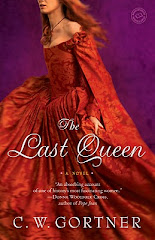
 hung out together at dinner, giggled over drinks one night with the equally gracious and divinely funny Rosalind Miles, and not once did Judith ever treat me as anyone other than a fellow writer. She bought a copy of my self-published book; and on the shared ride we took to the airport, she mentioned she had started reading it and wanted to give me a referral to her literary agency for the book I’d been pitching to editors at the conference. Would I give her a few sample chapters? That book was The Last Queen and Judith’s enthusiastic referral got me my agent, Jennifer Weltz at the Jean V. Naggar Literary Agency, who eventually sold my work at auction to Ballantine Books.
No one was more thrilled for me than Judith. In the following years, we spoke often on the phone and she always wanted to hear about what was happening in my career, even as she embarked on her own valiant, often arduous struggle against an insidious illness. Once when I went to visit her at her home, she showed me the organic wheat grass she was growing and I learned that beyond that keen mind and delicious wit, which make her novels such original paeans to the resiliency and foibles of women who are swept up in extraordinary circumstances, Judith was in fact a m
 ulti-faceted and extraordinary woman herself, whose passion for life and spirit for adventure and discovery refused to be quenched.
When I last spoke to her, Judith's illness had taken a frightening turn for the worse. We had talked often of the challenges she faced, but never once, in all that time, did I ever hear her utter a single complaint. She expressed to me her gratitude for the ability to re-evaluate her priorities and embrace her life, for t
 he many friends she’d made and the love she had received. If she knew she would never write another book, she made no mention of it. She spoke as if time would always be on her side. In a way, it is.
Though she’'ll be greatly missed by all of us who had the privilege to know her, Judith Merkle Riley lives on in her wonderful novels, all of which reflect her unique humor, her unending passion, and her grand and generous heart.
We can do her no greater honor than to read them.
To read another tribute to Judith, please visit Sarah Johnson’s Reading The Past.
To read an interview I did with Judith, please click here.
To read another tribute to Judith, please visit Sarah Johnson’s Reading The Past.
To read an interview I did with Judith, please click here.
Subscribe to:
Posts (Atom)