Pages

Monday, April 2, 2012

Two Reviews: LADY OF THE RIVERS by Philippa Gregory and

(These reviews first appeared in Historical Novels Review, November 2011)

THE LADY OF THE RIVERS. Philippa Gregory

Philippa Gregory’s third entry in her Cousins’ Wars series features an unusual character: Jacquetta Woodville, mother of Elizabeth, who in turn gave birth to the princes who disappeared mysteriously in the Tower. In THE LADY OF THE RIVERS, Ms Gregory travels further back in time, bringing us a glimpse of the seeds of the epic conflict that will be known as the War of the Roses. French-born Jacquetta first weds an older duke more interested in her supernatural gifts than her physical ones; upon his death, she defies convention to find love with his squire, whose loyalty to the crown brings them heavy responsibilities. Through Jacquetta’s eyes, we’re given a wide-angle view of the lethal intrigues that plague the English court, where a young, weakling king is manipulated by his nobles, and accusations of witchcraft are wielded to destroy opponents. The end of the Hundred Years’ War, when England lost its territories in France, offers a compelling backdrop to Jacquetta’s personal trials as she endures repeated separations from her husband and witnesses the depredations of power-hungry courtiers. When her fortunes increase with the arrival of Margaret of Anjou, a princess brought to wed the king, the novel becomes more intimate, as well. Margaret is a compelling character who steals the show— not yet the Lancastrian virago of legend, Gregory depicts her as a brash, beautiful girl tethered to a man better suited to prayer than bed play; Margaret’s vulnerability and fallible relationship with Jacquetta bring humanity to the crowded historical events. Jacquetta’s magical gifts are underplayed except for one crucial episode; and her astounding fertility and perennial passion for her husband, as well as her keen insight, center her as a voice of reason in a complex, treacherous era.


ALL THE KING’S COOKS: THE TUDOR KITCHENS OF HENRY VIII AT HAMPTON COURT. Peter Brears

From the storage of game without modern refrigeration to the extraordinary size of the staff required to cater a banquet, Peter Brears’ All The King’s Cooks offers a fascinating, detailed account of how the massive kitchens built at Hampton Court were operated. This deceptively slim book goes beyond a mere accounting of pots and pans. Interspersing recipes from the era with commentary on social mores and table etiquette, along with a thorough examination of how the system contended with the daily demands placed on it, Mr. Brears has created an intelligent yet accessible look into a rarely explored part of the Tudor world. The kitchens at Hampton Court are marvelous to visit; the book fleshes out the displays for tourists with the grease and grit of the machinery that propelled these kitchens to become one of the most efficient in the realm. Numerous illustrations help visualize a part of the palace that remained hidden from most courtiers’ eyes. Mr. Brears has himself re-enacted cooking at Hampton Court and his hands-on knowledge makes his book a must-have for Tudor aficionados.

Sunday, March 4, 2012

Guest post from Donna Russo Morin, author of THE KING'S AGENT

I'm delighted to welcome Donna Russo Morin, author of THE KING'S AGENT. Set in 16th century, Italy, this is a stunning adventure featuring a woman agent and art collector for Francois I of France, whose work for the king leads her into a deadly mission to find a mysterious sculpture and a dark secret that could change the course of history. Publisher's Weekly's starred review says The King's Agent "skillfully blends historical fiction and fantasy in surprising ways . . . a wonderfully action-packed ride through the lush landscape of Renaissance Italy."

Please join me in welcoming Donna Russo Morin!


Michelangelo: A Short History of a Long, Magnificent Life
To sum up a life such as Michelangelo Buonarotti’s in the length of a blog post seems not only an impossible challenge but the epitome of an understatement, yet if there was ever a life worthy of such an endeavor, it is his.

Michelangelo is perhaps one of the most well-known artist’s throughout the history of the world, the man who struggled for years to complete one of the ultimate pieces of art ever created. But in truth, Michelangelo’s struggles began almost at the beginning of his life and they were to mold that life as distinctly as he himself would carve his great statues. When I uncovered his connection to my main historical character in The King’s Agent, I felt it a blessing to be able to research this gifted man’s life and a privilege to include him in one of my books.

Born on March 6, 1475 in Casentino, Italy, outside the walls of the grand city of Florence, his father was Lodivico di Lionardo Buonarroti-Simoni, the Podesta of Caprese and Chiusi. His mother, Francesca di Neri di Miniato del Sera, gave birth to five sons in all, all within an eight year span. It killed her, and it was a loss that would shape the entirety of Michelangelo’s life.
Because of his mother’s ill health, Michelangelo was suckled by a wet nurse. The loving woman, nurturing in even sense of the word, was one Signora Topolino, a stone-cutter’s wife living in the rocky hills of Pontasseive. Michelangelo found such encompassing affection from this woman and her family that he would return to them, for days and months at a time, throughout the entire course of his life. It is a great myth—one that might have started from Michelangelo’s own lips—that he ingested stone dust along with the woman’s milk, binding him and his life to worship of the stone.

Michelangelo was six when his mother passed and, from that moment on, he lived a life of solitude; his father was consumed by his grief and incapable of caring for the children Francesca left behind. Lodivico’s sister, Michelangelo’s Aunt Cassandra, took over the care of the household, but she was a cold if efficient woman, seeing to the boys’ needs but with little love in the act. Nonna Alessandra, Michelangelo’s grandmother, offered some affection, but it was not enough to fill the emptiness created by the loss of his mother. None of the adults cared much to keep track of the young boy’s comings and goings and Michelangelo became a child of the streets, an urchin as prone to mischief as he was to curiosity.

At the age of 13, his father sent Michelangelo to school in the city proper, under the auspices of Francesco da Urbino, but he neglected all of his studies save for drawing. And though his father and uncle tried, literally, to beat the predilection for art out of the child, they were vastly unsuccessful, eventually capitulating to Michelangelo’s truth and fostering his artistic achievements. In 1488, he entered the studio of Domenico and Davide Ghirlandaio, elite members of the large Florentine artistic community. There he learned the cutting edge techniques of the age and studied the works of such masters as Giotto, Donatello, Ghiberti, and others, those considered the founding fathers of the Renaissance. In 1489, he became a pupil at the School of Sculpture headed by the great Bertoldi, who was himself a student of the master Donatello. Here his obsession with sculpture would be secured and here he would come to the attention of one Lorenzo de’ Medici, Il Magnifico.

His life would be forever changed for it. From this moment on, Michelangelo’s life would be one of learning, not only artistically, but philosophically and of self-enlightenment, present in the studio of Lorenzo during the deep discussions of Paganism and Humanism. He studied the human anatomy by sneaking into the morgue of a church and dissected the bodies awaiting burial (it is why he was able to recreate them with such precision). He learned too the harshness of life, the confusing truth of his sexual orientation, and the vagaries of living in Italian states that went to war with the same frequency and glee with which they sat down to a vast meal. Michelangelo was an ardent patriot to his Tuscan lands, and took part in the many revolutions that plagued the city, pulling on his loyalties to the Medici and the city in a gut wrenching struggle. He became both adored and vilified by the popes of the Catholic Church, heartbroken by both men and women, and though he was forever surrounded by great friends, talented colleagues, and lovers, he remained a solitary man, rarely speaking of what he felt most deeply.

And yet, in all that I learned of him, as he became for me not the subject of my work, but a living, breathing being with whom I spent many hours of many days, it was his intellect and his vulnerability that touched me the most deeply. It has been one of the great delights of my life to ‘spend that time’ with him while crafting The King’s Agent. And I am thrilled to be including him in my current work in progress, but there he is a younger man, in the throes of artistic and personal awakening, feisty in his arrogant youth.

Michelangelo’s list of works is breathtaking, astounding, too vast to be accounted for here, and he is considered to be one of the greatest artists of all time. He was a sculptor, painter, architect, engineer and poet. His best known work, that of the paintings on the ceiling and the altar wall of the Sistine Chapel, catapulted him into the realm of the immortal icon, and yet it was his other work, that with the stone, creations like the great David (original called the Giant), with which he cared the most, with which he identified. Were one to encounter the painter of the Sistine Chapel and ask him what he did, he would answer forthrightly, “I am a sculptor.”

The relationship between the lead male character in The King's Agent, Battista della Palla—a true historical character—and Michelangelo is as I’ve drawn it within The King’s Agent, one of emotional succor of the most innocent kind, a bond between an older and younger man of a father and son nature, each yearning to fulfill the emptiness and lack of the one, each more than willing to fulfill that emptiness for the other. It was, perhaps, the most long lasting and satisfying bond of the magnificent Michelangelo’s life. The love they bear for each other is just one of the many reasons for the love I bear them both.

Thank you, Donna! We wish you much success with this fantastic novel. To learn more about Donna and her work, please visit her website.

Friday, February 24, 2012

Guest post by David Rocklin, author of THE LUMINIST

I am delighted to welcome David Rocklin, author of THE LUMINIST, a highly-praised novel which Jacquelyn Mitchard calls: "... a weave of legend and history, science and art, politics and domesticity that are symphonic themes . . .the story of an enduring and forbidden friendship.”

Set in Colonial India, in a time of growing friction between the ruling British and Indian populace, The Luminist tells the story of Catherine Colebrook, an Englishwoman living in Ceylon, and a fifteen-year old Tamil boy, Eligius Shourie, who is brought as a servant to the Colebrooks’ neglected estate. Catherine’s obsession to arrest beauty—to select a moment from the thousands comprising her life and hold it apart from memory—transforms Eligius into her apprentice in the creation of the first haunting photographs in history, even as their fragile world crumbles.

Please join me in welcoming David Rocklin.

In early 2004, I went to the Getty Museum in Los Angeles. They were exhibiting photographs from the earliest days of the art, including a number from Julia Margaret Cameron. Now, I’m not a photographer – I’m the one waiting for it to tell me how to use it when you ask me to take a picture of you and your family. I’d never heard of Ms. Cameron or her work. I am, though, very visual. Everything I’ve written had its start not as a theme or a character, but as an image that I could not shake, that hinted at a larger story.

The photographs I saw that day really moved me. Those faces had a lost quality to them when viewed from a distance; here, after all, was a wall of people who died before I’d ever encountered them. Individual moments of whimsy, contemplation, mourning, a child’s exasperation at having to wear wings. The first image I saw, of a woman half-shrouded in shadow, was stunning. Her face emerged from the dark into a muted light. She was unreadable. The model, as it turned out, was Julia Jackson, the mother of Virginia Woolf (I wrote a blog about that image, and the serendipity that caused it to become the cover of the novel).

After the Getty, I did a bit of research on Ms. Cameron. She was unique for her time, a Victorian woman who obsessively pursued this unknown art and science despite all societal expectations or barriers. The likes of Charles Darwin, Lord Tennyson, Robert Carlisle and Sir John Herschel sat for her, enduring the interminable stillness necessitated by the technology of the time. She saw something like prayer in her work, and made of it images to rival painting.

I found a quote of hers: “I longed to arrest all beauty that came before me…” Her quote took on a newly relentless, tragic meaning when I learned that she lost a child shortly after birth. An image of her started to form, but from a vantage point outside of her, as if I was observing her from the eyepiece of an old camera.

That’s where the story started. What transpired is completely fictionalized, but my jumping-off point began that day at the Getty.I really lived with this world for quite a while before starting the book. I realized early on that even if I travelled to India, I could not find the setting for the book. Ceylon no longer exists as it was. More importantly, the moment that really drives everything in “The Luminist” no longer exists: that moment before the first photographic image existed, before that instant of fast-passing life could be held still. And then, it could.

So much of what I learned from writing The Luminist is making the journey with me towards realizing the new novel I’m working on. Patience with the stops and starts of the first draft (the characters were really battling for dominance in voice, and I’ve re-started the book three times now). Immersion in the world, and once immersed, picking my battles from amongst so many possibilities. Daunting and exciting – that tangled emotional combination that I think all writers know.

Thank you, David. We wish you much success with this fascinating novel. To learn more about The Luminist and David, please visit his website.

Monday, February 13, 2012

Interview with Eva Stachniak, author of THE WINTER PALACE

I'm delighted to welcome Eva Stachniak back to Historical Boys for an interview about her bestselling novel THE WINTER PALACE, one of my favorite historical novels this year and a riveting account of the rise to power of Catherine the Great. Please join me in giving a warm welcome to Eva!

1. Congratulations on the publication of THE WINTER PALACE! It's an honor to have you with us. Set in Russia during the era of the Czars, this novel offers us two different characters—Catherine the Great and her spy and maid-servant, Barbara—each of whom is linked to the dramatic and ultimately deadly struggle for the throne. What inspired you to write about Catherine? Why did you choose a fictional character through which to tell Catherine’s rise to power?

Thank you, C.W.

Catherine the Great tempted me for a long time. Or I should rather say, her many incarnations. Catherine, or Sophie, for such is her birth name, arriving in Moscow at 14 to marry the Crown Prince, with just a few Russian words at her command and a meager supply of linen in dire need of mending. Catherine a vulnerable immigrant who has to reinvent herself and find friends who will not betray her. Catherine an unloved wife of a not too stable and mature husband who—jealous of her abilities—constantly threatens to push her aside.

But there is also another Catherine, the enlightened empress who reforms Russia’s institutions and strengthens its army, turning her adopted country into a formidable European power. Catherine the usurper, a woman who stole her husband’s crown and condoned his murder. Catherine a masterful politician, with steady nerves, foresight, and courage, demanding her place at the political gaming table of the 18th century Europe.

My fictional narrator? I wanted to tell Catherine’s story from an observer’s point of view in order to show the essence of Catherine’s power over people. I wanted the reader to experience Catherine’s spell over those around her, show how this Prussian princess managed to command the hearts of so many. In addition, my narrator, Varvara/Barbara, is an immigrant to Russia. Most outsiders make excellent observers, readers of clues, and hidden intentions. And, of course, she is also a spy, a perfect tool for a writer.

2. THE WINTER PALACE shows the seamy underside of life at court, especially the constant scheming, intrigue, and relentless quest for power. And Catherine’s own actions as she fights for the crown are controversial. What types of challenges did you encounter while researching this story? What surprising or interesting facts did you discover about Catherine’s role in history?

For me, born and raised in Poland, Catherine is the empress who, with the help of Prussia and Austria, wiped Poland off the map of Europe for over a hundred years, and made my own ancestors reluctant subjects of the Russian tsars. She was the one who crushed the last Polish uprising and made Poland’s king—her one time lover—her prisoner. I grew up hearing stories about her, bitter stories of a woman feared and despised, hated and cursed. What I have uncovered through my research was the more authentic Catherine, a woman behind the politician, passionate, clever, but also sometimes at a loss.

3. Barbara is both the narrator and key player in the novel. Her struggle to find her independence as a woman and a human being is an important part of this story. Because your book is centered on women and told through the eyes of a woman, do you believe it can also resonate with male readers? Is there anything in particular that you do in your book to address this issue?

I assume that the book will resonate with anyone, man or woman, fascinated or troubled by the issues of power. Catherine often referred to herself as being of “a manly” turn of mind. She certainly stood her ground against male monarchs and politicians of eighteenth century Europe. Her world is not particularly feminine, even in the sexual terms, for as empress she chose her lovers —younger and younger as she grew older—and let them go when they no longer pleased her. Not unusual for male monarchs of Europe, but still quite revolutionary for a woman.

I try to write from a universal perspective—show women and men navigating their worlds, reaching for their dreams, but there is also another reflection. The ambitious vision Peter the Great had for Russia was fully realized by two women rulers: Elizabeth Petrovna and Catherine the Great. Would Russia have been a stronger, more just, or even only more prosperous country, if it were ruled by men?

4. Please tell us about any methods that you employ to give your characters authenticity.

I try very hard to see my characters, imagine their physical characteristics, hear them speak. To do it, I scrutinize all existing portraits of my historical characters looking for anything that might help: facial expressions, background scenery, the pattern on a dress. If they have written memoirs and letters—like Catherine did—I read and re-read them for the turn of phrase, the patterns of thinking.

With fictional characters I spend time writing a short biography of their lives, and when I know what they did in life and when, I look for a portrait that would help me see them. Often I find their likeness among the many portraits in a museum—hanging there to tease and temp the writer in need—and when I do, I get a good copy of this portrait and keep it on my desk when I write.

6. How do you think your novel speaks to today’s reader or how do the events you evoke resonate for today’s world?

I have a persistent sense that the Iron Curtain separated the West and the East not only politically but culturally and spiritually, and that eliminating this division is a slow and laborious process. I like to think that the stories I tell—stories that come from behind the former Iron Curtain—make this process easier. I also like to think that if you read my novels you will understand something about Russia, Poland, and other countries east of the Oder river, something you might have missed in history books.

7. Please, tell us about your next project.

The Winter Palace is the first of two novels of Catherine the Great. The second, Empress of the Night will be written from Catherine’s point of view, and the two books will, I hope, complement each other. In Empress of the Night Catherine is an absolute monarch, a sole autocrat of a great and thriving empire. I want to explore how having power has transformed the empress herself.

Thank you, Eva. We wish you much success with THE WINTER PALACE.

Eva Stachniak was born in Wrocław, Poland, and came to Canada in 1981. She has been a radio broadcaster and college English and Humanities lecturer. Her debut novel, Necessary Lies, won the Amazon.com/Books in Canada First Novel Award, and her second novel, Garden of Venus, has been translated into seven languages. Her third novel, The Winter Palace, is a #1 bestseller in Canada (Doubleday) and has also been published in the US (Bantam) and the UK (Transworld) and will soon appear in Holland, Germany, and Poland. Eva Stachniak lives in Toronto, where she is working on her second historical novel about Catherine the Great. Please visit her website.


Monday, February 6, 2012

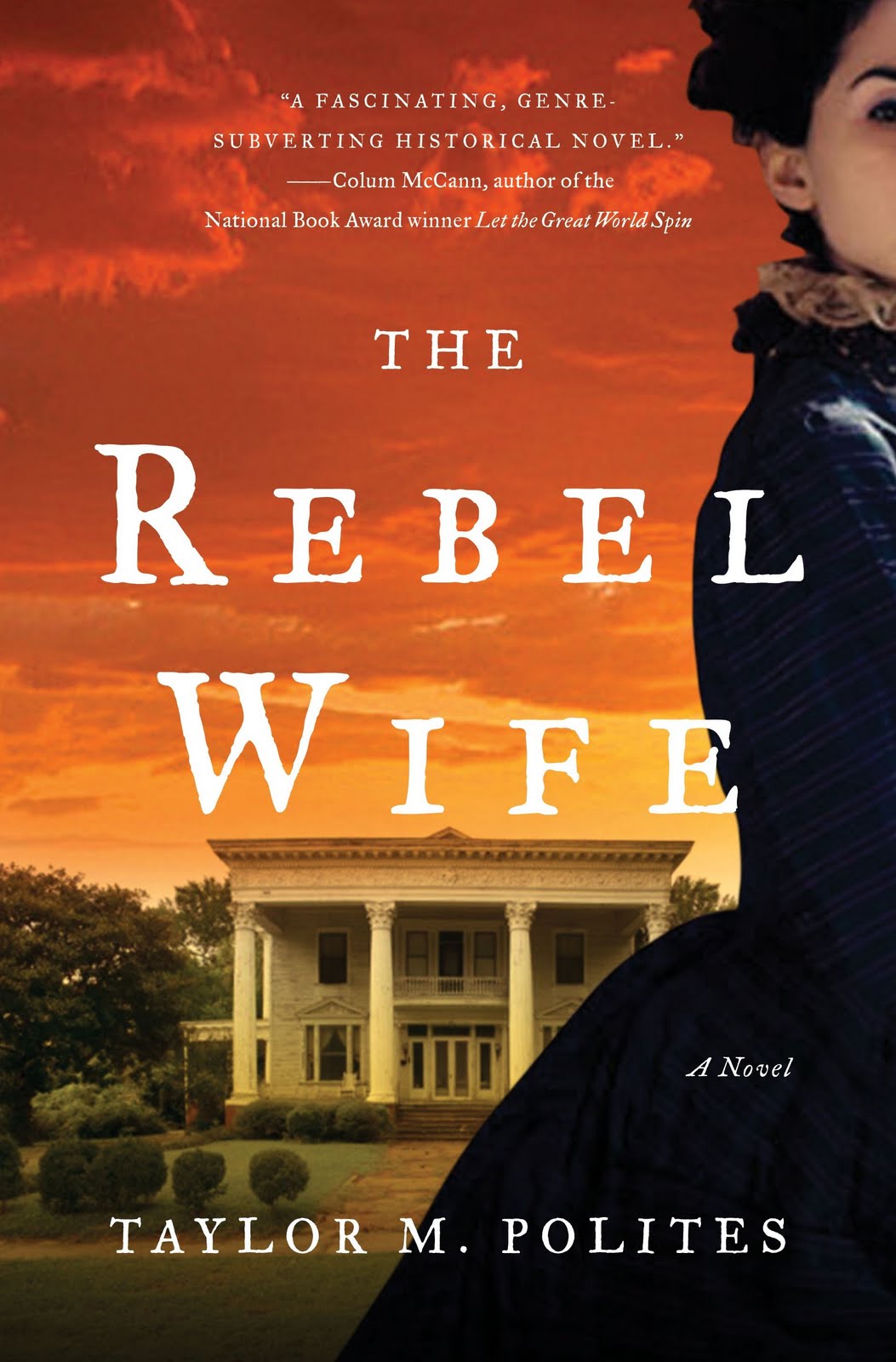
Guest post from Taylor M Polites

I'm honored to welcome Taylor M. Polites, author of REBEL WIFE. Set in Reconstruction Alabama, Augusta “Gus” Branson's is a young widow whose quest for freedom turns into a race for her life when her husband Eli dies of a horrifying fever, and a large package of money – her only inheritance and means of survival – goes missing. Gus begins to wake to the realities that surround her: the social stigma her marriage has stained her with, what her husband did to earn his fortune, the shifting and dangerous political and social landscape that is being destroyed by violence between the Klan and the Freeman's Bureau, and the deadly fever that is spreading like wildfire. Nothing is as she believed, everyone she trusts is hiding something from her.

I really enjoyed this novel. It presents a different picture of what we often see in fiction about the south, after the Civil War, when slaves were suddenly free and an entire society had to dig itself out of the ashes of defeat. Mr Polites has clearly researched his subject in depth and it's a delight to have him with us today. Please join me in welcoming Taylor M. Polites!

Writing The Rebel Wife

This is my first novel, and I think for many people, the first novel is the hardest. It is not the first novel I have tried to write, of course, but the first one that I have finished, and hallelujah for that!

I grew up in Huntsville, Alabama, and that town is really the basis for Albion in the novel. Growing up in Alabama, learning about the old homes and the history and the hard times, laid the groundwork for a specific way of understanding the Civil War. Getting older, I continued to be fascinated by that time and to read about it. I was looking for another level of awareness and understanding about the Civil War and Reconstruction. I began to understand Reconstruction not as a rampage of Republican carpetbaggers hell-bent on pillaging the state (although there is no doubt there was corruption, just as there was corruption in the Bourbon administrations that followed Reconstruction), but as a time of idealism and experimentation. This was a time in modern history when a people held in bondage were freed and given equal rights with their former captors. When in history has something like this ever happened before? It was an amazing, truly mind-blowing time, and there was a harsh and violent reaction against it that led to another hundred years of segregation and white racial dominance. What an amazing field in which to write a book!

So I began from that perspective as someone who thought about the Civil War and Reconstruction one way, but over time learned that things were not quite as originally presented. The main character, Augusta, goes through a parallel change, but she is in the period. She understands what happened and what people said about the war and the carpetbaggers, but she wakes up, she looks around her, she weighs what she believes against what she sees. And that brings about a change in her.

Her character, too, changed over the years I spent on this book. I did much writing, first in 1998. Realizing I had much more research to do, I put the idea aside and zeroed in on research for the period. Again in 2002, I picked up the story and wrote about 200 pages of text, but still felt short on what I needed to know. I went back to the history books and research. Finally, in 2006, I made a major life change. I decided this was the time for me to make a go of writing, or I would never do it. I left my job in New York City, moved to Cape Cod and began to work on this book again. Through the wonderful and fortuitous guidance of some good friends, I entered the Wilkes University MFA program and found a mentor, the great novelist Kaylie Jones, who helped me bring this work to its end. What an incredible ride! And what a dream come true!

Thank you so much for giving me space on your blog to talk about my book!

Thank you, Taylor. Best of luck with this fascinating novel! To learn more about Taylor Polites, please visit his website.