I recently had the privilege of reviewing C.C. Humphrey's VLAD: THE LAST CONFESSION, about the historical Dracula, for the Historical Novels Review. I've been a fan of his work for some time; I loved his novels abou

t the man who executed Anne Boleyn (THE FRENCH EXECUTIONERand BLOOD TIES) as well as his dashing hero, JACK ABSOLUTE. I haven't read his YA novels yet, but VLAD is a masterpiece: an evocative, dark, impeccably researched account of the prince known as Vlad the Impaler, whose tumultuous reign gave rise to a terrifying legend.
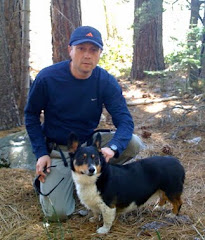
Chris (C.C.) Humphreys was born in Toronto He has acted all over the world and appeared on stages ranging from London’s West End to Hollywood’s Twentieth Century Fox. Favorite roles have included Hamlet, Caleb the Gladiator in NBC’s Biblical-Roman epic mini-series, ‘AD - Anno Domini’ and Jack Absolute in Sheridan’s ‘The Rivals’. As C.C. Humphreys, he's written five historical fiction novels. As ‘Chris Humphreys’ he has written a trilogy for Young Adults ‘The Runestone Saga’. His latest, VLAD: THE LAST CONFESSION, was published in Canada September 1. Chris lives in Vancouver, Canada, with his wife and young son. To learn more about him and his work, please visit:
http://www.cchumphreys.com/It's my great honor to welcome C.C. Humphreys.
1.
Congratulations on the publication of VLAD: THE LAST CONFESSION. It's an honor to have you with us. This is a dark and evocative novel detailing the historical personage who inspired the legendary Dracula by Bram Stoker. While the vampire is exceedingly famous Prince Vlad Dracul is largely unknown. What inspired you to write about him?
In a word, alcohol. I got drunk with my editor in London, wept about elusive besteller-dom. Together we decided I had to stop making people up (Jack Absolute) and write about someone already known, as that’s what many readers like. But who hadn’t been done? No one it seemed. My editor suggested Dracula and I scoffed: someone so infamous had to have been covered, surely? Not, it seemed. That intrigued me initially. I was soon to find out why. Its very hard to write anything other than a horror story. But then I began to uncover certain ‘hooks’ such as his childhood spent as a hostage to the Turk. The more I uncovered the more fascinating he became. Soon, I just had to do it.
Oh, by the way, it’s Dracul-a. The ‘a’ makes it ‘son of’. Vlad Dracul was his father.
2. THE LAST CONFESSION is both graphic and unsentimental in its approach to this controversial man, who became known as the Impaler for his particularly horrific method of dispatching his enemies. The novel is framed through the “confessions” of three of his intimates: his companion in arms, his confessor, and his mistress. Are these characters based on actual personages or fictional? Why did you choose these particular three to tell his story?
These characters are fictional, though there may have been an ‘Ion Tremblac’ in Vlad’s camp. And there was one mistress whose experience I knew I’d need to write about. I chose them because I wanted to have a framing device that was quite Gothic. “Draw up your chair close to the fire and hear the true tale of Dracula,” kind of thing. So the closest people to him would be able to both observe him and, to a certain extent, take us inside his head – especially his confessor. It’s a bit of a cheat but it does allow Vlad himself to have a voice. As for their ‘roles’ – his comrade could speak to politics and war, his mistress to love and his confessor to motivation, though of course they all overlap.
3
. What types of challenges did you encounter while researching this book? What surprising or interesting facts did you discover about this time in history and Vlad’s role in it?The main challenge was separating the facts from the propaganda. I have no doubt that the Impaler did terrible things – such as impale, by the thousand. But it is also true that his story was told almost entirely by men who hated him and wanted to blacken his name. And they had the means to do it – the printing press had been churning out religious tracts for about 20 years when Vlad was overthrown. But, as in that other great technological leap, the Internet, p

eople soon tire of information and God. What they really want is sex and violence. Printers wanted pamphlets that would sell. Dracula’s deeds provided fantastic copy.
There were so many things I discovered that intrigued. One, that when all the other princes of Europe ignored the Pope’s call for crusade against the Turk in 1462, Vlad alone, in tiny Wallachia, raised the banner of the Cross – and damned near killed the Sultan! Another, that the week I was in Romania, the president had been impeached by his parliament. This had to go to a plebiscite so rallies were held for and against him. The president’s supporters carried two portraits on placards – him… and Dracula.
To this day, Vlad is held up as the benchmark of justice and probity in government. He turned the most lawless state into the most law-abiding using the Giuliani method of ‘zero tolerance’. Not sure Rudi ever impaled anyone, mind.
4. Vlad is difficult to empathize with, though in fact he did not behave more or less cruelly than other tyrannical princes of his age. He also fought against treacherous nobles and the ever-constant threat of Turkish invasion. Many writers would shy away from this fearsome man as a lead character for a historical novel. What decisions and/or compromises did you find yourself making as a writer when it came to telling his story?
Decisions? The crucial one came after much angst and struggle. I kept trying to make judgments, take an angle on him. And he wouldn’t come.
Then, one day I decided that I would not judge him, however horrific his deeds and actions. I would depict him – and let the reader judge. The Roman, Terence, his quote: ‘I am a man. Nothing human is alien to me’, I set above my desk. I may have flinched. But I wrote down what came and left judgment to the reader.
Compromises? The book is hefty. But if I’d told the whole story and followed every fascinating tangent I’d still be at it. I had to select. The framing device helped me here. I used the ‘confession’ to get necessary history out fast so I could get back to the story. I don’t like giving history lessons in my novels. But there’s lots that people need to know to make sense of the characters’ choices.
5. One of the most fascinating moments in the book depicts Vlad’s youth as a Turkish prisoner, in particular his stay in the Tokat prison. Few readers will expect that a Wallachian prince had spent time as a hostage. You also show a startling link between what he endures and his later behavior. There are moments in the novel that seem to hint that he suffers from some form of mental illness. Was this your intent? What do you think motivated him to act as he did?Is that your judgment? Mental illness? I can, of course, neither confirm nor deny. But I think that many people, raised in extreme circumstances, pressured by extraordinary things, are capable of acts that could be interpreted as ‘mad’ without being clinically ‘crazy’. There could be any number of things that motivated him, from terrible abuse to religious fanaticism. Yes, I am hedging. But I’d rather keep my opinion to myself. Because it's not up to me any more. It's not my book any more. I believe that a novel is made by two people – the one who writes and the one who reads. My Vlad will be different from yours, theirs. I wouldn’t want to influence them now any more than I have already.
6. Please tell us about methods that you employ to give your characters authenticity.
Hmm! How long have you got? I think there are two types of authenticity – the age the character lived in and who the character is. For the first, we all try to set our protagonists against a credible backdrop, political, philosophical, social; how they were brought up, what they believed in, what clothes they wore. But how they process what they learn, what happens to them, their choices – that makes the journey. Characters’ authenticity is also revealed by what others think, say and do to them. One of the reasons I put a classic ‘love triangle’ at the center of the novel. So that each can reflect on, and react to, the other.
7
. How do you think your novel speaks to today’s reader or how do the events you evoke resonate for today’s world?
This is one of my ‘things’. I consider myself a modern novelist. I write historical fiction but I am a man of today, writing for today’s readers. Though there are huge differences in attitude and belief from the 15th century to today; there are also huge similarities. Men and women want many of the same things, physically, spiritually. And as for politically - is the conflict between Islam and Christianity any less fierce today? Are the Balkans any more stable? For the Turks Tokat, what price Guantanamo? We can haggle about rights and wrongs. They did. They still are.
So, there is resonance. But I am a storyteller and my first duty is to that. Readers will pick out whatever they choose. What I hope is that what really draws them in and holds them is my characters’ journeys.
8. Please tell us about your next project.Well, I am touring Vlad all over Canada in the next month. Next year, it's out in the UK so there will be more there I am sure. As for writing, I am wearing my Young Adult hat again – you know I have just completed the Runestone Saga trilogy for Knopf? So now I am in the first draft of a stand alone novel about … unicorns! A little different than the Impaler. Mind you, that horn…
Thank you so much for joining us, Chris. Here's the much success with VLAD![To my readers: This guy is great, a fellow historical fiction writer with tremendous wit and talent, and a wonderful conversationalist. If you haven't read anything by him, now is the time.]

 I'm delighted to welcome back my friend C.C. Humphreys, who is currently touring for the US release of his new novel A PLACE CALLED ARMAGEDDON. Set in Constantinople in the earth-shattering year of 1453, this is a riveting account of the city's catastrophic fall to the Sultan Mehmet, as seen though the eyes of four lead characters whose lives and fates are entwined with that of the beautiful, doomed city. C.C. has such an eye for detail and voice; he captures the tragedy and drama of this pivotal event in history while never forgetting the human impetus behind it. I'm reading this novel now and am thoroughly entranced.
 ‘Heh, Mister! Cigarettes! You give!’