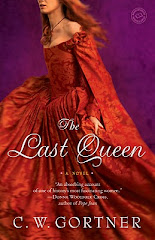
I got a really bad review a few days ago. No, let me re-phrase that. Not merely bad. Rotten. Dreadful. As in, this reviewer said everything I imagine someone saying in my worst nightmares about my book. I wasn’t expecting it -writers rarely do - and at first I sat there, stunned. I couldn’t believe anyone could take such offense to what is, in the final say, fiction. A novel. Entertainment. It didn’t help that as I re-read the review, with that weird bewilderment which sets in as you realize someone out there really dislikes your work, I found the reviewer had put an enormous spoiler in the review and evidently thought nothing of it.
Bad reviews are, of course, part and parcel of being published; it comes with the territory and there’s no handbook to teach you how to deal with the emotional impact. Some authors cry. Others get drunk. Some call a friend to gripe. Most get mad. A few take it in stride, or at least pretend to. After all, it’s your book someone just skewered—the tangible fruit of years of labor. You’ve sacrificed valuable time with family and friends; forgone movies, restaurants, sex; you’ve walked the dog aimlessly in circles, muttering like an indigent to yourself; burned or forgotten meals; lost sleep; tussled and agonized over a single word, even screamed at your computer when no one was looking. The hard truth is writing is tough and writing a novel is the epitome of toughness. It takes perseverance, ego, and more than a touch of insanity. I mean, you spend all this time by yourself, locked in your head in a room staring at a screen or piece of paper, conjuring imaginary things, and hoping, praying, someone else will care enough to want to read it, let alone publish it. Then, insomniac, battered and badly in need of a shower, you turn the manuscript in and have to deal with everyone else’s opinion of it— your agent, your editor, the marketing team, the booksellers. In their own ways, they will each shape your work into something that can be packaged and sold to the public. Sentences you slaved over will be cut without mercy; scenes shifted here or re-crafted there; a character will be eliminated and another, to your astonishment, will attempt to hijack the plot. You’ll go back over the same lines time and time again, until you can recite them from memory and your spouse or significant other will look at you furtively as you sit hunched at your desk, crab-handed over those first-pass pages, and remark perhaps it’s time for us to start thinking of taking that oft-delayed vacation.
In the end, the idea that started as a seed in your febrile brain, was nurtured on imagination and the internal chug-a-lug of I-think-I-can, I-think-I-can will become a cooperative project, a team effort. A Book.
And then, it gets sent out. To anonymous people and places you’ve never seen. Newspapers (though these are less and less); trade magazines; online sites; bloggers—hundreds of eyes will peruse your painstakingly crafted prose and, within a few lines, maybe a few chapters, if you’re lucky, pass judgment. To review or not review; to like or not like. After all, this person who will now review your book has no stake in your well-being, particularly. They don’t know if you’re a nice person or a mean one; if you talk on your cell phone when you should be driving; if you donate to an animal shelter or spend too much money on shoes. All they care about is that visceral, subjective moment which you have no control over, when they read your words for the very first time and had a reaction. Or didn’t. So, those words you hoped and prayed were worthy of attention will now, finally, garner words of their own, for better or worse.
In some cases, as in bad reviews, you’ll almost wish they hadn’t. Almost, but not quite. Because in the end, even a bad review is still a review. It means someone cared enough to take the time to say: Hey, this sucks. Don’t bother. Buy a DVD instead. Check out the latest Ikea catalog. Collect stamps. Browse online for new underwear. Do anything but purchase this lousy book.
Yes, someone cared. And isn’t that what every writer dreams of? I know I do. So, how did I deal with the bad review? How else? I cried. I got mad. I pretended not to care. I poured myself a stiff drink and called a friend to complain.
And so it goes.
Showing posts with label writing. Show all posts
Showing posts with label writing. Show all posts
Wednesday, October 26, 2011


Monday, July 26, 2010
When Fiction and History Collide
History and historical fiction appear to go hand-in-hand; without the former, certainly there couldn't be the latter. Yet in some cases, these two apparent inseparable allies make for uneasy bedfellows. The truth is, not everyone who loves history is going to love historical fiction and vice versa. Some people are best disposed to the history itself, such as original documents, erudite biographies etc. This is the arena where scholars most often dwell; it's a hallowed place yet not one necessarily conducive to reading historical fiction, which, in the final say, remains a form of entertainment.
While historical fiction can inform and inspire an interest in history, and should of course refrain from blatant disrespect, it was never intended to substitute or even augument history itself. Historical fiction is a form of creative interpretation; it utilizes historical framework to relate a fictionalized story based on the past. The most informed readers will often find anacronisms in a novel that others might never notice and find this disillusioning, even off-putting; but we should remember that to be a working historical fiction writer in today's publishing climate, by and large it's often required to steamline characterizations, simplify complex political, social, and religious situations, modernize dialogue, keep the cast small and the pacing crisp. In sum, most commercial editors at major houses want writers whose books can be enjoyed by all potential readers, regardless of their particular background.
History is not an easy subject; historical fiction, when done well, can help to relieve the most intimidating aspects of history and make it accessible to those who believe the past can't be exciting or fun, with all those pesky dates and titles to remember. A scholar approaches history from an extremely detailed perspective; while such knowledge can inform the reading of historical fiction and even make it enjoyable, it can also by contrast curtail the ability to suspend disbelief, which is an essential requirement for fiction, regardless of the genre.
We read novels because we want to be entertained; we read nonfiction because we want to learn. And while the two may cross and, in the best of cases, even blend, the distinction still exists.
While historical fiction can inform and inspire an interest in history, and should of course refrain from blatant disrespect, it was never intended to substitute or even augument history itself. Historical fiction is a form of creative interpretation; it utilizes historical framework to relate a fictionalized story based on the past. The most informed readers will often find anacronisms in a novel that others might never notice and find this disillusioning, even off-putting; but we should remember that to be a working historical fiction writer in today's publishing climate, by and large it's often required to steamline characterizations, simplify complex political, social, and religious situations, modernize dialogue, keep the cast small and the pacing crisp. In sum, most commercial editors at major houses want writers whose books can be enjoyed by all potential readers, regardless of their particular background.
History is not an easy subject; historical fiction, when done well, can help to relieve the most intimidating aspects of history and make it accessible to those who believe the past can't be exciting or fun, with all those pesky dates and titles to remember. A scholar approaches history from an extremely detailed perspective; while such knowledge can inform the reading of historical fiction and even make it enjoyable, it can also by contrast curtail the ability to suspend disbelief, which is an essential requirement for fiction, regardless of the genre.
We read novels because we want to be entertained; we read nonfiction because we want to learn. And while the two may cross and, in the best of cases, even blend, the distinction still exists.
Monday, July 19, 2010
The Amazing Jean Taggart
On July 18, Jean Taggart, a fourth-generation Californian and writer, left this world. She was 91 years old and though very well-traveled (she took a cruise to Guatemala in her 80s) she had spent most of her life in San Francisco, a city she revered.
 was 91 years old and though very well-traveled (she took a cruise to Guatemala in her 80s) she had spent most of her life in San Francisco, a city she revered.
 I first met Jean 16 years ago; I was working on my first historical novel and looking for a group to join in the area. I saw an ad in the Noe Valley Voice for a group called the Sunset Writers and called; Jean answered the phone. She had a rough, sexy voice - she was in her 70s at this time but she sounded decades younger and we had almost instant rapport. She told me the group had openings and to come to their next meeting. "They'll have to audition you," she said, "but don't worry. I'm sure you'll do just fine."
That first meeting, I was a bundle of nerves. It was my first live encounter with other writers; I didn't know what to expect. I'd brought a few chapters of my opus-in-progress; as I walked up the steps to Jean's cozy home, shaded by trees on a sunny hillside corner near Noe Valley, I heard laughter coming from within. Jean opened the door, a tall, slightly stoop-shouldered, white haired woman with sparkling blue eyes and an infectious grin. "Good, you're young," she said, motioning me in. "We need young blood here." She offered me coffee - she always had coffee and cookies available at every meeting - in a crowded kitchen where her cats languidly inspected my shoes and over which presided a framed poster of a faerie-like woman holding a broom and the words: F*#K Housework.
Over the next years, myriad group members came and went; we had our internal dramas, controversies, even fights, but Jean remained a constant, her house a place of refuge where we gathered to read aloud from our work and receive criticism and advice. Jean was a gifted writer with a knack for the cut-to-the- chase critique; like many intelligent, quick-witted people she did not suffer fools gladly. She loved youth, and though our younger members arrived like whirlwinds of enthusiasm and invariably moved on, several kept in contact with Jean after they left our group.
 chase critique; like many intelligent, quick-witted people she did not suffer fools gladly. She loved youth, and though our younger members arrived like whirlwinds of enthusiasm and invariably moved on, several kept in contact with Jean after they left our group.
 Her own writing tended to reflect her chief passion: her love for California. Raised in the Sacramento area, Jean had been through the war and lost a brother overseas; her other brother, also gone by the time I met her, had been a talented novelist whose life had often been difficult. She'd traveled abroad many times; she loved to discover new places and never complained about the hardships that travel must have imposed on a woman of her years, but home was San Francisco - the City by the Bay whose history she had experienced firsthand and was chronicled in her marvelous unpublished series of stories, Taylor Street Tales. Though Jean was married for only a short time, when she spoke of past beaus and of her glamorous, heady life in San Francisco in the 1940s and '50s, you could see in her eyes the secret joy of a woman who had loved often and loved well. Men and cats: each had felt the magnetic pull of her ardor for life. Though men faded eventually, cats remained. Jean always had a cat, or two, frightened creatures she rescued and nurtured back to trust.
Jean dabbled in painting, as well - her splashy watercolors were often haphazardly arranged about her house, with and without frames. Her eclectic sense of decor carried over to her taste in books; she was attracted to literary works, but also loved a good mystery. One of the highest compliments she ever paid me was that I'd made her appreciate historical fiction, a genre she'd always associated with "big gowns and hair." When I finally managed to get published after years of disappointments and perseverance, Jean took immense pleasure in my success and rallied her neighborhood bookseller to order in my books.
Jean dabbled in painting, as well - her splashy watercolors were often haphazardly arranged about her house, with and without frames. Her eclectic sense of decor carried over to her taste in books; she was attracted to literary works, but also loved a good mystery. One of the highest compliments she ever paid me was that I'd made her appreciate historical fiction, a genre she'd always associated with "big gowns and hair." When I finally managed to get published after years of disappointments and perseverance, Jean took immense pleasure in my success and rallied her neighborhood bookseller to order in my books.
Some of my favorite moments with Jean were spent at her kitchen table, in the half-hour before the rest of our writing group arrived; over coffee and the occasional furtive cigarette, she'd share with me stories of San Francisco; of the speak-eases in the Tenderloin where she used to go dancing; the clatter of cable cars on Nob Hill where she lived; the busy downtown office where she worked; and of the aura of endless promise shimmering over a time when the end of the war had heralded a burst of optimism in America. Jean lived through it all: the penciled seam up-the-leg stocking of the 40s; the ice-cream crinolines of the 50s; the hedonistic smoky rebellion of the Beat Generation; the sexual napalm of Flower Power; the bra burning and glitter balls of the 70s; the Me-Me 80s, Woe-is-Me 90s, and into the uncertain early years of a troubled new century. She had experienced more history than most of us will ever see and lost most of her contemporaries in the process. Her face would sometimes turn distant as she recalled everyone she had loved and said goodbye to during her remarkable long life; though Jean rarely indulged in self-pity or regret, I could tell that all those goodbyes lived inside her. We had a term for it: 'The Price of Longevity.' She herself had narrowly escaped the shadow of her mortality on various occasions; a breast cancer survivor, she was proud of her scars and matter-of-fact about the horrors she'd undergone as a result of her mastectomies and implants. Still, Jean never wasted time on looking back; she reveled in the present, in the thrill of opportunity, and even took up blogging.
Toward the last few years of her life, after a series of serious health setbacks that curtailed her independence, she expressed to me her aversion to reaching the 100-year mark. She didn't mind being old, she said; she just  didn't want to fall apart. The last time I saw her was at our group; though frail, she still chuckled with me in the kitchen as I boiled water for tea and mentioned how much she had enjoyed coming to my book party - a haul for her, which she had insisted on making. I said goodbye at the night's end and told her I'd see her at our next meeting, but I ended up not making it due to conflicts in my schedule. I never saw her again.
Jean Taggart wanted us to say of her that she was a fourth-generation Californian and proud of it. As the song says, 'I know when I die, I will breath my last sigh for sunny California,' but Jean always said, she planned to go out laughing.
I can hear her now.
 didn't want to fall apart. The last time I saw her was at our group; though frail, she still chuckled with me in the kitchen as I boiled water for tea and mentioned how much she had enjoyed coming to my book party - a haul for her, which she had insisted on making. I said goodbye at the night's end and told her I'd see her at our next meeting, but I ended up not making it due to conflicts in my schedule. I never saw her again.
 Jean Taggart wanted us to say of her that she was a fourth-generation Californian and proud of it. As the song says, 'I know when I die, I will breath my last sigh for sunny California,' but Jean always said, she planned to go out laughing.
I can hear her now.
Tuesday, June 29, 2010
Four Books I Recommend: Mini Reviews
THE PASSAGE by Justin Cronin
This is being buzzed as the Big Book of the Year, and with reason: it was bought for a colossal sum at auction by Ballantine Books; film rights sold to Ridley Scott, director of Alien a nd Gladiator within days, and it's drawn comparisons to the best of Stephen King. Being a fan of King's earlier novels (The Shining is one of my all-time favorites) I was intrigued by Cronin's apocalyptic tale of a scientific experiment gone awry and a world overcome by virological vampires, aptly dubbed "virals." At the center of this huge story spanning over 700 pages is an enigmatic girl named Amy, whose abandonment by her mother propels her into the horrific events leading up to the end of civilization as we know it, and the creation of a much-altered and frightening post-collapse society, where clusters of surviving mortals hide behind enclosed homesteads and banks of battery-powered lights which are slowly but inexorably losing power. The cast is immense, as befitting an epic, though at times this proves challenging both in remembering who everyone is and investing in any single person, particularly as you never know when said person will fall prey to the marauding, tree-leaping, blood-thirsty virals who've quite literally "eaten the world." These virals, however, are more than toothy creatures; and it's their secret, as well as Amy's role in it, that drives the story to its long-winded but ultimately creepy conclusion. THE PASSAGE requires immersion and patience; but for the intrepid reader there are rewards to be had, including the first 250 pages, which are a pitch-perfect icy soak into the terrors of science taken to extreme, and later on, a particularly nasty confrontation with hordes of virals in devastated Las Vegas. Mr Cronin is working on the next book in a proposed trilogy.
THE ILLUMINATOR by Brenda Rickman Vantrese
This is another book that generated serious buzz when it sold to St Martin's Press years ago and I bought a first edition because, frankly, the cover looked like a gold-laminated Faber ge egg. Unfortunately, I didn't get around to reading it until recently, though I've faithfully bought the next two books by Ms Vantrese based on reviews. And let me just say for the record: Why did I wait so long?! THE ILLUMINATOR is a magnificent, thought-provoking and defiantly anti-anachronistic plunge into the turmoil and tragedy of 14th century England. The story, on the surface, appears deceptively simple: a widow, Lady Kathyrn - portrayed refreshingly in middle age, rather than the dewy glamour of youth- is fighting to save her estate as inheritance for her sons from the rapacity of the Church and ill-intentioned suitors. Enter a mysterious illuminator named Finn and his evanescent daughter; after a mishap on the road involving a pig and a dwarf, Finn is conscripted into plying his trade as an illuminator of manuscripts for the local bishop and comes to live in Lady Kathyrn's manor, where his presence sets off a chain of life-shattering events. Vantrese's true strengths lie in her superb grasp of the era and understanding of the complex importance of spirituality to people striving to overcome every-day suffering. This is not a romanticized historical recreation; THE ILLUMINATOR transports you into a time both fascinating and repellent in its contradictions. Ms Vantrese is also the author of The Mercy Seller and The Heretic's Wife, which loosely connect with her first book and are now at the top of my TBR list.
DAUGHTER OF FORTUNE by Isabel Allende
Let me say it upfront: I'm a devoted fan of Ms Allende. From her House of the Spirits t o Zorro, I have reveled in her quixotic, sensual, unabashedly sprawling explorations of family ties, the toll and joys of love in all its diverse forms, and the independent spirit of the immigrant. DAUGHTER OF FORTUNE was the book selected by Oprah for her book club and of course it garnered enormous acclaim; while I bought it, it was another that sat on my shelf unread, for some inexplicable reason. Nevertheless, the wait was worth it. Infused with Ms Allende's trademark turns of phrase ("fate lashed its tail and changed her life forever") and cast of eccentric characters driven by private obsessions, this novel takes place in the 1800s, starting in Chile with the discovery of a baby in a soap crate, left on the threshold of the very proper but secret-riddled English family of the Sommers. The child, named Eliza, is raised by the delightful wasp-waisted Ms Rose Sommers, indoctrinated in the limited methods a girl can employ to survive in their rarefied society; but when Eliza falls passionately and unexpectedly in love with a common clerk, she flees the safe emptiness of her cloistered existence for feral California, embarking on an adventure that awakens her to life's vast potential and cracks the fragile veneer in which the Sommers themselves have dwelled. Ms Allende's deft pen conjures to vivid, humane life both the hypocrisy of Victorian mores in South America as well as the savage abandon of the Gold Rush; her cast is wide and diverse, ranging from the mourning Chinese physician who accompanies Eliza to a caravan of prostitutes led by a transgender humanitarian. Very few writers today can claim the mastery of color and depth of Gabriel Garcia Marquez's work; I humbly suggest that Ms Allende is definitely one of them.
THE SHEEN ON THE SILK by Anne Perry
Anne Perry departs from her bestselling Victorian mysteries for this epic, yet at times une ven, tale of 13th century Byzantium featuring a female physician who disguises herself as a eunuch to uncover the truth about her twin's involvement in the assassination of a politician. Still reeling from a Venetian-led assault that devastated its populace and exiled its imperial family, Byzantium is a city of crumbling secrets, besieged noble families, and labyrinthine intrigues; into this dangerous yet seductive crossroads between East and West enters Anna, a.k.a. Anastasius, determined to prove her brother's innocence. While Anna's story is compelling in and of itself, it is her patroness Zoe, an aging but still beautiful noblewoman intent on revenge, who steals the plot — seductive, lethal, and uncompromising, Zoe has never forgotten the debt that Venice has incurred for destroying the city, even as her own past is haunted by tragedy and violence. Woven throughout the novel's ambitious narrative are various supporting characters, including a conflicted Roman priest whose contact with Byzantium throws his own faith into question; a Venetian sailor seeking his hidden past; and a spiritually pliant bishop of the Orthodox faith determined to prevent ecclesiastical union with Rome. Perry excels in her characterizations and in creating an ambiance that shifts easily between the gilded corridors of Byzantium’s sea-scented palaces to the corrupt intrigues of the Vatican to the arid expanse of the Sinai desert; however, at times her pacing can be challenging both because of the wide cast of characters and the novel's meditations on the meaning of religion in a world overcome by upheaval.
This is being buzzed as the Big Book of the Year, and with reason: it was bought for a colossal sum at auction by Ballantine Books; film rights sold to Ridley Scott, director of Alien a
 nd Gladiator within days, and it's drawn comparisons to the best of Stephen King. Being a fan of King's earlier novels (The Shining is one of my all-time favorites) I was intrigued by Cronin's apocalyptic tale of a scientific experiment gone awry and a world overcome by virological vampires, aptly dubbed "virals." At the center of this huge story spanning over 700 pages is an enigmatic girl named Amy, whose abandonment by her mother propels her into the horrific events leading up to the end of civilization as we know it, and the creation of a much-altered and frightening post-collapse society, where clusters of surviving mortals hide behind enclosed homesteads and banks of battery-powered lights which are slowly but inexorably losing power. The cast is immense, as befitting an epic, though at times this proves challenging both in remembering who everyone is and investing in any single person, particularly as you never know when said person will fall prey to the marauding, tree-leaping, blood-thirsty virals who've quite literally "eaten the world." These virals, however, are more than toothy creatures; and it's their secret, as well as Amy's role in it, that drives the story to its long-winded but ultimately creepy conclusion. THE PASSAGE requires immersion and patience; but for the intrepid reader there are rewards to be had, including the first 250 pages, which are a pitch-perfect icy soak into the terrors of science taken to extreme, and later on, a particularly nasty confrontation with hordes of virals in devastated Las Vegas. Mr Cronin is working on the next book in a proposed trilogy.
THE ILLUMINATOR by Brenda Rickman Vantrese
This is another book that generated serious buzz when it sold to St Martin's Press years ago and I bought a first edition because, frankly, the cover looked like a gold-laminated Faber
 ge egg. Unfortunately, I didn't get around to reading it until recently, though I've faithfully bought the next two books by Ms Vantrese based on reviews. And let me just say for the record: Why did I wait so long?! THE ILLUMINATOR is a magnificent, thought-provoking and defiantly anti-anachronistic plunge into the turmoil and tragedy of 14th century England. The story, on the surface, appears deceptively simple: a widow, Lady Kathyrn - portrayed refreshingly in middle age, rather than the dewy glamour of youth- is fighting to save her estate as inheritance for her sons from the rapacity of the Church and ill-intentioned suitors. Enter a mysterious illuminator named Finn and his evanescent daughter; after a mishap on the road involving a pig and a dwarf, Finn is conscripted into plying his trade as an illuminator of manuscripts for the local bishop and comes to live in Lady Kathyrn's manor, where his presence sets off a chain of life-shattering events. Vantrese's true strengths lie in her superb grasp of the era and understanding of the complex importance of spirituality to people striving to overcome every-day suffering. This is not a romanticized historical recreation; THE ILLUMINATOR transports you into a time both fascinating and repellent in its contradictions. Ms Vantrese is also the author of The Mercy Seller and The Heretic's Wife, which loosely connect with her first book and are now at the top of my TBR list.
DAUGHTER OF FORTUNE by Isabel Allende
Let me say it upfront: I'm a devoted fan of Ms Allende. From her House of the Spirits t
 o Zorro, I have reveled in her quixotic, sensual, unabashedly sprawling explorations of family ties, the toll and joys of love in all its diverse forms, and the independent spirit of the immigrant. DAUGHTER OF FORTUNE was the book selected by Oprah for her book club and of course it garnered enormous acclaim; while I bought it, it was another that sat on my shelf unread, for some inexplicable reason. Nevertheless, the wait was worth it. Infused with Ms Allende's trademark turns of phrase ("fate lashed its tail and changed her life forever") and cast of eccentric characters driven by private obsessions, this novel takes place in the 1800s, starting in Chile with the discovery of a baby in a soap crate, left on the threshold of the very proper but secret-riddled English family of the Sommers. The child, named Eliza, is raised by the delightful wasp-waisted Ms Rose Sommers, indoctrinated in the limited methods a girl can employ to survive in their rarefied society; but when Eliza falls passionately and unexpectedly in love with a common clerk, she flees the safe emptiness of her cloistered existence for feral California, embarking on an adventure that awakens her to life's vast potential and cracks the fragile veneer in which the Sommers themselves have dwelled. Ms Allende's deft pen conjures to vivid, humane life both the hypocrisy of Victorian mores in South America as well as the savage abandon of the Gold Rush; her cast is wide and diverse, ranging from the mourning Chinese physician who accompanies Eliza to a caravan of prostitutes led by a transgender humanitarian. Very few writers today can claim the mastery of color and depth of Gabriel Garcia Marquez's work; I humbly suggest that Ms Allende is definitely one of them.
THE SHEEN ON THE SILK by Anne Perry
Anne Perry departs from her bestselling Victorian mysteries for this epic, yet at times une
 ven, tale of 13th century Byzantium featuring a female physician who disguises herself as a eunuch to uncover the truth about her twin's involvement in the assassination of a politician. Still reeling from a Venetian-led assault that devastated its populace and exiled its imperial family, Byzantium is a city of crumbling secrets, besieged noble families, and labyrinthine intrigues; into this dangerous yet seductive crossroads between East and West enters Anna, a.k.a. Anastasius, determined to prove her brother's innocence. While Anna's story is compelling in and of itself, it is her patroness Zoe, an aging but still beautiful noblewoman intent on revenge, who steals the plot — seductive, lethal, and uncompromising, Zoe has never forgotten the debt that Venice has incurred for destroying the city, even as her own past is haunted by tragedy and violence. Woven throughout the novel's ambitious narrative are various supporting characters, including a conflicted Roman priest whose contact with Byzantium throws his own faith into question; a Venetian sailor seeking his hidden past; and a spiritually pliant bishop of the Orthodox faith determined to prevent ecclesiastical union with Rome. Perry excels in her characterizations and in creating an ambiance that shifts easily between the gilded corridors of Byzantium’s sea-scented palaces to the corrupt intrigues of the Vatican to the arid expanse of the Sinai desert; however, at times her pacing can be challenging both because of the wide cast of characters and the novel's meditations on the meaning of religion in a world overcome by upheaval.
Wednesday, July 29, 2009
Don't Defame The Dead
Given the continuing surge in historical fiction’s popularity, backlash was inevitable. First, it was an article in the UK Guardian, in which certain historians bemoaned the success of historical novelists, which in turn has lowered historical nonfiction’s profile and their own advances, and even led some to defect to a genre they clearly feel is beneath them. Now, in a recent article in the same Guardian, historian Anthony Beevor makes his case against what he dubs “histo-tainment”, stating: “…when the historical novel is made into a TV play or film the process of faction-creep accelerates. From selling fiction as truth in books and movies to the big lies of counter-knowledge is not such a very big step after all. The key point, surely, is that we play with facts at our peril.”
Earlier in the article, Mr Beevor argues that the trend of fictionalizing actual events in film and, to a lesser degree, books corrupts history and misleads us as a culture. We are losing a sense of our historical past and giving conspiracy theorists the upper hand, as these thrive in a fact-deprived environment. He mentions hearing a young man whisper in the row behind him at the end of The Da Vinci Code movie, “It makes you think, doesn’t it?” and not knowing whether to laugh or be appalled. Well, neither do I – but mostly because Mr. Beevor evidently paid to see the film.
In any event, the article ruffled my fur. First of all, as a historical fiction novelist I strive to remain as true to facts as possible and I know most of my respected colleagues do the same. Some of us even have a saying: "Don’t defame the dead." Yet for years, the lofty gatekeepers of academia have looked down on historical fiction novelists as second-rate hacks who can never fully achieve the illusory veracity of history. Much of their disdain reads like sour grapes; nevertheless, everyone has a right to their opinion. That said, most historical fiction writers do not set out to castrate history; while the words ‘a novel’ are emblazoned on our covers, we take our research very seriously – sometimes, to our editors’ despair, too seriously.
No one can argue that Story is the primary component of commercial fiction, the arena where historical fiction competes for readers; within this vast arena, maintaining factual veracity at all times is not so simple. For starters, history itself is contradictory. Seek out three sources on the Tudors and I guarantee you’ll find different opinions on Henry VIII. The historical novelist’s task is therefore complex: we must research everything there is to find out; distill this unwieldy mass of information into what is relevant to our particular book; and, in the case of contradictory facts, make decisions about what probably happened based on what we know about the era, the event, the character in question—all the while never forgetting the dictates of Story. Factual accuracy is essential. But within a finite amount of words, we know going in that not everything that happened to our Historical Protagonist will make it into the book. And sometimes, painful as it can be, we must modify or alter situations and characters to create a seamless narrative, because unlike the historian or biographer for the historical novelist the biggest challenge is what not to include.
The truth is, our readers and our editors require the same ingredients from us that they require from any novelist: complex, interesting characters; a well-constructed plot, and, above all else, irresistible story. At best, historical fiction draws them into the past and gives them a sense of what life might have been like. If their imagination ignites, they’ll hopefully seek out more fiction and nonfiction on the subject. At worst, historical fiction is just entertainment, on par with much commercial fiction published today. Some writers do it better than others; but it should never be mistaken for History. It is fiction, based on actual events, people and eras, so there is no excuse for sloppy research. A historical novelist worth his or her salt will not show Lucrezia Borgia plugging in the can opener. Still, when it comes to story . . . well, that can depend on who’s telling it.
I believe historical fiction writers bear the responsibility to adhere to known facts and not go hog-wild re-inventing the past to suit their whims; but I also believe that as readers, we bear equal responsibility to not believe everything we read.
Earlier in the article, Mr Beevor argues that the trend of fictionalizing actual events in film and, to a lesser degree, books corrupts history and misleads us as a culture. We are losing a sense of our historical past and giving conspiracy theorists the upper hand, as these thrive in a fact-deprived environment. He mentions hearing a young man whisper in the row behind him at the end of The Da Vinci Code movie, “It makes you think, doesn’t it?” and not knowing whether to laugh or be appalled. Well, neither do I – but mostly because Mr. Beevor evidently paid to see the film.
In any event, the article ruffled my fur. First of all, as a historical fiction novelist I strive to remain as true to facts as possible and I know most of my respected colleagues do the same. Some of us even have a saying: "Don’t defame the dead." Yet for years, the lofty gatekeepers of academia have looked down on historical fiction novelists as second-rate hacks who can never fully achieve the illusory veracity of history. Much of their disdain reads like sour grapes; nevertheless, everyone has a right to their opinion. That said, most historical fiction writers do not set out to castrate history; while the words ‘a novel’ are emblazoned on our covers, we take our research very seriously – sometimes, to our editors’ despair, too seriously.
No one can argue that Story is the primary component of commercial fiction, the arena where historical fiction competes for readers; within this vast arena, maintaining factual veracity at all times is not so simple. For starters, history itself is contradictory. Seek out three sources on the Tudors and I guarantee you’ll find different opinions on Henry VIII. The historical novelist’s task is therefore complex: we must research everything there is to find out; distill this unwieldy mass of information into what is relevant to our particular book; and, in the case of contradictory facts, make decisions about what probably happened based on what we know about the era, the event, the character in question—all the while never forgetting the dictates of Story. Factual accuracy is essential. But within a finite amount of words, we know going in that not everything that happened to our Historical Protagonist will make it into the book. And sometimes, painful as it can be, we must modify or alter situations and characters to create a seamless narrative, because unlike the historian or biographer for the historical novelist the biggest challenge is what not to include.
The truth is, our readers and our editors require the same ingredients from us that they require from any novelist: complex, interesting characters; a well-constructed plot, and, above all else, irresistible story. At best, historical fiction draws them into the past and gives them a sense of what life might have been like. If their imagination ignites, they’ll hopefully seek out more fiction and nonfiction on the subject. At worst, historical fiction is just entertainment, on par with much commercial fiction published today. Some writers do it better than others; but it should never be mistaken for History. It is fiction, based on actual events, people and eras, so there is no excuse for sloppy research. A historical novelist worth his or her salt will not show Lucrezia Borgia plugging in the can opener. Still, when it comes to story . . . well, that can depend on who’s telling it.
I believe historical fiction writers bear the responsibility to adhere to known facts and not go hog-wild re-inventing the past to suit their whims; but I also believe that as readers, we bear equal responsibility to not believe everything we read.
Subscribe to:
Posts (Atom)