Pages

Friday, April 12, 2013

Q&A with Teresa Grant, author of THE PARIS AFFAIR

I'm delighted to welcome Teresa Grant, author of THE PARIS AFFAIR. Set during the Napoleonic era - one of my favorite times in history - shortly after the battle of Waterloo, this is a lavish mystery and adventure novel surrounding a lost child and family secret, featuring the suave intelligencer, Malcom Rannoch, and his intrepid wife, Suzanne, who must race against time and the crumbling world around them to discover the truth of the child's whereabouts.

Please join me in welcoming Teresa Grant.


Please you tell us about your inspiration for writing THE PARIS AFFAIR.
When I wrote about Malcolm and Suzanne Rannoch at the Congress of Vienna in Vienna Waltz, I knew I wanted my next two books in the series to be set around the battle of Waterloo (Imperial Scandal) and then post-Waterloo Paris (The Paris Affair). I loved writing about Waterloo, but I was equally excited to tackle its aftermath. The Bourbon Restoration and the White Terror are such a fascinating time. Knowing the setting, it made sense for the plot to revolve around the attempts of the Ultra Royalists to exact vengeance on those who had supported Napoleon after his escape from Elba. I got the idea of an agent who had worked for the British using secrets to blackmail them into helping him escape Paris and supporting him in style in England. And then, because I think stories are stronger with a personal element, I thought of Malcolm’s murdered half-sister Tatiana Kirsanova and what the implications would be if one of those secrets concerned a secret child she had left behind in Paris. Thematically, a number of the characters are trying to reclaim a lost heritage in one way or another.

What drew you to the particular era that your book depicts? What are some of the challenges and/or delights about writing about this time?
I was initially intrigued by the Regency/Napoleonic era through Jane Austen and Georgette Heyer. I think it’s such a fascinating time period, on the cusp between the 18th century and the Industrial Revolution, between the classical and romantic eras, between the Les Liaisons Dangereuses generation and Victorian repression. The ferment of the French Revolution ripples through despite the efforts of some politicians to turn back the clock. In many ways those tensions came to the fore in the post-Napoleonic era when politicians and diplomats redrew the map of Europe. My protagonists, Malcolm and Suzanne, are both intelligence agents, and there are so many wonderful opportunities for spy stories in this era, both James Bond adventure and the sort of intricate chess games and moral dilemmas John le Carr’s dramatizes so brilliantly. So many different sides, so many different factions within sides. The French under Napoleon had been bent on conquest, but they had also brought much-needed reforms to many countries. Some liberal Spaniards saw supporting the French in the Peninsular War as the quickest route to progressive reform. 

And after the Napoleonic Wars, a number of the victors wanted to turn the clock back to before the French Revolution and saw any hint of reform as one step away from blood in the streets. Friends easily melt into enemies and back again. Napoleon’s longtime foreign minister Prince Talleyrande later became prime minister under the Bourbon restoration, Joseph Fouche who had been ruthless in using terror against enemies of the Bonapartist government was equally ruthless in going after Napoleon’s supporters who were proscribed from the amnesty after Waterloo. In the midst of breakneck adventure, a love affair can have political consequences, a tactical decision can shatter a friendship, it can come down to a question not of whether or not commit betrayal but only of who or what to betray. It’s a fun era to research because a lot of material is available - letters, memoirs, diaries, newspapers, novels of the time. There’s a fascinating cast of real historical figures to explore: Talleyrand, Fouche, Talleyrand’s niece Dorothee and her sister Wilhelmine of Sagan, the Duke of Wellington, the British foreign secretary Lord Castlereagh, the scandalous Lady Caroline Lamb. To the extent there are challenges, it’s sometimes it can sometimes be difficult to find sources that focus specifically on the Regency/Napoleonic era as distinct from what came before and after. 
Even say typing in a search in Google images, if one puts 19th century Paris, most of the images will be from the later 19th century, but if one puts 18th century Paris the images may be too early.

What process did you use to transport yourself (and readers) to another time period? How do you go about research and incorporating it into fiction?
I love reading letters, diaries, and memoirs of people who lived through the events I’m writing about. I love to travel to the area I’m writing about, but that isn’t always financially and logistically feasible (I was pregnant and had a baby while writing The Paris Affair). If I can’t visit the place in person, I look at a lot of pictures and talk to friends who have been to the area. I also find historical films are incredibly helpful, as long as one knows enough about the era to know where they have taken liberties :). I find having a theater background very helpful in terms of thinking of my book in scenes and acts.

To bring the setting alive, I try to put myself in the scene. First one has to know how a character would be dressed, then one has to imagine what it would be like to be moving about in a corset and a long skirt, or a cravat and waistcoat. I try as much as possible to show my characters interacting with their environment rather than just giving detached descriptions. It’ll often make lists of what I can use in a setting for each of the five senses.

Does your historical fiction convey a message or theme relevant to our world today? If so, what do you think it is? If not, how do you think readers can find common ground with the characters in your story?
I think most historical fiction says something about the time in which it is written as well as the time in which it is set. The issues surrounding power dynamics, political factions, the rights of small countries versus larger ones, the moral ambiguity of spying, and the challenges of bring about social change are all relevant in the Napoleonic Wars and their aftermath and today. Also, my central couple, Malcolm and Suzanne Rannoch, are both intelligence agents. A lot of what they deal with juggling being a diplomatic couple and also spies, investigators, and parents is remarkably similar to similar to a modern couple struggling to balance family and the demands of careers.

Can you tell us about your next project?
I’m currently finishing up the next book in the series, provisionally titled The London Gambit. It’s set in London in December 1817. Malcolm and Suzanne have taken up residence in Britain and have a second child. Malcolm has left the diplomatic service and gone into Parliament, but you cannot really leave the spy game. Their friend, playwright Simon Tanner, climbs through their library window one night, rain-drenched and bloody, clutching a manuscript. Malcolm and Suzanne are drawn into a mystery involving an alternate version of Hamlet that may or may not be by Shakespeare, a mysterious secret society, Irish rebels, Lady Caroline Lamb, and Lord Byron.

Thank you, Teresa. Best of success with The Paris Affair. To find out more about Teresa's work, please visit  her website.

Monday, April 8, 2013

Q&A with Lauren Willing, author of THE ASHFORD AFFAIR

I'm delighted to welcome Lauren Willig, bestselling author of The Pink Carnation series, whose novel THE ASHFORD AFFAIR debuts today. Set in the 1920s and modern-day Manhattan, this enthralling tale of two women and the family secrets that bind them moves from the inner circles of WWI-era British society to the broad expanses of Kenya. Lauren has been highly praised for her novels and The Ashford Affair is no exception, with Library Journal starring its review, saying: "[A] nuanced story teeming with ambiance and detail that unfolds like African cloth, with its dips and furls and textures, woven by a master storyteller."

Please join me in welcoming Lauren Willig.

Please you tell us about your inspiration for writing THE ASHFORD AFFAIR.

THE ASHFORD AFFAIR was one of those books that popped up out of the blue.  I wasn’t meant to be writing about 1920s Kenya; I was scheduled to write another novel set during the Napoleonic Wars.  But one rainy afternoon in the fall of 2010, a friend sent me a copy of Frances Osbornes’s The Bolter as a gift.  It wasn’t just that I was fascinated by the rackety life of British expats in Kenya; I was deeply struck by the author’s comment, in the preface, that she hadn’t known that the Bolter (aka Idina Sackville) was her great-grandmother until she was in her teens.  The family had kept the relationship under wraps.
At the time, my own grandmother was very ill, and it struck me, forcibly, how much we assume and how little we know of our own family members and their pasts.  What if a modern woman were to discover that nothing about her family was as it seemed? Once the idea struck, it wouldn’t go away.  I put the next Napoleonic book on hold, read up on Edwardian England, World War I, and 1920s Kenya, and launched into the story that would eventually become THE ASHFORD AFFAIR.

What drew you to the particular era that your book depicts? What are some of the challenges and/or delights about writing about this time?
If you had told me two years ago that I was going to write a book set entirely in the twentieth century, I would have made rude noises of incredulity.  After nine novels all set during the Napoleonic Wars, I had always assumed that if I were to jump century, as it were, I would go back in time to the seventeenth century, the era of my abandoned doctoral thesis, or perhaps even earlier than that.  The twentieth century was just so… modern.  In particular, I’ve always avoided World War I, with its gas masks and trenches and mechanized warfare.

I had no idea what I was missing. 

Periods of flux and change make for larger than life characters and great fiction—and the World War I era doesn’t lack for either.  One of the delights of writing about World War I England and 1920s Kenya was that I came to the topic knowing so little (despite a brief stint in grad school TA-ing a class on colonial Kenya—but that’s a whole other story!).  My research was a journey of discovery, fresh and exciting, and I hope that fascination with the time period, with the quirks and characters I was discovering, came across in the book itself.

What process did you use to transport yourself (and readers) to another time period? How do you go about research and incorporating it into fiction?
I’ve always found that the best way to get a sense of the time is to read the firsthand accounts of those who lived it: letters, diaries, novels, memoirs.  (Allowing, of course, for the tendency of memoirs to shift the truth about to exculpate the author!)  Fortunately for me, the denizens of the early twentieth century were not chary with their prose.  I found a wealth of material that I was able to draw on to understand how my characters would have perceived and reacted to various places and events.  Rupert Graves’s World War I memoir, Goodbye to All That, left a deep impression on me (and my characters), as did Beryl Markham’s account of her days as an aviatrix in Kenya.  Many of their experiences, as well as those of others, found their way into the lives of my characters.
For those wanting to read more on the topic, I have a truncated bibliography up on my website.

Does your historical fiction convey a message or theme relevant to our world today? If so, what do you think it is? If not, how do you think readers can find common ground with the characters in your story?
THE ASHFORD AFFAIR zigzags back and forth between a modern woman in 1999 and the life of her grandmother in the 1910s and 20s.  When we meet my modern heroine, Clemmie, she’s running late to her grandmother’s ninety-ninth birthday party, harried and coffee-stained, on track for a partnership at a prestigious law firm—but at the cost of lost friendships and a broken engagement.
I know many women like Clemmie, women who have been told, by teachers and mothers, that they’re meant to go out and grasp with both hands all that the previous generations of women have been denied, who achieve and achieve and achieve, and wake up one day—usually at one a.m. in the office with half-filled coffee cups scattered around them—to ask, “How did I go wrong? Why is this making me so miserable?”  With all of the discussion these days of leaning in, leaning out and work/life balance, I think there are many who will find Clemmie’s experience particularly relevant.

Can you tell us about your next project?
I’ve been hopping time periods.  In August, the tenth book in my madcap Napoleonic-set spy series, THE PASSION OF THE PURPLE PLUMERIA, hits the shelves. Set in Bath in 1805, a chaperone turned spy and a former Colonel in the East India Company’s army join forces to find a pair of missing school girls and a legendary cache of missing jewels—unless someone else finds them first….

I am also very excited about my next major stand- alone novel (still untitled) which will be coming out in the spring of 2014. This new stand-alone goes back and forth between 2009 and 1849, as a modern woman, raised in New York, is drawn back to the suburbs of London when she unexpectedly inherits a house from an unknown great-aunt.  In the old house on Herne Hill, she discovers a lost Preraphaelite painting hidden away in the back of a wardrobe.  As our modern heroine hunts down the provenance of the painting—and the fate of the man who painted it—she discovers a tale of forbidden love and a hushed up family scandal with reverberations through the generations.I had such fun researching the early days of the Preraphaelite movement—and, of course, coopting Dante Gabriel Rossetti as a side character!

Thanks so Lauren and best of luck with The Ashford Affair. To find out more about Lauren and her work, please visit her website,


Wednesday, April 3, 2013

Q&A with Guy Gavriel Kay, author of RIVER OF STARS


I'm delighted to welcome Guy Gavriel Kay, whose new novel RIVER OF STARS was published this week. I've long been a devoted fan of Mr Kay's work; his adaptations of history through the prism of fantasy offer breathtaking new landscapes that feel both familiar and utterly unique. In his new novel, he returns us to historical China, following the events detailed in his previous novel Under Heaven. This time, it is four centuries later, and we journey into an epic rendering of a dynasty on a collision course with fate, featuring prideful emperors, battling courtiers, bandits and soldiers, nomadic invasions, and a woman who fights in her own way to find a new place for women in the world – all inspired by the glittering, decadent Song Dynasty.

Please join me in welcoming Guy Gavriel Kay!

You are considered a master of historical fantasy, melding history and fiction into a unique setting. What inspired you to write within this particular arena?  What are some of the challenges and/or delights about writing a fictionalized version of a historical era?


First of all, thank you. Good interview tactic to start with a compliment! The problem with answering a good question is that it takes, not a village, but an essay. I have written speeches and essays on what I see as some of the core strengths of this blending of history and the fantastic. You can find some of them on http://www. brightweavings.com under 'GGK's Words'.

I like grounding and controlling my art with research. I like not piggybacking on real lives, pretending I know what Justinian and Theodora were like in private. I like being able to sharpen chronology and themes. I enjoy the idea that even readers who know the history I am working with may feel suspense as they read because the books serve notice from the outset that they are inspired by, but not identical to the actual history. Pleasures for me are many, mostly in the research stage. I enjoy that enormously: reading widely, corresponding with some brilliant people who become friends, just learning things. There is a reward for me in finding themes, motifs, inspirations in the past and alchemizing them into a novel that doesn't 'cheat' by pretending to any literal knowledge. Elements of the fantastic also validate the beliefs of people in another time and place, take us away from modern 'smugness'.

I feel ethically and creatively liberated working this way. I know there are writers (and filmmakers) who say, essentially, 'It is just a novel (or a film') as an anything-goes excuse. I am not challenging their own work concept, merely expressing my own. I don't think there is anything 'just' about a novel. I think power and importance can reside in them. And I find a great deal of strength in what one critic called a 'quarter turn to the fantastic' - and I am happy to see more and more people discussing and exploring these issues.

Tell us about your reasons for writing RIVERS OF STARS? What drew you to this story? 
I suppose I began learning bits and pieces of the 11th-12th c Song Dynasty as I read and interacted with scholars while researching and writing Under Heaven - which is inspired by events in the Tang period, 350 or so years before. I have an ongoing fascination, something of a recurring theme, regarding the power of the past to affect us, the way it 'doesn't go away'. Faulkner's 'the past is not even past' (paraphrasing). The Song, in many ways, was a period shaped by an intense reaction to the past of China, and felt perfect to me as a chance to delve deeply into a motif I love. In addition, there are some glorious figures that emerge from any reading of the period, and I made full use of some of these as inspirations for my protagonists and supporting characters. I am always drawn to times and places of transition, flux, the great chaos these sometimes cause - and this story is locked into that, too. The many and varied layers of conflict gave me the complexities I seem to be drawn to exploring.

What process did you use to transport yourself (and readers) to your realm? How do you go about your research?
I have always believed a writer needs to know far more about his or her material than ever gets into the book. The reader needs to be made intuitively, subliminally confident in their 'guide'. This means, for me, a horror of 'info dumps' that operate mainly to declare, 'See, I did some googling!' Details need to slip in as quietly and naturally as possible, and there are various narrative devices that make that possible if you do know your source material well. I would never, ever presume to say I am anything like a scholar in the periods of history I have worked with, but I do spend a lot of time on it, and in some targeted areas, I suppose I do end up knowing an awful lot. A few years ago I could have bored you, big time, on Byzantine mosaic technique, or where the best horse in a chariot racing quadriga was placed (it is actually a dispute! I checked with modern harness racers, along with historians!) So I suppose the answer is I start with research, and I take my time. I think that idea of a 'trusted guide' is important. As readers we are forming responses to a work below the conscious level, along with our surface reactions.

Do you believe your novel conveys a message or theme relevant to our world today? If so, what do you think it is? If not, how do you think readers can find common ground with the characters in your story?
This is tricky. I dislike didactic novels, and I always prefer to 'get' you with a stiletto in the ribs, quietly (you don't even know you're being stabbed), than with a heavy hammer to the head (alliterative or not!). I do have themes, motifs, for each novel and some that recur in various forms. I need reasons to spend as long as I do with a story, and a reason for readers to spend as much time with me as a big book demands. So the answer, 'entertainment' isn't quite enough, for me. Of course I want you awake half the night turning pages, but - foolishly or otherwise - I also want you thinking about the book after, remembering it when you encounter something in your reading or your life, afterwards.

So, yes, I do have themes and elements that I feel are deeply relevant to our times in each book, but I am reluctant to spell these out. And there's something else: very often, since every novel is a journey of discovery for me, the evolving narrative and characters show me themes I have obviously been preoccupied by, but hadn't known when I began. Small example: River of Stars has a motif of how a relationship with a parent shapes a child. I didn't plan or anticipate that. It also has a sibling relationship I am very happy with, and I didn't have that as a note or purpose at the start. Despite what I said at the top of this answer, books are organic for me, in some ways I write them and discover why I am writing them and I think readers, on their own journey through a book, can respond to that process, consciously or subconsciously.

Can you tell us about your next project?
Never can, because I just about never know. The only time I ever knew what the next book would be was when I began Under Heaven. I'd had a Chinese-inspired book in mind, and a trunk full of research books, when I went with my family to the south of France in 2004 to begin researching and writing it. I was, as I have been describing it, hijacked by the past of Provence (our fourth long stay there, but first in many years) and the ideas and themes for Ysabel became more and more insistent. So I eventually stopped fighting those, shifted gears, and wrote a Provence-inspired book there. But did know what would follow when that one was done. Otherwise, as now, I don't know. Can be an anxious feeling, in fact it usually is, but some stress and anxiety I can be good for an artist. Think oyster, seed, pearl. Or at least a writer dreaming and hoping he ends up with a pearl.

Thank you, Guy. Best of success with River of Stars! To find out more about Guy and his work, please visit his website.

Wednesday, March 20, 2013

Guest post by Evan Ostryzniuk, author of OF FATHERS AND SONS


I'm delighted to welcome back Evan Ostryzniuk, whose second novel in the English Free Company series set in the medieval ages, OF FATHER AND SONS: Geoffrey Hotspur and the Este Inheritance, is published this month. In this latest installment, Geoffrey and his companions travel to Italy and the land of the d'Este family, where the death of the marquis of Ferrara has left his eleven-year-old son as sole direct heir. Led by the skilled but reckless Geoffrey Hotspur, an orphan-squire and ward of the mighty Duke of Lancaster, the Company finds itself mired in the dangerous struggle between the Este heir and his rivals, confronting Geoffrey and Niccolo with the same question of, when does the boy become the man? 

Please join me in welcoming Evan Ostryzniuk!


The Este Inheritance and the War for Ferrara
The conflict that lies at the heart of my novel Of Fathers and Sons: Geoffrey Hotspur and the Este Inheritance was the civil war in the Marquisate of Ferrara fought during 1394-95 between two branches of the Este family. Internecine wars were common in the Middle Ages, but the struggle for the small but strategic territory in northeastern Italy was especially important for reasons ranging from the geopolitical to the cultural.

By 1394, a very fragile balance of power was keeping the peace in northern Italy, but tensions among the great and lesser city-states were running high. The absence of central authority combined with rapidly growing wealth and a sophisticated military culture had resulted in regular conflict between city-states. Meanwhile, the smaller city-state played the alliance game in order to survive, and few were more adept at this than the Este clan of Ferrara. The Este lords of Ferrara had been clever enough to remain friendly with its neighbors and the great powers for most of the 14th century, but this success also relied on an unbroken line of experienced marquises and stability within the clan. Twice the condominium amongst the branches of the family broke down during the century, which nearly cost the entire family its inheritance! However, as clever as the Este were, they did not always learn the lessons of their own history.

When the Marquis of Ferrara and head of the Este clan Alberto died in 1393, he left as his sole heir his son Niccolo, who was not only just ten-years-old, but also of illegitimate birth. Sure, the Roman pope okayed the whole deal in exchange for a few florins, but it was still a chink in the armor of the senior Este clan. However, knowing that the great powers might exploit the power vacuum in Ferrara and plunge the region into war, Niccolo’s regency council arranged for Florence, Venice, Padua, and Bologna to guarantee the right of Niccolo to rule.

However, while the regency council was taking care of external threats, they ignored internal ones. Some of the strengths of the late Alberto were his ability to centralize power, gather intelligence, exploit economic opportunities, and create an effective clientele, but this constantly shifting dynamic produced winners and losers. The losers included the city of Modena, which had been recently taken over by the Este, and several old and powerful vassal families in Ferrara, who resented the nouveau riche type that had grown rich under Alberto.

The straw that broke the camel’s back in fuming Ferrara was one of the aspects of the senior Este rule that made it unique. For several years the Este had been experimenting with feudal client relations, meaning that they wanted to get the most out of their vassals. Traditionally, vassalage, or the feudal system, was an exchange of obligations – a vassal pledged to serve the lord loyally in exchange for land. The ritual by which this was done was called ‘investiture’, whereby the vassal would kneel before the lord and vow to serve him faithfully. The catch for the lord was that he had to give away some of his wealth. During the course of their long rule the Este had created many categories of vassals, from city shop-keepers to wealthy barons. By the time of Alberto’s death, the senior Este branch had to manage over 700 of them! So, in order to accelerate the consolidation of power with Niccolo, the regency council, as instructed by Alberto in his will, decided that all Este vassals must undergo investiture at once. Usually, investiture was reserved for new vassals, heirs who had come of age, and rebels who wanted to return to the fold. For long-standing loyal vassals to be essentially stripped of their feudal contract and be obliged to kneel before a mere boy was considered to be an outrageous innovation.

The young Niccolo’s challenger for the Este Inheritance was his uncle Azzo, an old condottiere. His decision to seize the marquisate was not born out of simple greed. As played out in my novel, Azzo had a myriad of issues to contend with, ranging from the political to the personal. In addition, he had to create and effective fighting force out of the disparate elements of disgruntled vassals, small-time opportunists, and the hired companies that formed the core of any late medieval Italian army.

Niccolo’s situation was no less complex. As titular ruler, he should stand at the head of his army and defend his right to rule. As a minor, he was not prepared to take on this role and so was dependent on a regency council that may or may not have his interests at heart. He needed to defeat his uncle, yet preserve family unity. He needed to show that he was not a puppet in the hands of a deceitful cabal, but someone capable of ensuring the fidelity of his subjects. In short, he needed to demonstrate his prowess as the legitimate, strong and determined ruler, despite his age and lack of experience. How the boy went about achieving this lies at the heart of my novel.

Thank you, Evan. Best of success with the new book! To learn more about Evan Ostryzniuk and his work, please visit his website.


Monday, March 11, 2013

Guest Post by Anthony Riches, author of THE WOLF'S GOLD


I'm delighted to welcome Anthony Riches, author of the Empire novels set in the ancient world of Rome, including his most recent EMPIRE: WOLF'S GOLD. In this latest installment, Marcus Aquila and the Tungrians have been sent to Dacia, on the north-eastern edge of the Roman Empire, with the mission to safeguard a major source of imperial power. But the Tungrians must also come to terms with the danger posed by a new and unexpected enemy, one they will have to fight to the death to save the honor of the empire - and their own skins.

Anthony began his lifelong interest in war and soldiers when he first heard his father`s stories about World War II, leading him to complete a degree in Military Studies at Manchester University. He began writing the story that would become Wounds of Honour after a visit to a Roman fort on Hadrian's Wall in 1996. Highly praised for his accuracy and insight into the struggles of Rome's battalions, the Historical Novels Review says: "Anthony Riches brings alive the harsh reality of the Roman world – the period, people, and culture – in a frenetic and exciting novel which is well researched and tinged with humor . . . Difficult to put down, this is a welcome addition to the genre."

Today, Anthony offers this look at the foibles of being a disciplined writer. Please join me in welcoming Anthony Riches!

Life in the Hen House
Being quite spectacularly ill disciplined – just ask my business partner and our long suffering employees – I’ve been aware for a while now that I’m not at my best writing at home. Nowhere near it, as a matter of fact. Barely ten minutes into the day’s work I’ll have diverted to the internet to research something or other of some relevance, but from there it’s only a matter of seconds before I’m reading car reviews on the Evo website, looking at gorgeous stainless steel lever action rifles on the Marlin website or simply trawling Wikipedia to find out just who was the lead singer of Mud in 1975.

Having confided this shocking lack of discipline to my friend Eddie a few months ago, I then spent a few days writing in his office after receiving an invitation so sincere in its expression that it would quite literally been rude to refuse. Driving down into north London at a ‘going to work’ time of the day, I would sit at a table and tap away at my laptop while he went about his business. Was it quiet? No, it was a working office with all that entails (and Ed’s a forceful man when he gets going!). We drank tea, we chatted every now and then, and it was most convivial. And yet, despite all that, I routinely turned out two thousand words in less than three hours. Even I could do those maths – working a gentle five half days a week would equate to five hundred thousand words a year, with afternoons off for proof reading copy edits, stroking my chin while looking at proposed book covers and (more to the point) playing games on the PS3. The scales fell from my eyes. What had I been thinking all these years not to have realised what I was missing?

So, when I found the end of my most recent engagement looking like coming to an end a few weeks ago, I bought the local paper and sat on the train into London searching for somewhere internet free to go and hide for the purposes of writing. And there it was! ‘Small office space in rural location, would suit undisciplined writer due to lack connection to the internet.’ OK, everything after the word ‘location’ was in my head rather there in black and white, but all the same it sounded perfect. I galloped round to the farm in question for a look the next day (up the handy private road that cuts out most of the area’s horrendous traffic and the world’s worst level crossing – I swear those blasted gates must close when the train is leaving the previous station, and frequently close again thirty seconds after it has passed five minutes later – at the cost of 50p and a noseful of a sewage treatment works. I took one look and fell in love with the place.

OK, the ‘office’ is actually a converted hen house riddled with cracks and gaps that allow the cold in (I sit here writing this cuddled up to a gas heater and with a fan heater on hot standby), but it’s peaceful… well, most of the time. Yesterday a tree that overlooked the duck pond decided to rot past the point of no return and fall into the water with a creak tearing creak of splintering wood and a huge splash, and this morning a bird fell out of the rafters to sit (and then defecate) on my desk, missing the laptop by inches. A local metal detector specialist wandered by a week or so ago at the land owner’s kind instigation, to show me the 1900 year old bronze figurine of the god Mars he’d recently found, most likely from a votive altar in a Roman settlement on the site the farm now occupies. Pheasants and squirrels wander past every now and then to divert my attention from whatever deathless prose I’m in the middle of turning out, and the farm’s four geese go everywhere on land or water in line astern, and at quite hysterical speed when food is sighted -but all of these distractions are only momentary. Unlike the internet they don’t lead me off into dreams of German sports cars and large calibre firearms, or off in search of meaningless ephemera, and after a moment’s pondering I’m back on track to deliver my two thousand words. I did it yesterday; I’ve done it today, and damn me if I won’t do the same tomorrow.

And for me, let me assure you, that’s about as close to writer’s heaven as I can get.

Thank you, Anthony. Now, I need to go look for my own hen house :) To find out more about Anthony and his books, please visit his website.

Thursday, February 7, 2013

Interview with Patricia Bracewell, author of SHADOW ON THE CROWN


I'm delighted to welcome Patricia Bracewell, a fellow Bay Area writer whose historical novel, SHADOW ON THE CROWN is available in stores today.The first in a trilogy set in the brutal days of the 11th century, Shadow on the Crown tells the rare, often forgotten story of Emma of Normandy, whose marriage to the English king set in motion a series of dramatic events that would ultimately result in the Norman Conquest. The book has received much advance acclaim, with Publishers Weekly calling it "an enthralling debut . . . highly entertaining." I'm currently reading and loving it, and will soon post a review here; in the meanwhile, please join me in welcoming my friend and colleague, Patricia Bracewell.
  
y.
What inspires about historical fiction? What can you tell us about your particular inspiration to write THE SHADOW ON THE CROWN? I have always loved books that take me to a time and place different from my own, whether they are fantasy or historical fiction or even sci fi, and so as a writer I turned to the genres that I love. I thought about writing fantasy for a long time – back when I was in my ‘dreaming of writing’ phase. But the idea of creating an entire world from scratch, as LeGuin and Tolkien did for example, was daunting. When I discovered Emma of Normandy, a queen of England completely unknown to me, I was inspired to write about her, and although the research that would be demanded made me hesitate for a time I finally threw myself into the project. Very little is known about what Emma experienced when she first arrived in England because the annals of the time were concerned with much larger and quite threatening events taking place, so I felt I had a pretty free hand in imagining the challenges and fears that she must have faced in crossing the Narrow Sea at fifteen to become the bride of a much older, foreign king.

Tell us about the time period in which your book is set. What drew you to the particular era? What are some of the challenges and/or delights about writing about this time? I set the book in England just after the turn of the first millennium. There had just been a generation of peace and plenty, but by A.D. 1000 the kingdom of Aethelred II faced continuous attack from Danish raiders, and there was a very strong belief that the Danes were the instruments of God’s punishment for sin. This was an uneasy period in English history, with pagan superstition existing right along side Christian beliefs. If you wanted to cure an illness, for example, you might recite a charm that incorporated part of the Lord’s Prayer. It was a common notion, as well, that human affairs were governed by supernatural intervention, and that gave me the opportunity to explore concepts like guilt, sin, retribution and punishment. It meant that I could inject a little bit of a mystical element into the novel, too, and I loved that. The early eleventh century – the period before the Norman Conquest – has been somewhat under-represented in historical fiction, and that was a bonus in a way; but it was really my fascination with Emma that drew me there. 


What process did you use to transport yourself (and readers) to another time period? How do you go about your research and incorporating it into fiction?  The late Anglo-Saxon period was a time when courage and honor were highly prized, and this is reflected in Old English poetry. Re-reading some of that poetry, like The Wanderer, The Battle of Maldon, and Beowulf for example, helped me enter the mind-set of the people who wrote it. One critic referred to my novel as ‘Beowulf-y’ and I quite liked the comment. It was what I was after, so I hope I was successful in taking the reader with me into that long-distant, dark and brooding past. I used a number of quotes from the Anglo-Saxon Chronicle to ground the reader in the events of the time, and I purposely chose a translation (from the Old English) that has a medieval lilt to it without being over the top. I’ve also sprinkled some Old English words into the text (yes! there’s a glossary), and that, too, is a way of pulling the reader out of the present and placing him or her into the early medieval world. My research included a class in Anglo-Saxon history, hours and hours of reading translations of ancient texts including the Encomium Emmae Reginae which was commissioned by Queen Emma herself, plus books and Journal articles on the details of early medieval life: food, travel, clothing, crafts, architecture, and in particular, ships and seafaring. I traveled to Normandy and to Denmark, I made several trips to England, and I incorporated all of this research into my settings and story line.

Does your historical fiction convey a message or theme relevant to our world today? If so, what do you think it is? If not, how do you think readers can find common ground with the characters in your story? Although my intention is to transport the reader to early medieval England and throw some light on Emma’s world, it’s impossible for a writer to be completely divorced from his or her own time. I have to draw from my own beliefs, experiences and observations to create my characters and the situations in which they find themselves, so many of the themes that surface in my novel are going to be ageless. The theme of family is one of them as I explore relationships between father and sons, between mother and daughter, between brothers, and between stepmothers and stepchildren. Other themes include loyalty, trust, ambition and vengeance. Fear of the stranger is a big one. There is a scene in the book where King Aethelred orders what is essentially a pre-emptive strike on his enemies. This was a real event, and when I wrote the scene I was remembering America’s pre-emptive strike on Iraq. I’d say that was pretty relevant. 

Can you tell us about your next project? Because Shadow on the Crown is the first book of a trilogy my next project is the follow-up novel. I’m calling it The Perilous Tide, but titles have a way of changing between first draft and publication, so who knows if that will stick. The story picks up roughly fourteen months after the final chapter of Shadow. New allies and new enemies come into the tale, and the setting broadens to include London, Sandwich, Oxford, and Windsor as well as an ancient part of eastern England known as Holderness. As the working title suggests, outside forces continue to threaten, and as my characters mature, more conflicts divide and torment them.

Thank you, Patricia! Best of luck and much success with the novel! To find out more about Patricia and her work, as well as upcoming events, please visit her website. To hear Patricia talk about the book on the radio with the fabulous Liz St John of Sunday Magazine on Alice@97.3, go here.

Wednesday, January 23, 2013

Review of BITTER GREENS by Kate Forsyth

Bitter GreensBitter Greens by Kate Forsyth

My rating: 5 of 5 stars


Kate Forsyth's BITTER GREENS is not only a magnificent achievement that would make any novelist jealous, it's one of the most beautiful paeans to the magic of storytelling that I've ever read.

Told in the points of view of three women linked to the legend of the girl locked by a curse in a tower, the story begins in the dazzling, corrupt France of the Sun King, where witty, hapless Charlotte-Rose de la Force finds herself immured in a convent after a disastrous affair that displeased the king. Railing against her fate, she finds herself drawn against her will into the confidences of a beatific nun, who relays to her the story of Marguerita, an innocent living in sixteenth century Venice who is sold to a rapacious witch for a handful of bitter greens. Interwoven with these tales is the haunting, seductive parable of the courtesan Selena, muse of the artist Tiziano and Renaissance survivor, who has locked away her heart from the fickle vagaries of men to cultivate an untouchable wealth and youth that demand the ultimate price.

From these threads, each an exquisite rendering of the struggles of women in a world that discards love in favor of power, Ms Forsyth weaves the bewitching origins of Rapunzel, and the revelation of how each woman becomes part of the fairytale. The writing alone is breathtaking, but the heart of this novel lies in Forsyth's unquenchable empathy for her characters, and her innate understanding of how myriad compromises and disappointments, betrayals and pain can calcify the soul, as well as how strength of spirit can arise in the most arid places, instilling hope and invoking change.

BITTER GREENS is the work of a master writer at the very top of her game; a novel to be read and savored, and then read again.


View all my reviews

Interview with V.E. Ulett, author of Captain Blackwell's Prize


I'm delighted to welcome V.E. Ulet, author of CAPTAIN BLACKWELL'S PRIZE. Set during the time of the Revolution in France, this historical nautical adventure has been praised by the Historical Novel Society as "a fine story . . . highly recommended for those who enjoy a romantic tale with a little action included, as well." Please join me in welcoming V.E. Ulet.

What inspired you to write historical fiction? Tell us about your book Captain Blackwell's Prize.
I'm an avid reader and I started writing because I love reading so much. I soon found they are very different animals. Reading is a pleasure and a joy, writing is also, but much more work is involved. Much more effort, using all your powers at full stretch.

Captain Blackwell's Prize is historical and nautical fiction. The story takes place during the time of the Revolutionary war in France, and during the long war that eventually involved most of Europe. This was the time of Napoleon, the famous Lord Nelson, and the time during which Jane Austen was an adult and actively writing. A fictional Jane Austen figures as a minor character in Captain Blackwell's Prize. I should add it is an adult novel.

Tell us about the time period in which your book is set. What drew you to the particular era? Did you feel obliged to remain true to the actual events, social structures and political circumstances of the time period, or did you feel free to take license with historical record?
Captain Blackwell's Prize is set during the Revolutionary and Napoleonic wars, and the story centers around a captain in the Royal Navy. I have a keen interest in the world of wooden ships and iron men of that era. I've read all twenty of Patrick O'Brian's magnificent Aubrey / Maturin novels, all of C.S. Forrester's Hornblower books, and many of the contemporary writers of nautical fiction like Dewey Lambdin, David Donachie, J.D. Davies, Broos Campbell.

Do I feel obliged to remain true to actual events of the time period? In Captain Blackwell's Prize I take liberties with the time line of history. It suits my story to have the Spanish involved in the European conflict right before the Peace of Amiens, in truth I don't think Spain was in the war at that time. But they came in and out of it as Napoleon's ally so frequently that it is hard to keep track. So I certainly deviate from the historical record. What I don't take liberties with is the world and culture of Nelson and Napoleon's day. I'm very careful about word choice and the way characters express themselves, and why they speak and act as they do.

What process did you use to transport yourself (and readers) to another time period? Tell us a little about your research.
Here is where my interest in naval adventure stories and the Regency and Napoleonic periods in Europe led me to search out and read primary source material. These are letters, diaries, journals, dispatches, first hand accounts of life at sea in a wooden vessel and the world of Lord Nelson and Jane Austen. Here's a short list.
Five Naval Journals 1789 – 1817
The Wynne Diaries 1789 – 1820
The Dispatches & Letters of Lord Nelson

It's through the language of the story and the characters that I hope to transport readers to the eighteenth and early nineteenth centuries. This is why research using those primary source materials is important, to capture how people of that time expressed themselves. Equally important is why they felt as they did. This Republic of Suffering by Drew Gilpin Faust is an excellent non-fiction book about death and the Civil War, and in it the author examines how the view of death in the mid-nineteenth century was very different from ours today. People had a concept about an 'honorable' death, and 'dying well', that is, being prepared to meet your Maker.  I hope to capture in the language of Captain Blackwell's Prize, in what the characters say and why they say it, that world in Europe during Napoleon's time.

Does your historical fiction convey a message or theme that’s relevant to our world today? If so, what do you think it is?
I don't write with a theme in mind. I believe the primary duty of fiction is to entertain, that's my focus as I write a story. Good novels, of course, are about many things. I wouldn't be unhappy if, behind the sword fights and sea battles in Captain Blackwell's Prize, you learn something of the circumscribed lives of women in 1802. But my first question as an author of historical fiction is, are you not entertained?

Tell us about your next project.

Captain Blackwell's Prize is the first of three historical adventures. The second, BLACKWELL’S PARADISE takes Captain Blackwell and Mercedes into the Pacific ocean and the world of early nineteenth century exploration, on a new personal and cultural adventure.
Thank you for having me on Historical Boys, I think Captain Blackwell's Prize and its sequel are books both men and women will enjoy.

Thank you for being here and we wish you much success! To find out more about V.E. Ulet and her work, please visit her website.

Friday, January 4, 2013

On the UK blog tour for THE QUEEN'S VOW

My UK blog tour for THE QUEEN'S VOW, which was just released in the UK, started yesterday.There will be guest posts, interviews and reviews, and a chance to win a copy! I'm adding the links here and will update as the tour proceeds. I sincerely hope you enjoy it and happy 2013!


January 3 - Clover Hill Book Reviews
January 3 - Review at Books 4 Spain
January 3 - Giveaway at Books 4 Spain
January 4 - Review at Sir Read A Lot
January 4 - Guest post at Sir Read A Lot
January 5 - Interview at Kincavel Corner
January 6 - Interview at The Secret Writer
January 7 - Review / Interview at Turney's Blog of Random Miscellany
January 8 - Review and interview at A Fantastical Librarian
January 9 - Review and interview at For Winter Nights
January 10 - Review and Guest post at Reading Gives Me Wings
January 11 - Interview at Life Between Pages
January 12- Review at Medieval Bookworm
January 13 - Interview at Curiosity Killed The Bookworm
January 14 - Review at Michael Jecks' Writerly Witterings
January 15 - Guest post at Once Upon A Time

Monday, December 17, 2012

Tribute to Paris


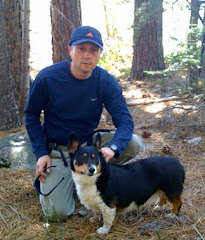
If we are lucky in life, we get to meet and spend years with our soul mate. I am one of the lucky. I met my human soul mate, my partner, twenty years ago, and my canine soul mate, Paris, a Welsh Pembroke corgi, came into our lives twelve and a half years ago, at the age of six weeks.
She was an unexpected gift. Several weeks before our rescue dog Chacha passed away after a long battle with an autoimmune disease which left us grief-stricken and bewildered. We’d only had Chacha a year before she became ill; having expected many more years with her, I was bereft. In mourning and at a loss, we wanted a new dog soon after, but repeated visits to shelters did not yield the right one. Looking back now, I realize we were seeking for a replacement for Chacha, not a new dog at all; she had been a dachshund/corgi mix, and we searched in vain for another like her. As the days went by, I became despondent. My friends and partner rallied around me; one friend finally took it upon herself to locate a litter of corgi puppies in Gilroy. 
  
I hardly recall the drive down, but I do remember that moment when I first saw Paris—brought to me by her breeder in a milk crate, she was the “runt” of the litter and priced at half of what her siblings had gone for. I paid willingly and returned home with this tiny, beautiful puppy whose markings were startling, perfect delineations of coal black, russet brown and pure white. Her eyes were blue, but would change to a soulful rich brown in time, as would her ears, rising to impressive peaked height, and her chest, which developed a strong breadth and bony ridge that are hallmarks of her breed.  I named her Paris in honor of the city, where my partner and I had planned to go on vacation but canceled our trip due to Chacha’s illness.

Paris was a joyous puppy:  she played, ate and ran around before collapsing wherever she happened to fall to nap, during which we couldn’t move her because then she’d growl and get testy. I’d never raised a pup before and she soon put me to the test, her willfulness and keen intelligence sending me to every puppy book I could get my hands on before I finally enrolled her in a series of obedience classes where she took to training with acuity, earning top marks. The training opened new doors in our relationship; all of a sudden, she looked to me as her guide, and her innate trust healed me of the pain I had suffered for her predecessor. As if she knew how much I needed her, Paris displayed remarkable resiliency and health, though her stomach was her Achilles heel, a legacy of her premature weaning. We overcame the stomach issues with a raw food diet supplemented by a high quality kibble; and lots of exercise.

She was tireless. She loved to hike and we patrolled the hills of our neighboring park twice daily in two-hour walks. Because of her, I met people I’d never have otherwise seen, fellow dog walkers whom I befriended and whose dogs became Paris’s playmates. Eventually we graduated to longer and grander hikes when my partner and I purchased a second home in Lake Tahoe. There, a whole new world filled with adventure burst open for us, as we explored dozens of mountain lakes and trails in our subsequent years together. We even hiked to the top of Mount Tallac at 8,500 feet! Paris may well have been the first corgi to accomplish that feat. And snow - oh, how she loved snow! It didn't matter how cold it was, she rolled and romped and frolicked in the stuff with abandon.
She also adored running water. Though she never swam willingly, at the falls of Taylor Creek she could spend hours knee-deep in crystalline pools, nipping and barking and drenching herself in the cascades. She loved to tear apart pine cones and nibble on the tender seeds inside; squirrels were designed specifically to drive her crazy and the chatter of chipmunks seemed to echo her name, like a network of warning that the pesky corgi was among them. Yet despite her herding instincts, she was invariably kind with other animals; she never harmed another being, including the six feral cats who shared our lives in our garden and whom she saw every day sunning themselves on our deck. It was she in fact who discovered the two once-feral cats who now share our home, finding them huddled under a bridge in the park and barking to alert me that their kittens were tumbling about her feet. Feeding the cats in the park became part of our ritual, as did long naps in the afternoon, sharing bananas and oranges and cheese, and jaunts about town. Paris liked to travel, though she could on occasion get car sick. She went several times with us to visit relatives in Los Angeles and it was always a thrill to find that new park to walk in, that new smell or object to pee on. She was always curious, always ready; she welcomed everything we did, no matter how often we did it, as if it were the first time. Unlike so many of us, she eschewed boredom. If things got slow, she simply dozed off for a while.
We had two near-encounters with death. The first was a savage pit bull attack in the park that she narrowly escaped by rushing to me; I had to beat the dog off her and we were both injured in the process. Paris’s shoulder and ear were torn out; when her fur grew back on her shoulder, it had a new white streak on the site, her battle scar. Her ear mended perfectly, to the vet’s surprise. The second brush was with a marijuana-laced brownie; always a chow-hound, she found it by the barbecue pits one Sunday and gobbled it up before I could stop her. I had no idea it was drugged until two hours later when we had to rush her to the emergency vet because she had lost muscle control and was hallucinating. The vet spent the night shoveling charcoal down her throat to induce vomiting; a very anxious ten hours later, we picked her up, groggy and tired, but thankfully alive.

Both occasions reminded me of the fragility of life and of that unspoken pact between us, that I would see her through to the end. It was easy to forget the pact, because her love taught me that the important thing in life was to be in the moment. And thus we remained until she fell ill with an esophageal disorder shortly before Thanksgiving. The disease was relentless, depriving her of her ability to keep down her food. When dreaded aspiration pneumonia set in on December 4 in the early morning hours, we rushed her to the same emergency vet who had saved her life twice before. There was no saving her this time; I had vowed she must not suffer. Her disease was incurable and so, as she lay in my arms and my partner knelt before her, stroking her face, she left us peacefully, with dignity.

I miss her every day. The initial anguish of her passing overwhelmed me. I finally understood the meaning of the word ‘inconsolable.’ But as time, remorseless and healing, has begun to pass, I find glimmers of joy in the memories of her beautiful face and expressive eyes that always regarded me so intently, in her stub of a tail that wagged so insistently whenever I returned home, no matter how brief my absence, and her solid warmth at my feet when I wrote, reminding me with a nudge of her muzzle that it was time for lunch or a nap or our walk. Though for today I remain lost without her, I know that as time continues to pass my memories will vanquish the sorrow, for I am a better human for having loved her. She was the dog of my soul, you see, and I am lucky to have met her.

Farewell, my sweet Paris. Until we meet again.