
I was a man.
When my agent at the time (who I must emphasize is NOT my agent now) told me she felt my gender was working against me, I was taken aback. Why did it make any difference? They liked my writing; praised my authenticity and my characterization; who cares if I'm a man? "Well," she replied, "they care. You're writing about women. They believe women readers want women writers, and women write better historical fiction than men."
Hold on! "What about the classics," I asked, "like Alexander Dumas and Rafael Sabatini?"
She made a snorting sound. "When was the last time they published anything? Today, men writing in the genre, like Wilbur Smith, do adventure novels centered on male characters. Men aren't writing about the female heart in history. And if they are, editors are reluctant to make an offer because they think the predominately female audience who buy historical fiction won't purchase the books."
Is that so? The truth was, I'd read several historical novels by men which I loved, such as "Duchess of Milan" by Michael Ennis, a gorgeous novel about the D'Este sisters that is very much about the female heart. I'd recommended it to my women and men friends, and no one seemed to mind about his gender. No one even seemed to notice. And yet here I faced an seemingly insurmountable obstacle in a long road of seemingly insurmountable obstacles. "What should I do?" I finally asked my agent. She said, "It's quite simple. Take on a pen name. I suggest you call yourself Caren Gortner."
Caren Gortner. Now, I wanted to be published more than anything else on this world. I'd have walked to New York if it would have made a difference, but there was something about changing my name to suit a preconceived notion that just didn't sit right with me. I strongly felt gender shouldn't have anything to do with the value of writing. I knew writers change names for a variety of reasons, including moving between different genres and/or to retain anonymity or simply because they don't think they sound authorial enough. But all I kept thinking was, How would I do book signings? Would I have to send in a female friend after prepping her for hours on what she should say to readers about my writing process, my inspiration, etc.? What about the author photo on the jacket? What about the bio, the publicity? How would I enjoy any of it if my readers thought I was a woman?
"Lots of male authors do it," my agent informed me tartly, when I expressed my objections. Look, I can't keep submitting your work this way. Take some time to think about it."
I was in a quandary. I consoled myself with the thought that no one had said, Oh, he writes terrible women. It's a marketing strategy, I decided after a sleepless night. A strategy to get past this bizarre prejudice, nothing more.
The next day, I called my agent. "What about C.W. Gortner? It's not female or male. I could be anyone."
There was a long pause. Then the phone clicked. The next time I heard from her it was a short letter explaining she was terminating our agreement.
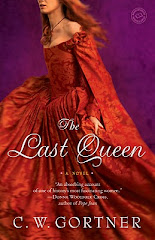
It was several more years before I buckled under the pressure and wrote The Secret Lion, my fourth written novel and first one using a male POV. It found a home in the small press world and led me in a roundabout way to my new agent, Jennifer Weltz, who sold my second-written novel The Last Queen in a 2-book deal to Ballantine Books. Is there still concern that I'm a man writing in a genre where women predominate? Absolutely. Do my editor, my agent and I believe my book transcends its author's gender? They do.
And I think readers will feel the same.






35 comments:
Enjoyed the post!
Could you please e-mail me with contact information for you (boswellbaxter@bellsouth.net)? I've tried to send the interview questions we discussed to you, but they keep getting returned to me as undeliverable. Thanks!
Susan Higginbotham
Hi Susan, just send you an e-mail from my personal address. Sorry about that! Thanks for tracking me down.
Hi, I found your blog via Yesterday Revisited. I'm not yet ready to submit anything, but I suspect I'm going to face the opposite problem since I'm a woman writing about men and battles.
I'm looking forward to read your blog and your books.
I'd be very interested to see if that's the case, Gabriele. Sharon Penman has written some pretty intense war sequences in her earlier novels; I wonder if she ever found an editor questioning her ability to pull it off as a woman writer? Hmmm . . . might be fun to ask her!
But Sharon writes books about the entire life of some people, and the battles are just a part of a greater whole. I focus a lot more on the military conflicts and my main characters, be they historical (Germanicus, Arminius) or fictive (Horatius Ravilla, Talorcan mac Ferac), are often officers or tribal leaders.
It's not the Life of Germanicus, but the Roman wars in Germany 9-16 AD, for example.
Interesting post! I’ve linked to it in “What is Women’s Fiction?” I too enjoy reading books by both male and female authors and hope my work appeals to a broad audience as well. I noticed that we are both represented by the same terrific literary agency, JVNLA – what a small world. Congratulations on your 2 book deal!
افضل شركة تنظيف فلل بالرياض
شركة تنظيف شقق بالرياض
تخزين عفش بالرياض
نقل اثاث
شركات نقل عفش بالرياض
تغليف الاثاث
نقل عفش داخل الرياض
شركة رش مبيدات بالرياض
شركات مكافحة القوارض
شركة ابادة الحشرات
اجهزة كشف الماء
شركات تخزين اثاث بالرياض
شركات تنظيف
عزل اسطح
نقل أثاث في الرياض
شركة تنظيف بالرياض
افضل شركات التنظيف في الرياض
شركة تنظيف شقق بالرياض
شركة مكافحة الحشرات بالرياض
شركة تنظيف منازل بالدمام
شركات تنظيف بالدمام
شركة تنظيف فلل بالرياض
تنظيف فلل
افضل الخصومات العالمية التى لا مثيل لهتا الان حيث اننا نعمل على تقدم افضل المميزات من افضل شركة لابادة الحشرات التى لا مثيل لها الان لاننا نعمل على تقدم افضل الخصومات والعروضص الرائعة من شركات ابادة الحشرات التى نقدمة الان من شركات مكافحة الحشرات بالقاهرة فىق ال وقت ممكن وباقل الاسعار الرائعة التى لا مثيل لها الا على تقدم افضل ن نعمل ابادة حشرات المنزل التى نقدمة الان
احصل الان علي افضل العروض المقدمة من كبري شركات العنود من كبري شركات عزل خزانات بمكة المكرمه اي انهم يعملون علي غسيل خزانات باحدث الطرق التس تستخدم في كبري شركة تنظيف مكة المكرمه وهنا يمكنكم التمتع في شركة تنظيف كنب مكة المكرمه باخدث وسائل التبخير وتعمل علي تنظيف رخام بمكة المكرمه فهم يعملون جيدا علي تنظيف الرخام وهنا تتوفر شركه مكافحة حشرات بمكة المكرمه الكبري التي تعمل علي اباده الحشرات ومكافحتها
Wonderful blog post. This is absolute magic from you! I have never seen a more wonderful post than this one. You've really made my day today with this. I hope you keep this up! Emergency Towing Austin
I quite like reading an article that can make people think. Also, thanks for allowing me to comment! Winch Outs Woodbridge
This is a wonderful article, Given so much info in it, This type of article keeps the user's interest in the website, and keeps on sharing more. Roadside Assistance Clarksville
This is really nice and informative, containing all information and also has a great impact. Cheap Towing Memphis
A debt of gratitude is in order for the post with respect to this. I discover this kind of data exceptionally helpful. Wrecker Service Houston
I think this is an informative post and it is very useful and knowledgeable. therefore, I would like to thank you for the efforts you have made in writing this article. Towing Service Near Me Humble
I want you to thank for your time of this wonderful read!!! I definitely enjoy every little bit of it and I have you bookmarked to check out new stuff of your blog a must-read blog! 24 Hour Towing Albuquerque
I would like to thank you for the efforts you have made in writing this article. I am hoping for the same best work from you in the future as well. Cheap Towing Henderson
Pretty good post. I just stumbled upon your blog and wanted to say that I have really enjoyed reading your blog posts. Anyway, I'll be subscribing to your feed and I hope you post again soon. Big thanks for the useful info. Heavy Wrecker Bowling Green KY
I found this article very interesting and informative. It will definitely add to our knowledge. 24 Hour Towing DeSoto
This is absolutely too a great posting we genuinely experienced glancing through. It is a long way from every day we have a hazard to look at a touch of something. 24 Hour Towing Buda Kyle
Your grasp of this topic is amazing. It really touched base with me and I am glad I found this material. Thank you very much. Towing Service Shreveport
Keep ‘em coming. you all do such an excellent task at such Concepts… cannot tell you how significantly I, for a single appreciate all you do! 24 Hour Towing Watertown TN
It is extremely nice to see the greatest details presented in an easy and understanding manner. Towing Company Portland TN
Thanks for writing such a good article, I stumbled onto your blog and read a few posts. I like your style of writing. Towing Service Cincinnati
I am very glad after reading your amazing article, thanks for sharing. Recovery Towing Lewisville
I am happy subsequent to perusing your stunning article, a debt of gratitude is in order for sharing. Towing Company Near Me Bentonville
This is an extraordinary post. I like this theme. This site has loads of preferred positions. I discovered many fascinating things from this site. It causes me from multiple points of view. A debt of gratitude is in order for posting this once more. Towing Company Near Me Coppell
Fantastic Blog! I agree completely with you here. It is a very valuable and helpful collection of blogs. I am trying to gain information from all these. Really helpful post. Thank you. Box Truck Towing Dallas
I am impressed by the way you detailed everything. It is really going to help me a lot. Thanks for sharing your thoughts so clearly. Wrecker Service Bastrop
We are really grateful for your blog post. You will find a lot of approaches after visiting your post. Great work. Junk Car Shirley NY
This is also a very good post which I really enjoy reading. It is not every day that I have the possibility to see something like this. Tow Truck Near Me Addison
Great Article its really informative and innovative keep us posted with new updates. It was really valuable. thanks a lot. Car Towing West Park FL
I am impressed by the way you detailed out everything. It is really going to help me a lot. Thanks for sharing your thoughts so clearly. Heavy Duty Towing Corpus
Exploring gender dynamics in literature offers invaluable insights into societal constructs. This blog delves into the intricate interplay of gender roles, shedding light on their portrayal in books. An enlightening read, it prompts reflection on how narratives shape and challenge our perceptions of gender. Javi's Towing & Transport Orlando
Post a Comment