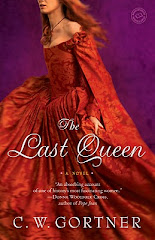
History and historical fiction appear to go hand-in-hand; without the former, certainly there couldn't be the latter. Yet in some cases, these two apparent inseparable allies make for uneasy bedfellows. The truth is, not everyone who loves history is going to love historical fiction and vice versa. Some people are best disposed to the history itself, such as original documents, erudite biographies etc. This is the arena where scholars most often dwell; it's a hallowed place yet not one necessarily conducive to reading historical fiction, which, in the final say, remains a form of entertainment.
While historical fiction can inform and inspire an interest in history, and should of course refrain from blatant disrespect, it was never intended to substitute or even augument history itself. Historical fiction is a form of creative interpretation; it utilizes historical framework to relate a fictionalized story based on the past. The most informed readers will often find anacronisms in a novel that others might never notice and find this disillusioning, even off-putting; but we should remember that to be a working historical fiction writer in today's publishing climate, by and large it's often required to steamline characterizations, simplify complex political, social, and religious situations, modernize dialogue, keep the cast small and the pacing crisp. In sum, most commercial editors at major houses want writers whose books can be enjoyed by all potential readers, regardless of their particular background.
History is not an easy subject; historical fiction, when done well, can help to relieve the most intimidating aspects of history and make it accessible to those who believe the past can't be exciting or fun, with all those pesky dates and titles to remember. A scholar approaches history from an extremely detailed perspective; while such knowledge can inform the reading of historical fiction and even make it enjoyable, it can also by contrast curtail the ability to suspend disbelief, which is an essential requirement for fiction, regardless of the genre.
We read novels because we want to be entertained; we read nonfiction because we want to learn. And while the two may cross and, in the best of cases, even blend, the distinction still exists.
Monday, July 26, 2010


Sunday, July 25, 2010
Loaded Questions is Back!
After a long hiatus, Kelly Hewitt's fabulous Loaded Questions is back. If you haven't followed it before, Kelly features marvelous interviews with authors, as well as insider scoop on publishing news and other book-related features. Welcome back, Kelly! We missed you.
You can find my own interview with Kelly here.
You can find my own interview with Kelly here.
Monday, July 19, 2010
The Amazing Jean Taggart
On July 18, Jean Taggart, a fourth-generation Californian and writer, left this world. She was 91 years old and though very well-traveled (she took a cruise to Guatemala in her 80s) she had spent most of her life in San Francisco, a city she revered.
 was 91 years old and though very well-traveled (she took a cruise to Guatemala in her 80s) she had spent most of her life in San Francisco, a city she revered.
 I first met Jean 16 years ago; I was working on my first historical novel and looking for a group to join in the area. I saw an ad in the Noe Valley Voice for a group called the Sunset Writers and called; Jean answered the phone. She had a rough, sexy voice - she was in her 70s at this time but she sounded decades younger and we had almost instant rapport. She told me the group had openings and to come to their next meeting. "They'll have to audition you," she said, "but don't worry. I'm sure you'll do just fine."
That first meeting, I was a bundle of nerves. It was my first live encounter with other writers; I didn't know what to expect. I'd brought a few chapters of my opus-in-progress; as I walked up the steps to Jean's cozy home, shaded by trees on a sunny hillside corner near Noe Valley, I heard laughter coming from within. Jean opened the door, a tall, slightly stoop-shouldered, white haired woman with sparkling blue eyes and an infectious grin. "Good, you're young," she said, motioning me in. "We need young blood here." She offered me coffee - she always had coffee and cookies available at every meeting - in a crowded kitchen where her cats languidly inspected my shoes and over which presided a framed poster of a faerie-like woman holding a broom and the words: F*#K Housework.
Over the next years, myriad group members came and went; we had our internal dramas, controversies, even fights, but Jean remained a constant, her house a place of refuge where we gathered to read aloud from our work and receive criticism and advice. Jean was a gifted writer with a knack for the cut-to-the- chase critique; like many intelligent, quick-witted people she did not suffer fools gladly. She loved youth, and though our younger members arrived like whirlwinds of enthusiasm and invariably moved on, several kept in contact with Jean after they left our group.
 chase critique; like many intelligent, quick-witted people she did not suffer fools gladly. She loved youth, and though our younger members arrived like whirlwinds of enthusiasm and invariably moved on, several kept in contact with Jean after they left our group.
 Her own writing tended to reflect her chief passion: her love for California. Raised in the Sacramento area, Jean had been through the war and lost a brother overseas; her other brother, also gone by the time I met her, had been a talented novelist whose life had often been difficult. She'd traveled abroad many times; she loved to discover new places and never complained about the hardships that travel must have imposed on a woman of her years, but home was San Francisco - the City by the Bay whose history she had experienced firsthand and was chronicled in her marvelous unpublished series of stories, Taylor Street Tales. Though Jean was married for only a short time, when she spoke of past beaus and of her glamorous, heady life in San Francisco in the 1940s and '50s, you could see in her eyes the secret joy of a woman who had loved often and loved well. Men and cats: each had felt the magnetic pull of her ardor for life. Though men faded eventually, cats remained. Jean always had a cat, or two, frightened creatures she rescued and nurtured back to trust.
Jean dabbled in painting, as well - her splashy watercolors were often haphazardly arranged about her house, with and without frames. Her eclectic sense of decor carried over to her taste in books; she was attracted to literary works, but also loved a good mystery. One of the highest compliments she ever paid me was that I'd made her appreciate historical fiction, a genre she'd always associated with "big gowns and hair." When I finally managed to get published after years of disappointments and perseverance, Jean took immense pleasure in my success and rallied her neighborhood bookseller to order in my books.
Jean dabbled in painting, as well - her splashy watercolors were often haphazardly arranged about her house, with and without frames. Her eclectic sense of decor carried over to her taste in books; she was attracted to literary works, but also loved a good mystery. One of the highest compliments she ever paid me was that I'd made her appreciate historical fiction, a genre she'd always associated with "big gowns and hair." When I finally managed to get published after years of disappointments and perseverance, Jean took immense pleasure in my success and rallied her neighborhood bookseller to order in my books.
Some of my favorite moments with Jean were spent at her kitchen table, in the half-hour before the rest of our writing group arrived; over coffee and the occasional furtive cigarette, she'd share with me stories of San Francisco; of the speak-eases in the Tenderloin where she used to go dancing; the clatter of cable cars on Nob Hill where she lived; the busy downtown office where she worked; and of the aura of endless promise shimmering over a time when the end of the war had heralded a burst of optimism in America. Jean lived through it all: the penciled seam up-the-leg stocking of the 40s; the ice-cream crinolines of the 50s; the hedonistic smoky rebellion of the Beat Generation; the sexual napalm of Flower Power; the bra burning and glitter balls of the 70s; the Me-Me 80s, Woe-is-Me 90s, and into the uncertain early years of a troubled new century. She had experienced more history than most of us will ever see and lost most of her contemporaries in the process. Her face would sometimes turn distant as she recalled everyone she had loved and said goodbye to during her remarkable long life; though Jean rarely indulged in self-pity or regret, I could tell that all those goodbyes lived inside her. We had a term for it: 'The Price of Longevity.' She herself had narrowly escaped the shadow of her mortality on various occasions; a breast cancer survivor, she was proud of her scars and matter-of-fact about the horrors she'd undergone as a result of her mastectomies and implants. Still, Jean never wasted time on looking back; she reveled in the present, in the thrill of opportunity, and even took up blogging.
Toward the last few years of her life, after a series of serious health setbacks that curtailed her independence, she expressed to me her aversion to reaching the 100-year mark. She didn't mind being old, she said; she just  didn't want to fall apart. The last time I saw her was at our group; though frail, she still chuckled with me in the kitchen as I boiled water for tea and mentioned how much she had enjoyed coming to my book party - a haul for her, which she had insisted on making. I said goodbye at the night's end and told her I'd see her at our next meeting, but I ended up not making it due to conflicts in my schedule. I never saw her again.
Jean Taggart wanted us to say of her that she was a fourth-generation Californian and proud of it. As the song says, 'I know when I die, I will breath my last sigh for sunny California,' but Jean always said, she planned to go out laughing.
I can hear her now.
 didn't want to fall apart. The last time I saw her was at our group; though frail, she still chuckled with me in the kitchen as I boiled water for tea and mentioned how much she had enjoyed coming to my book party - a haul for her, which she had insisted on making. I said goodbye at the night's end and told her I'd see her at our next meeting, but I ended up not making it due to conflicts in my schedule. I never saw her again.
 Jean Taggart wanted us to say of her that she was a fourth-generation Californian and proud of it. As the song says, 'I know when I die, I will breath my last sigh for sunny California,' but Jean always said, she planned to go out laughing.
I can hear her now.
Thursday, July 8, 2010
New This Week: Recommended Fiction
This week, I heartily recommend two books which I endorsed and which captured me from beginning to end.
FOR THE KING by Catherine Delors
Catherine Delors blazed onto the historical fiction scene with her riveting Mistress of the Revolution, about a young woman swept up into the vagaries and savagery of the Fr ench Revolution, and her struggle to survive. In FOR THE KING, Ms Delors turns her keen eye for characterization and impeccable sense of period detail to the tumultuous world of Napoleonic Paris, offering us a fascinating account of a conflicted man determined to uncover the truth behind a spectacular crime. With consummate skill, she guides us into a world that is glamorous, barbaric and deceitful, where privilege often trumps guilt and betrayal can exact an unimaginable price. This was one of my favorite endorsement reads of 2010; masterfully written, FOR THE KING offers a vivid portrait of a city caught between its violent past and treacherous present, combining the pulse-pounding suspense of a thriller with the glamour of superbly researched historical fiction.
 ench Revolution, and her struggle to survive. In FOR THE KING, Ms Delors turns her keen eye for characterization and impeccable sense of period detail to the tumultuous world of Napoleonic Paris, offering us a fascinating account of a conflicted man determined to uncover the truth behind a spectacular crime. With consummate skill, she guides us into a world that is glamorous, barbaric and deceitful, where privilege often trumps guilt and betrayal can exact an unimaginable price. This was one of my favorite endorsement reads of 2010; masterfully written, FOR THE KING offers a vivid portrait of a city caught between its violent past and treacherous present, combining the pulse-pounding suspense of a thriller with the glamour of superbly researched historical fiction.
 SHADOW OF THE SWORDS by Kamran Pasha
Forget everything you thought you know about the Crusades. In this gorgeously wrought tale, following his sublime Mother of the Believers, Kamran Pasha depicts the epic strugg le for Jerusalem between Christians and Muslims with startling modern relevance. His unexpected portrayal of charismatic Saladin, whose gift for leadership harbors a secret weakness for a woman forbidden to him; tortured Richard the Lionheart, whose blind ambition to conquer the East turns him into a ruthless, fallible foe; and Miriam, the proud healer haunted by the past, is timely and deeply moving. Mr Kamran's vision is rooted in both sensual detail and a sage appreciation for irony; passionate, gilded with the scents of a vanished time, and steeped in the blood and thunder of two antagonistic faiths, SHADOW OF THE SWORDS is a triumph from start to finish.
 le for Jerusalem between Christians and Muslims with startling modern relevance. His unexpected portrayal of charismatic Saladin, whose gift for leadership harbors a secret weakness for a woman forbidden to him; tortured Richard the Lionheart, whose blind ambition to conquer the East turns him into a ruthless, fallible foe; and Miriam, the proud healer haunted by the past, is timely and deeply moving. Mr Kamran's vision is rooted in both sensual detail and a sage appreciation for irony; passionate, gilded with the scents of a vanished time, and steeped in the blood and thunder of two antagonistic faiths, SHADOW OF THE SWORDS is a triumph from start to finish.
 Tuesday, June 29, 2010
Four Books I Recommend: Mini Reviews
THE PASSAGE by Justin Cronin
This is being buzzed as the Big Book of the Year, and with reason: it was bought for a colossal sum at auction by Ballantine Books; film rights sold to Ridley Scott, director of Alien a nd Gladiator within days, and it's drawn comparisons to the best of Stephen King. Being a fan of King's earlier novels (The Shining is one of my all-time favorites) I was intrigued by Cronin's apocalyptic tale of a scientific experiment gone awry and a world overcome by virological vampires, aptly dubbed "virals." At the center of this huge story spanning over 700 pages is an enigmatic girl named Amy, whose abandonment by her mother propels her into the horrific events leading up to the end of civilization as we know it, and the creation of a much-altered and frightening post-collapse society, where clusters of surviving mortals hide behind enclosed homesteads and banks of battery-powered lights which are slowly but inexorably losing power. The cast is immense, as befitting an epic, though at times this proves challenging both in remembering who everyone is and investing in any single person, particularly as you never know when said person will fall prey to the marauding, tree-leaping, blood-thirsty virals who've quite literally "eaten the world." These virals, however, are more than toothy creatures; and it's their secret, as well as Amy's role in it, that drives the story to its long-winded but ultimately creepy conclusion. THE PASSAGE requires immersion and patience; but for the intrepid reader there are rewards to be had, including the first 250 pages, which are a pitch-perfect icy soak into the terrors of science taken to extreme, and later on, a particularly nasty confrontation with hordes of virals in devastated Las Vegas. Mr Cronin is working on the next book in a proposed trilogy.
THE ILLUMINATOR by Brenda Rickman Vantrese
This is another book that generated serious buzz when it sold to St Martin's Press years ago and I bought a first edition because, frankly, the cover looked like a gold-laminated Faber ge egg. Unfortunately, I didn't get around to reading it until recently, though I've faithfully bought the next two books by Ms Vantrese based on reviews. And let me just say for the record: Why did I wait so long?! THE ILLUMINATOR is a magnificent, thought-provoking and defiantly anti-anachronistic plunge into the turmoil and tragedy of 14th century England. The story, on the surface, appears deceptively simple: a widow, Lady Kathyrn - portrayed refreshingly in middle age, rather than the dewy glamour of youth- is fighting to save her estate as inheritance for her sons from the rapacity of the Church and ill-intentioned suitors. Enter a mysterious illuminator named Finn and his evanescent daughter; after a mishap on the road involving a pig and a dwarf, Finn is conscripted into plying his trade as an illuminator of manuscripts for the local bishop and comes to live in Lady Kathyrn's manor, where his presence sets off a chain of life-shattering events. Vantrese's true strengths lie in her superb grasp of the era and understanding of the complex importance of spirituality to people striving to overcome every-day suffering. This is not a romanticized historical recreation; THE ILLUMINATOR transports you into a time both fascinating and repellent in its contradictions. Ms Vantrese is also the author of The Mercy Seller and The Heretic's Wife, which loosely connect with her first book and are now at the top of my TBR list.
DAUGHTER OF FORTUNE by Isabel Allende
Let me say it upfront: I'm a devoted fan of Ms Allende. From her House of the Spirits t o Zorro, I have reveled in her quixotic, sensual, unabashedly sprawling explorations of family ties, the toll and joys of love in all its diverse forms, and the independent spirit of the immigrant. DAUGHTER OF FORTUNE was the book selected by Oprah for her book club and of course it garnered enormous acclaim; while I bought it, it was another that sat on my shelf unread, for some inexplicable reason. Nevertheless, the wait was worth it. Infused with Ms Allende's trademark turns of phrase ("fate lashed its tail and changed her life forever") and cast of eccentric characters driven by private obsessions, this novel takes place in the 1800s, starting in Chile with the discovery of a baby in a soap crate, left on the threshold of the very proper but secret-riddled English family of the Sommers. The child, named Eliza, is raised by the delightful wasp-waisted Ms Rose Sommers, indoctrinated in the limited methods a girl can employ to survive in their rarefied society; but when Eliza falls passionately and unexpectedly in love with a common clerk, she flees the safe emptiness of her cloistered existence for feral California, embarking on an adventure that awakens her to life's vast potential and cracks the fragile veneer in which the Sommers themselves have dwelled. Ms Allende's deft pen conjures to vivid, humane life both the hypocrisy of Victorian mores in South America as well as the savage abandon of the Gold Rush; her cast is wide and diverse, ranging from the mourning Chinese physician who accompanies Eliza to a caravan of prostitutes led by a transgender humanitarian. Very few writers today can claim the mastery of color and depth of Gabriel Garcia Marquez's work; I humbly suggest that Ms Allende is definitely one of them.
THE SHEEN ON THE SILK by Anne Perry
Anne Perry departs from her bestselling Victorian mysteries for this epic, yet at times une ven, tale of 13th century Byzantium featuring a female physician who disguises herself as a eunuch to uncover the truth about her twin's involvement in the assassination of a politician. Still reeling from a Venetian-led assault that devastated its populace and exiled its imperial family, Byzantium is a city of crumbling secrets, besieged noble families, and labyrinthine intrigues; into this dangerous yet seductive crossroads between East and West enters Anna, a.k.a. Anastasius, determined to prove her brother's innocence. While Anna's story is compelling in and of itself, it is her patroness Zoe, an aging but still beautiful noblewoman intent on revenge, who steals the plot — seductive, lethal, and uncompromising, Zoe has never forgotten the debt that Venice has incurred for destroying the city, even as her own past is haunted by tragedy and violence. Woven throughout the novel's ambitious narrative are various supporting characters, including a conflicted Roman priest whose contact with Byzantium throws his own faith into question; a Venetian sailor seeking his hidden past; and a spiritually pliant bishop of the Orthodox faith determined to prevent ecclesiastical union with Rome. Perry excels in her characterizations and in creating an ambiance that shifts easily between the gilded corridors of Byzantium’s sea-scented palaces to the corrupt intrigues of the Vatican to the arid expanse of the Sinai desert; however, at times her pacing can be challenging both because of the wide cast of characters and the novel's meditations on the meaning of religion in a world overcome by upheaval.
This is being buzzed as the Big Book of the Year, and with reason: it was bought for a colossal sum at auction by Ballantine Books; film rights sold to Ridley Scott, director of Alien a
 nd Gladiator within days, and it's drawn comparisons to the best of Stephen King. Being a fan of King's earlier novels (The Shining is one of my all-time favorites) I was intrigued by Cronin's apocalyptic tale of a scientific experiment gone awry and a world overcome by virological vampires, aptly dubbed "virals." At the center of this huge story spanning over 700 pages is an enigmatic girl named Amy, whose abandonment by her mother propels her into the horrific events leading up to the end of civilization as we know it, and the creation of a much-altered and frightening post-collapse society, where clusters of surviving mortals hide behind enclosed homesteads and banks of battery-powered lights which are slowly but inexorably losing power. The cast is immense, as befitting an epic, though at times this proves challenging both in remembering who everyone is and investing in any single person, particularly as you never know when said person will fall prey to the marauding, tree-leaping, blood-thirsty virals who've quite literally "eaten the world." These virals, however, are more than toothy creatures; and it's their secret, as well as Amy's role in it, that drives the story to its long-winded but ultimately creepy conclusion. THE PASSAGE requires immersion and patience; but for the intrepid reader there are rewards to be had, including the first 250 pages, which are a pitch-perfect icy soak into the terrors of science taken to extreme, and later on, a particularly nasty confrontation with hordes of virals in devastated Las Vegas. Mr Cronin is working on the next book in a proposed trilogy.
THE ILLUMINATOR by Brenda Rickman Vantrese
This is another book that generated serious buzz when it sold to St Martin's Press years ago and I bought a first edition because, frankly, the cover looked like a gold-laminated Faber
 ge egg. Unfortunately, I didn't get around to reading it until recently, though I've faithfully bought the next two books by Ms Vantrese based on reviews. And let me just say for the record: Why did I wait so long?! THE ILLUMINATOR is a magnificent, thought-provoking and defiantly anti-anachronistic plunge into the turmoil and tragedy of 14th century England. The story, on the surface, appears deceptively simple: a widow, Lady Kathyrn - portrayed refreshingly in middle age, rather than the dewy glamour of youth- is fighting to save her estate as inheritance for her sons from the rapacity of the Church and ill-intentioned suitors. Enter a mysterious illuminator named Finn and his evanescent daughter; after a mishap on the road involving a pig and a dwarf, Finn is conscripted into plying his trade as an illuminator of manuscripts for the local bishop and comes to live in Lady Kathyrn's manor, where his presence sets off a chain of life-shattering events. Vantrese's true strengths lie in her superb grasp of the era and understanding of the complex importance of spirituality to people striving to overcome every-day suffering. This is not a romanticized historical recreation; THE ILLUMINATOR transports you into a time both fascinating and repellent in its contradictions. Ms Vantrese is also the author of The Mercy Seller and The Heretic's Wife, which loosely connect with her first book and are now at the top of my TBR list.
DAUGHTER OF FORTUNE by Isabel Allende
Let me say it upfront: I'm a devoted fan of Ms Allende. From her House of the Spirits t
 o Zorro, I have reveled in her quixotic, sensual, unabashedly sprawling explorations of family ties, the toll and joys of love in all its diverse forms, and the independent spirit of the immigrant. DAUGHTER OF FORTUNE was the book selected by Oprah for her book club and of course it garnered enormous acclaim; while I bought it, it was another that sat on my shelf unread, for some inexplicable reason. Nevertheless, the wait was worth it. Infused with Ms Allende's trademark turns of phrase ("fate lashed its tail and changed her life forever") and cast of eccentric characters driven by private obsessions, this novel takes place in the 1800s, starting in Chile with the discovery of a baby in a soap crate, left on the threshold of the very proper but secret-riddled English family of the Sommers. The child, named Eliza, is raised by the delightful wasp-waisted Ms Rose Sommers, indoctrinated in the limited methods a girl can employ to survive in their rarefied society; but when Eliza falls passionately and unexpectedly in love with a common clerk, she flees the safe emptiness of her cloistered existence for feral California, embarking on an adventure that awakens her to life's vast potential and cracks the fragile veneer in which the Sommers themselves have dwelled. Ms Allende's deft pen conjures to vivid, humane life both the hypocrisy of Victorian mores in South America as well as the savage abandon of the Gold Rush; her cast is wide and diverse, ranging from the mourning Chinese physician who accompanies Eliza to a caravan of prostitutes led by a transgender humanitarian. Very few writers today can claim the mastery of color and depth of Gabriel Garcia Marquez's work; I humbly suggest that Ms Allende is definitely one of them.
THE SHEEN ON THE SILK by Anne Perry
Anne Perry departs from her bestselling Victorian mysteries for this epic, yet at times une
 ven, tale of 13th century Byzantium featuring a female physician who disguises herself as a eunuch to uncover the truth about her twin's involvement in the assassination of a politician. Still reeling from a Venetian-led assault that devastated its populace and exiled its imperial family, Byzantium is a city of crumbling secrets, besieged noble families, and labyrinthine intrigues; into this dangerous yet seductive crossroads between East and West enters Anna, a.k.a. Anastasius, determined to prove her brother's innocence. While Anna's story is compelling in and of itself, it is her patroness Zoe, an aging but still beautiful noblewoman intent on revenge, who steals the plot — seductive, lethal, and uncompromising, Zoe has never forgotten the debt that Venice has incurred for destroying the city, even as her own past is haunted by tragedy and violence. Woven throughout the novel's ambitious narrative are various supporting characters, including a conflicted Roman priest whose contact with Byzantium throws his own faith into question; a Venetian sailor seeking his hidden past; and a spiritually pliant bishop of the Orthodox faith determined to prevent ecclesiastical union with Rome. Perry excels in her characterizations and in creating an ambiance that shifts easily between the gilded corridors of Byzantium’s sea-scented palaces to the corrupt intrigues of the Vatican to the arid expanse of the Sinai desert; however, at times her pacing can be challenging both because of the wide cast of characters and the novel's meditations on the meaning of religion in a world overcome by upheaval.
Wednesday, June 23, 2010
Does the Prize make the Genre?
Hilary Mantel's recent win of The Walter Scott Prize for Historical Fiction is a definite boon for a genre that has suffered more than its fair share of critics. In the days leading up to the award of this prestigious UK-based prize, both author Sarah Dunant – a nominee - and academic Jerome de Groot wrote pieces in the Times and The Scotsman, respectively, which attest to, and attempt to explain, the current popularity of the historical novel. Both pieces offer valid points and rejoice in our genre's resurrection; and no one who has read my blog can deny my own admiration for Dunant’s work, in particular.
However, for me, both pieces exude a slight whiff of troubling elitism prevalent within the genre. It's almost as if historical novelists must justify the reason for their work while being divided into categories: the literary; the commercially popular; and, well, the rest. While we cannot deny a class status within the genre, as in all forms of writing, I believe there are more deserving novelists working in the arena of historical fiction than just the ubiquitous nominees. There seems to be a general reluctance to acknowledge this fact, as if in doing so we might risk opening the floodgates to a tidal wave of undesirables who will inundate our shelves; as if by paring the list to a few well-heeled and universally acclaimed names, we can restrain the growth of this rather checkered genre and keep it in its proper place, so to speak.
Surely the time has come to cease casting aspersions based on a tarnished past? Jean Plaidy, Anya Seton, Georgette Heyer, et al are our grand dames, who deserve respect, if nothing else, for popularizing a genre mired in 19th century convention. While few today would deem their books as serious literary endeavors, they remain compulsively readable. Even more important, these hard-working, prolific novelists helped make the genre accessible to thousands of readers who otherwise might never have picked up, much less read, an historical novel.
The archaic confusion between romance novels with historical settings—where the romantic interaction always assumes precedence over history— and the current vogue in novels featuring real historical figures appears to be a partial culprit in our current elitist stance. No one, it seems, wants to be caught dead being dubbed the descendant of a bodice ripper. Nor do some literary-aspiring novelists want to be caught dead doing the “marquee name” while others, conversely, shun stories about ordinary people living in the past, with nary a guttering beeswax candle or flicker of velvet in sight.
But in truth, these divisions are blurring. While it can be said we’re experiencing an overemphasis on queens, which in turn risks exposing the genre to all the historic criticisms leveled against it, such as lack of veracity, distortion of facts, etc., the genre is also more popular than ever— and that in and of itself is a remarkable feat, a testament to the fact that readers love what we write and there is room for variations on a theme.
I’m all for excellence in our craft; indeed, I strive for it. I just feel there is more of it around us than the rest of the world wants to admit and we must celebrate our diversity, rather than merely exalt our loftiest achievements.
However, for me, both pieces exude a slight whiff of troubling elitism prevalent within the genre. It's almost as if historical novelists must justify the reason for their work while being divided into categories: the literary; the commercially popular; and, well, the rest. While we cannot deny a class status within the genre, as in all forms of writing, I believe there are more deserving novelists working in the arena of historical fiction than just the ubiquitous nominees. There seems to be a general reluctance to acknowledge this fact, as if in doing so we might risk opening the floodgates to a tidal wave of undesirables who will inundate our shelves; as if by paring the list to a few well-heeled and universally acclaimed names, we can restrain the growth of this rather checkered genre and keep it in its proper place, so to speak.
Surely the time has come to cease casting aspersions based on a tarnished past? Jean Plaidy, Anya Seton, Georgette Heyer, et al are our grand dames, who deserve respect, if nothing else, for popularizing a genre mired in 19th century convention. While few today would deem their books as serious literary endeavors, they remain compulsively readable. Even more important, these hard-working, prolific novelists helped make the genre accessible to thousands of readers who otherwise might never have picked up, much less read, an historical novel.
The archaic confusion between romance novels with historical settings—where the romantic interaction always assumes precedence over history— and the current vogue in novels featuring real historical figures appears to be a partial culprit in our current elitist stance. No one, it seems, wants to be caught dead being dubbed the descendant of a bodice ripper. Nor do some literary-aspiring novelists want to be caught dead doing the “marquee name” while others, conversely, shun stories about ordinary people living in the past, with nary a guttering beeswax candle or flicker of velvet in sight.
But in truth, these divisions are blurring. While it can be said we’re experiencing an overemphasis on queens, which in turn risks exposing the genre to all the historic criticisms leveled against it, such as lack of veracity, distortion of facts, etc., the genre is also more popular than ever— and that in and of itself is a remarkable feat, a testament to the fact that readers love what we write and there is room for variations on a theme.
I’m all for excellence in our craft; indeed, I strive for it. I just feel there is more of it around us than the rest of the world wants to admit and we must celebrate our diversity, rather than merely exalt our loftiest achievements.
Sunday, June 20, 2010
Blog Tour Week 4
This is the final week of my tour for The Confessions of Catherine de Medici. I've had a lot of fun visiting the blogs and meeting readers; for me, the time just flew by. I also want to thank all the bloggers who took the time to review the book and host me during this tour; I owe each of them a huge debt of gratitude!
I'll be visiting the following blogs:
June 21 - Cafe of Dreams
June 21 -Bags, Books and Bon Jovi
June 21 - Teresa's Reading Corner
June 22 - Bookgirl's Nightstand
June 22 - One More Paragraph
June 22 - Celtic Lady Reviews
June 22- Medieval Bookworm
June 23 - A Room Without Books Is So Empty
June 23 - So Many Precious Books, So Little Time
June 24 - Epic Rat
June 24 - Review from Here
June 25 - My Friend Amy
June 25 - The Eclectic Reader
June 25 - Tribute Books Reviews
I'll be visiting the following blogs:
June 21 - Cafe of Dreams
June 21 -Bags, Books and Bon Jovi
June 21 - Teresa's Reading Corner
June 22 - Bookgirl's Nightstand
June 22 - One More Paragraph
June 22 - Celtic Lady Reviews
June 22- Medieval Bookworm
June 23 - A Room Without Books Is So Empty
June 23 - So Many Precious Books, So Little Time
June 24 - Epic Rat
June 24 - Review from Here
June 25 - My Friend Amy
June 25 - The Eclectic Reader
June 25 - Tribute Books Reviews
Sunday, June 13, 2010
Week 3 of the Confessions tour
This week, I'll be at the following blogs on the third week of The Confessions of Catherine de Medici virtual tour. Please, stop by if you can!
June 14 - Wonders and Marvels. Enter to win one of 3 copies of the book!
June 14- The Bluestocking Society
June 15- Savvy Verse and Wit
June 15- The Book Faery Reviews
June 16- The Review Stew
June 16 - Literary Lolita
June 17- Acting Balanced
June 17- Life in Review
June 18 - Review from Here
June 18 - The Introverted Reader
June 14 - Wonders and Marvels. Enter to win one of 3 copies of the book!
June 14- The Bluestocking Society
June 15- Savvy Verse and Wit
June 15- The Book Faery Reviews
June 16- The Review Stew
June 16 - Literary Lolita
June 17- Acting Balanced
June 17- Life in Review
June 18 - Review from Here
June 18 - The Introverted Reader
Friday, June 11, 2010
A CONFESSIONS Party
 |
| The Catherine cake |
On Thursday, June 10, we held a book party to celebrate the publication of The Confessions of Catherine de Medici. The event was held at my favorite San Francisco independent, Bookshop West Portal, which has been incredibly supportive of me and my work. Most authors know that bookstores these days are under a lot of pressure due to the state of the market in general and online discounting in specific; however, bookstores remain integral to our business, for these are comprised of actual human beings who recommend, hand-sell, and promote books to in-store customers. Without them, we'd be wholly dependent on the impartial automation of the online world, where titles sit among thousands of other thumbnails.
 |
| Readers!! |
 The party was great, well attended, and lots of fun. My partner and I served a cake with the book cover in frosting (raspberry and chocolate; it was divine), wine, and cheese; we held a Catherine de Medici medallion giveaway and of course the store sold books. I want to thank everyone who came and the bookshop personnel for their incredible generosity. I'm posting some photos here of the event; if you'd like a personalized copy of the book, please do contact the store. I'll make sure to go and personalize the book for you. Otherwise, there are currently signed copies available and they can be sent to you. Thanks to all of who came and to all of you who were there with me in spirit!
Monday, June 7, 2010
CONFESSIONS Blog Tour Week 2
This week, I'll be visiting the following blogs as part of my month-long virtual blog tour for The Confessions of Catherine de Medici. Hope to see you there! If you're in the San Francisco Bay Area, please come to my book launch party at Bookshop West Portal, too. We'll be serving wine, cake and offering a Catherine de Medici medallion giveaway. Should be fun :)
June 8 http://rebecca2007.wordpress.com
June 9 http://bookingmama.blogspot.com
June 10 http://literarilyspeaking.net
June 11 http://writingren.blogspot.com
June 8 http://rebecca2007.wordpress.com
June 9 http://bookingmama.blogspot.com
June 10 http://literarilyspeaking.net
June 11 http://writingren.blogspot.com
Saturday, June 5, 2010
Win A Silver Phoenix Pin, courtsey of MJ Rose at The Burton Review
 By now, most of you know how much I love MJ Rose's Reincarnationist series. These are intriguing, layered and fascinating thrillers that are right up there with the best in the genre. MJ's latest, The Hypnotist, is my favorite so far, combining reincarnation, art, and the high-stakes black market world into a complex, unputdownable story. You can read my review here.
Now, MJ is offering readers a limited edition silver Phoenix pin, courtsey of The Burton Review. Fans of the series will recognize the pin's significance; others can simply enjoy its beauty. To enter, head over to The Burton Review where Marie Burton is also offering a great post on MJ's books, including the book trailer. Good luck!
Tuesday, June 1, 2010
Blog Tour Starts Today
Starting today, I'm officially on a virtual blog tour for The Confessions of Catherine de Medici. Blog tours are always fun events that include reviews, interviews and giveaway opportunities. If you'd like to follow along with me while I tour, here's this week's schedule:
June 1 http://www.thehotauthorreport.com/
June 1 http://womenslit.bellaonline.com/
June 2 http://thisbookforfree.com/?p=1737
June 2 http://www.rundpinne.com/
June 3 http://thebookconnectionccm.blogspot.com/
June 3 http://amusingreviews.blogspot.com/
June 4 http://heatherlo.wordpress.com/
June 7 http://www.pumpupyourbook.com/
And speaking of giveaways, here's one together with a very nice review from A Musing Review!
Hope you can join me on tour. I look forward to seeing you.
June 1 http://www.thehotauthorreport.com/
June 1 http://womenslit.bellaonline.com/
June 2 http://thisbookforfree.com/?p=1737
June 2 http://www.rundpinne.com/
June 3 http://thebookconnectionccm.blogspot.com/
June 3 http://amusingreviews.blogspot.com/
June 4 http://heatherlo.wordpress.com/
June 7 http://www.pumpupyourbook.com/
And speaking of giveaways, here's one together with a very nice review from A Musing Review!
Hope you can join me on tour. I look forward to seeing you.
Wednesday, May 26, 2010
Release Day: A Day Late
The Confessions of Catherine de Medici went on sale yesterday - a rainy day here in SF. On sale days are odd amalgams of excitement, apprehension, and relief. The book is now officially out of my hands, no more fussing over a missed verb or awkward phrase; now,  it belongs to readers and I must start the process of supporting it promotionally even as I must let go of my creative protectiveness. Having been through this before, I thought I'd be okay but I woke up early yesterday, overcome by the urge to check my amazon rank obsessively while simultaneously rushing out to every bookstore within a 100-mile radius to see the book.
Fortunately, I had other duties as assigned, including a radio interview with the divine Liz St John at Radio Alice 93.7 AM. Liz's passionate support of authors is greatly appreciated; she is a devoted reader and her insightful questions helped me re-focus on my energies on more productive concerns. (See pic of me with Liz at the studio; the camera flash went on, unfortunately!).
I also have had online activities, including a review and interview at Margaret Donsbach's HistoricalNovelsInfo, a guest post at Historical Tapestry, a guest post at fellow author Christy English's blog, an interview at my good friend Sarah Johnson's Reading The Past, and a review at Devourer of Books. As always, bloggers have been so enthusiastic; in this era of ever-dwindling marketing dollars, I owe them a huge debt of gratitude.
On June 1, I'll start my official virtual tour, during which I'll visit 35 blogs; I'll post the schedule here for those who'd like to join me. I'm looking forward to it; tour organizer Cheryl Malandrinos of PumpUpYourBook Promotion has done a terrific job of bringing together a diverse selection.
Off to a good start, I think. More later, and thanks as always to you, my readers, for all your support. I truly hope you will enjoy Catherine de Medici's story.
 it belongs to readers and I must start the process of supporting it promotionally even as I must let go of my creative protectiveness. Having been through this before, I thought I'd be okay but I woke up early yesterday, overcome by the urge to check my amazon rank obsessively while simultaneously rushing out to every bookstore within a 100-mile radius to see the book.
Fortunately, I had other duties as assigned, including a radio interview with the divine Liz St John at Radio Alice 93.7 AM. Liz's passionate support of authors is greatly appreciated; she is a devoted reader and her insightful questions helped me re-focus on my energies on more productive concerns. (See pic of me with Liz at the studio; the camera flash went on, unfortunately!).
I also have had online activities, including a review and interview at Margaret Donsbach's HistoricalNovelsInfo, a guest post at Historical Tapestry, a guest post at fellow author Christy English's blog, an interview at my good friend Sarah Johnson's Reading The Past, and a review at Devourer of Books. As always, bloggers have been so enthusiastic; in this era of ever-dwindling marketing dollars, I owe them a huge debt of gratitude.
On June 1, I'll start my official virtual tour, during which I'll visit 35 blogs; I'll post the schedule here for those who'd like to join me. I'm looking forward to it; tour organizer Cheryl Malandrinos of PumpUpYourBook Promotion has done a terrific job of bringing together a diverse selection.
Off to a good start, I think. More later, and thanks as always to you, my readers, for all your support. I truly hope you will enjoy Catherine de Medici's story.
Thursday, May 20, 2010
Guest post from Mitchell James Kaplan, author of BY FIRE, BY WATER
I am honored to present the following guest post by Mitchell James Kaplan, author  of the forthcoming novel BY FIRE, BY WATER. Set in 15th century Spain during the reign of Isabella and Ferdinand, this beautifully written tale is about the ordinary men and women swept up in the chaos and upheaval of the Inquisition and the 1492 Expulsion of the Jews. Publisher's Weekly has praised the novel as "a naturally cinematic narrative" and Patricia Sullivan for The Historical Novels Review calls it "an engrossing read... [with] real men and women rather than historical caricatures."
This can be very difficult subject matter for a novelist, both because of its complex historical context as for its tendency to incite a modern-day viewpoint of events that happened over 500 years ago. Mr Kaplan, however, has created a vividly rendered and sensitive account of this intense time as seen through the eyes of Aragon's converso chancellor, Luis de Santangel, who helped convince Queen Isabella to finance Columbus, and Judith Midgal, aunt of Columbus's official translator. His portrayal of this remarkable man and woman and their struggles to reconcile their past with their future amidst a rising storm of persecution humanizes his tale; and his evocation of a troubled Spain at the crossroads of its own past and future is equally well drawn.
Please join me in welcoming Mr Kaplan, who has offered us this post about the circumstances leading up to his decision to write By Fire, By Water.
My Circumstances at the Time by Mitchell James Kaplan
I was living in Paris, in the chambre de bonne (maid’s room) of Monsieur M, a French political figure, and his wife, an attorney. I had very little money, so in lieu of rent I conversed over breakfast with Monsieur and Madame’s three children. My job was simply to keep their English fluent. A maid, a cook, and a chauffeur attended to their other needs. After breakfast, I lay on my bed and immersed myself in the literary worlds of Balzac, Baudelaire, Proust, Julien Gracq, Albert Cohen, and other French writers. I yearned to become a novelist, myself. I wanted to write a book that would grab readers and not let them go, a book that would say something important about the human condition. The problem was, I had no subject. So I kept reading. Reading was a form of prayer.
Sometimes, in the afternoon, I crossed the Pont Royal to the Bibliotheque Nationale. Housed in the seventeenth-century palace of Cardinal Richelieu, of Three Musketeers lore, the French National Library allowed visitors to circulate in its outer salons, where a manuscript by Gustave Flaubert sat in a long glass case. I marveled at the great author’s perfectly balanced, sweeping penmanship, the handwriting of an extreme perfectionist.
Visitors like me were not allowed to enter the main reading room. I peered inside, thinking: That’s where the real writers hang out. I asked a librarian how I might obtain a card. “Je suis désolé, Monsieur.” He shook his head and shuffled away solemnly, as if saddened to encounter yet another lost soul in the labyrinth of literary dreams. In the Centre Américain, Madame Boyd, a middle-aged volunteer who made it her job to look after American students, gave me a business card. “This man is a movie producer. He wants English lessons. I know you’ll hit it off.”
The movie producer, D, took his English lessons over dinner, offering plenty of wine with the boeuf bourgignon or coq au vin. My liver, utterly untrained in these matters, had no idea what to do with so much alcohol. I stumbled home through the small streets of Paris, wondering where life was leading me.
It didn’t take long for D to learn that I was an aspiring writer. He introduced me to a book editor who worked for the publisher Robert Laffont. Two days later, I received a letter on the publisher’s stationery, addressed to the management of the Bibliothèque Nationale. Armed with this letter, I once again presented myself to the librarian, who placed a card in his typewriter and asked for proof of my identity. I’ll never forget the pride I felt. Only “real” writers and editors had the right to this little rectangle of cardboard. From then on, I spent my afternoons reading there instead of in my little chambre de bonne.
It was in the Bibliothèque Nationale that I came across a curious little book that contained a list of the sailors who accompanied Christopher Columbus on his voyage of discovery in 1492. Most were men and boys from southern Spain; others hailed from Galicia, the Basque country, Portugal, Venice, Genoa, and Calabria. All possessed skills deemed necessary for a long voyage aboard a fifteenth-century sailing vessel – except one. Luis de Torres was Columbus’s “interpreter.” He spoke Hebrew, Aramaic, Arabic, and Spanish. I wondered: Why did Columbus need a translator who spoke Hebrew, Aramaic, and Arabic? Where, exactly, did Columbus think he was going? What did “the Indias” really mean, to Columbus?
The question stayed with me. It nagged me. I began reading books about Spain at the end of the middle ages. Little by little, the pieces of a jigsaw puzzle appeared in my mind, but try as I might, I could not discern how they fit together. I knew that when they did, they would form my first novel. What I did not know was that years would pass before I would be able to write that novel, that life would intervene in unpredictable ways between the conception and the delivery.
I had so much to learn.
Thank you, Mitchell. All the best of success with your novel! To learn more about Mitchell James Kaplan and his work, please visit him at his website.
 of the forthcoming novel BY FIRE, BY WATER. Set in 15th century Spain during the reign of Isabella and Ferdinand, this beautifully written tale is about the ordinary men and women swept up in the chaos and upheaval of the Inquisition and the 1492 Expulsion of the Jews. Publisher's Weekly has praised the novel as "a naturally cinematic narrative" and Patricia Sullivan for The Historical Novels Review calls it "an engrossing read... [with] real men and women rather than historical caricatures."
This can be very difficult subject matter for a novelist, both because of its complex historical context as for its tendency to incite a modern-day viewpoint of events that happened over 500 years ago. Mr Kaplan, however, has created a vividly rendered and sensitive account of this intense time as seen through the eyes of Aragon's converso chancellor, Luis de Santangel, who helped convince Queen Isabella to finance Columbus, and Judith Midgal, aunt of Columbus's official translator. His portrayal of this remarkable man and woman and their struggles to reconcile their past with their future amidst a rising storm of persecution humanizes his tale; and his evocation of a troubled Spain at the crossroads of its own past and future is equally well drawn.
Please join me in welcoming Mr Kaplan, who has offered us this post about the circumstances leading up to his decision to write By Fire, By Water.
My Circumstances at the Time by Mitchell James Kaplan
I was living in Paris, in the chambre de bonne (maid’s room) of Monsieur M, a French political figure, and his wife, an attorney. I had very little money, so in lieu of rent I conversed over breakfast with Monsieur and Madame’s three children. My job was simply to keep their English fluent. A maid, a cook, and a chauffeur attended to their other needs. After breakfast, I lay on my bed and immersed myself in the literary worlds of Balzac, Baudelaire, Proust, Julien Gracq, Albert Cohen, and other French writers. I yearned to become a novelist, myself. I wanted to write a book that would grab readers and not let them go, a book that would say something important about the human condition. The problem was, I had no subject. So I kept reading. Reading was a form of prayer.
Sometimes, in the afternoon, I crossed the Pont Royal to the Bibliotheque Nationale. Housed in the seventeenth-century palace of Cardinal Richelieu, of Three Musketeers lore, the French National Library allowed visitors to circulate in its outer salons, where a manuscript by Gustave Flaubert sat in a long glass case. I marveled at the great author’s perfectly balanced, sweeping penmanship, the handwriting of an extreme perfectionist.
Visitors like me were not allowed to enter the main reading room. I peered inside, thinking: That’s where the real writers hang out. I asked a librarian how I might obtain a card. “Je suis désolé, Monsieur.” He shook his head and shuffled away solemnly, as if saddened to encounter yet another lost soul in the labyrinth of literary dreams. In the Centre Américain, Madame Boyd, a middle-aged volunteer who made it her job to look after American students, gave me a business card. “This man is a movie producer. He wants English lessons. I know you’ll hit it off.”
The movie producer, D, took his English lessons over dinner, offering plenty of wine with the boeuf bourgignon or coq au vin. My liver, utterly untrained in these matters, had no idea what to do with so much alcohol. I stumbled home through the small streets of Paris, wondering where life was leading me.
It didn’t take long for D to learn that I was an aspiring writer. He introduced me to a book editor who worked for the publisher Robert Laffont. Two days later, I received a letter on the publisher’s stationery, addressed to the management of the Bibliothèque Nationale. Armed with this letter, I once again presented myself to the librarian, who placed a card in his typewriter and asked for proof of my identity. I’ll never forget the pride I felt. Only “real” writers and editors had the right to this little rectangle of cardboard. From then on, I spent my afternoons reading there instead of in my little chambre de bonne.
It was in the Bibliothèque Nationale that I came across a curious little book that contained a list of the sailors who accompanied Christopher Columbus on his voyage of discovery in 1492. Most were men and boys from southern Spain; others hailed from Galicia, the Basque country, Portugal, Venice, Genoa, and Calabria. All possessed skills deemed necessary for a long voyage aboard a fifteenth-century sailing vessel – except one. Luis de Torres was Columbus’s “interpreter.” He spoke Hebrew, Aramaic, Arabic, and Spanish. I wondered: Why did Columbus need a translator who spoke Hebrew, Aramaic, and Arabic? Where, exactly, did Columbus think he was going? What did “the Indias” really mean, to Columbus?
The question stayed with me. It nagged me. I began reading books about Spain at the end of the middle ages. Little by little, the pieces of a jigsaw puzzle appeared in my mind, but try as I might, I could not discern how they fit together. I knew that when they did, they would form my first novel. What I did not know was that years would pass before I would be able to write that novel, that life would intervene in unpredictable ways between the conception and the delivery.
I had so much to learn.
Thank you, Mitchell. All the best of success with your novel! To learn more about Mitchell James Kaplan and his work, please visit him at his website.
Tuesday, May 18, 2010
Some Good News!
In midst of the exciting Historical Fiction Bloggers Roundtable Event, I got some good news: My UK editor at Hodder & Stoughton has acquired my work-in-progress The Princess Isabella, and the first three novels in The Elizabeth I Spymaster Chronicles, starting with The Tudor Secret, which will be published by St Martin's Press in the US. I owe my agent really expensive shoes! She's one of the hardest working women in the business and she champions me shamelessly.
The Roundtable event is now officially over and I want to again thank the fantastic bloggers who invited me and gave me their all. Their creative posts, reviews, and other material really made this event fun and I'm very fortunate indeed to have been a part of it. To see the event in its entirety and visit the different blogs and posts, please click here.
Last but not least, the marvelous Sharon Kay Penman, one of my all-time favorite authors, has interviewed me over at her blog. Please stop by. Besides my interview, Sharon has a very active blog with many comments and interesting posts about her books, research, love for animals, and other diverse interests. She's a great lady, and a great friend.
Only 7 days till The Confessions of Catherine de Medici arrives in stores! I'm like a hen on an egg . . .
The Roundtable event is now officially over and I want to again thank the fantastic bloggers who invited me and gave me their all. Their creative posts, reviews, and other material really made this event fun and I'm very fortunate indeed to have been a part of it. To see the event in its entirety and visit the different blogs and posts, please click here.
Last but not least, the marvelous Sharon Kay Penman, one of my all-time favorite authors, has interviewed me over at her blog. Please stop by. Besides my interview, Sharon has a very active blog with many comments and interesting posts about her books, research, love for animals, and other diverse interests. She's a great lady, and a great friend.
Only 7 days till The Confessions of Catherine de Medici arrives in stores! I'm like a hen on an egg . . .
Sunday, May 9, 2010
The Roundtable Event Begins!
As promised, the Historical Fiction Bloggers Roundtable Special Pre-Launch Event for The Confessions of Catherine de Medici has begun. These hard-working and extremely creative ladies have designed a marvelous programme of events, the first of which are already up. To get a complete list of the events, please visit the HFBRT calendar here.
I hope to see you as I tour these great blogs!
I hope to see you as I tour these great blogs!
Tuesday, May 4, 2010
Historical Novels Review - Editor's Choice
I'm very honored that the Historical Novel Society's Historical Novels Review has selected The Confessions of Catherine de Medici as an Editor's Choice for their May 2010 edition. The HNS has been such an instrumental organization for me, both professionally and personally, and I have to admit, this is my favorite review so far. I am re-producing it here, with HNS permission.
THE CONFESSIONS OF CATHERINE DE MEDICI
C. W. Gortner, Ballantine, 2010, $25.00, hb, 416pp, 9780345501868 / To be pub by Hodder & Stoughton in 2011
Catherine de Medici came to the French court as a reluctant princess: young and naive, and yet somehow she knew her destiny was to guide France to glory. She was the last legitimate descendant of Lorenzo de Medici; she carried her pride well. It is written that she had second sight, and with this gift and her consultations with Nostradamus, Catherine was guided to act. After her husband’s death, her mediocrity faded and she gained increasing power. She emerged as an astute, formidable, and shrewdly confident regent who maintained a tenacious hold on governing France during her time. Religious tolerance was her mantra, and the survival of France was paramount.
To know Catherine, the reader must understand her culture, social life, and children. Romance eluded her, with the exception of her often-overlooked friendship with Coligny, the Protestant leader whom she would later hunt down. The chasm between the followers of Calvin, the Huguenot heretics, and the Catholics who were the dominant power is historically important to her life’s story. Gortner interweaves this pivotal, complex issue into his novel, bringing with it clear understanding.
Gortner’s story provides a compelling and fascinating view of Catherine’s life and world, her world being France. The reader will empathize with Catherine, ache for her, and sometimes recoil in disgust when her actions become too extreme. The details and the chronology of historical events told as Catherine’s confessions in first-person narrative are personal and emotionally realistic. When Hercule, her crippled son, is drawing his last breath, the scene is woefully tragic, so beautifully penned that the passage will beseech tears. You will devour this read desperate to satiate your curiosity. The writing is as illuminating and powerful as the character of infamous legend known as Catherine de Medici. Highly recommended without a doubt! - Wisteria Leigh
THE CONFESSIONS OF CATHERINE DE MEDICI
C. W. Gortner, Ballantine, 2010, $25.00, hb, 416pp, 9780345501868 / To be pub by Hodder & Stoughton in 2011
Catherine de Medici came to the French court as a reluctant princess: young and naive, and yet somehow she knew her destiny was to guide France to glory. She was the last legitimate descendant of Lorenzo de Medici; she carried her pride well. It is written that she had second sight, and with this gift and her consultations with Nostradamus, Catherine was guided to act. After her husband’s death, her mediocrity faded and she gained increasing power. She emerged as an astute, formidable, and shrewdly confident regent who maintained a tenacious hold on governing France during her time. Religious tolerance was her mantra, and the survival of France was paramount.
To know Catherine, the reader must understand her culture, social life, and children. Romance eluded her, with the exception of her often-overlooked friendship with Coligny, the Protestant leader whom she would later hunt down. The chasm between the followers of Calvin, the Huguenot heretics, and the Catholics who were the dominant power is historically important to her life’s story. Gortner interweaves this pivotal, complex issue into his novel, bringing with it clear understanding.
Gortner’s story provides a compelling and fascinating view of Catherine’s life and world, her world being France. The reader will empathize with Catherine, ache for her, and sometimes recoil in disgust when her actions become too extreme. The details and the chronology of historical events told as Catherine’s confessions in first-person narrative are personal and emotionally realistic. When Hercule, her crippled son, is drawing his last breath, the scene is woefully tragic, so beautifully penned that the passage will beseech tears. You will devour this read desperate to satiate your curiosity. The writing is as illuminating and powerful as the character of infamous legend known as Catherine de Medici. Highly recommended without a doubt! - Wisteria Leigh
Monday, May 3, 2010
Historical Fiction Bloggers Roundtable and a new review
It's May! Less than a month to go for the official launch of The Confessions of Catherine de Medici. I'm getting excited - and nervous, of course. Promoting a book is tougher than ever these days; bookstores are cutting back on events because of lousy attendance; blogs are swamped with publicity requests; the economy is still sluggish, at best - in short, the odds are daunting. Still, it's my job to market my work, so let the fun begin. This blog will feature henceforth various examples of shameless promotion as I advertise my wares - but not to worry, I'll also try to make it as interesting as possible :)
To start us off on a high note, please join me on the Historical Fiction Bloggers Roundtable Event, starting on May 8. If you happened to miss the banner hanging over my masthead with my pensive writer's mug or the one of the side of the blog with the pretty pearl bauble (both graphics courtesy of the multi-talented Lizzy Johnson of Historically Obsessed) then check it out and stop by if you can. I'll try to keep you up to date on where I'll be during the event, too, via this blog. The event will feature interviews, guest posts, reviews and a special giveaway at the end from yours truly: this is a special pre-launch party organized by the terrific, hard-working ladies of the Roundtable, who go all out to support writers and deserve a very warm round of recognition for balancing kids, jobs, boyfriends and fashion emergencies in order to blog for the rest of us. Thank you, my fair maidens of the Roundtable! I'm in awe of all of you.
Next, I just got a new 4-stars review from Romantic Times. Here is an excerpt:
Gortner has reimagined the life of one of the most controversial women in history in a fresh, well-researched and powerful portrait of a queen and mother in the turbulent 1500s. With great sensitivity, he gives readers a woman struggling to keep her children and country safe. Readers will come away with new ideas, and that's just what historical fiction is supposed to do - open our eyes to new possibilities. - Kathe Robin.
Other reviews are in from Booklist and the Historical Novel Society but currently embargoed until publication. As soon as I can, I will post them.
To start us off on a high note, please join me on the Historical Fiction Bloggers Roundtable Event, starting on May 8. If you happened to miss the banner hanging over my masthead with my pensive writer's mug or the one of the side of the blog with the pretty pearl bauble (both graphics courtesy of the multi-talented Lizzy Johnson of Historically Obsessed) then check it out and stop by if you can. I'll try to keep you up to date on where I'll be during the event, too, via this blog. The event will feature interviews, guest posts, reviews and a special giveaway at the end from yours truly: this is a special pre-launch party organized by the terrific, hard-working ladies of the Roundtable, who go all out to support writers and deserve a very warm round of recognition for balancing kids, jobs, boyfriends and fashion emergencies in order to blog for the rest of us. Thank you, my fair maidens of the Roundtable! I'm in awe of all of you.
Next, I just got a new 4-stars review from Romantic Times. Here is an excerpt:
Gortner has reimagined the life of one of the most controversial women in history in a fresh, well-researched and powerful portrait of a queen and mother in the turbulent 1500s. With great sensitivity, he gives readers a woman struggling to keep her children and country safe. Readers will come away with new ideas, and that's just what historical fiction is supposed to do - open our eyes to new possibilities. - Kathe Robin.
Other reviews are in from Booklist and the Historical Novel Society but currently embargoed until publication. As soon as I can, I will post them.
Subscribe to:
Posts (Atom)